

2 Mithqual – Sinkiang Province
China
Context

Material
References
Y: #Click to copy to clipboard23
Numista: #292274
Value
Bullion value: $21.14
Obverse
Description:
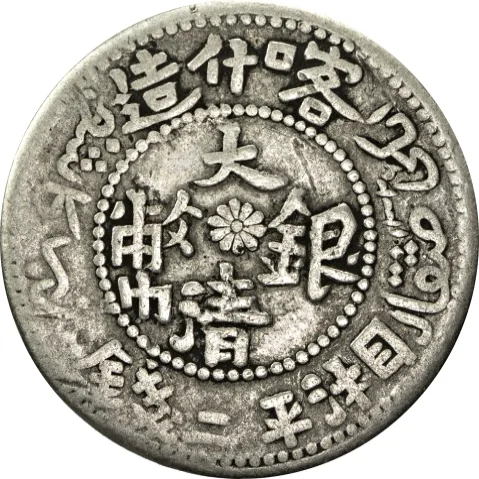
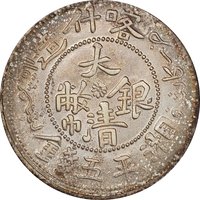
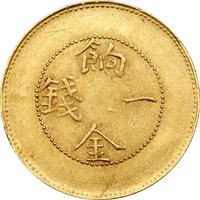
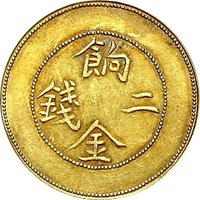
Four Chinese ideograms read vertically, centered on a flower, with more characters above and below and Arabic text on both sides.
Inscription:
造什喀
١٣٢٦ كى مثقال - كاشنو ب
大
幣銀
清
錢二平湘
١٣٢٦ كى مثقال - كاشنو ب
大
幣銀
清
錢二平湘
Translation:
Made in Kashgar
1326 Mithqal - Kashgar Mint
Large
Silver Coin
Qing
Xiang Two-Ping Coin
1326 Mithqal - Kashgar Mint
Large
Silver Coin
Qing
Xiang Two-Ping Coin
Reverse
Description:
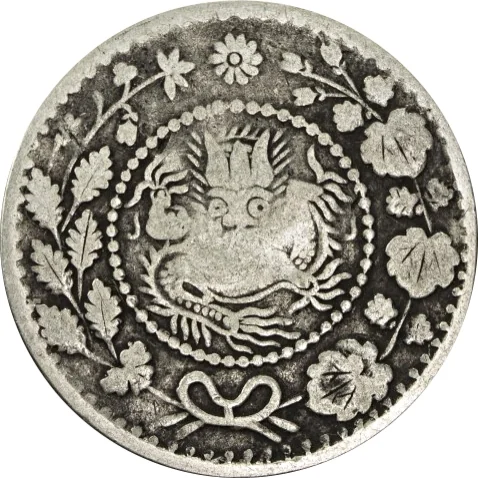
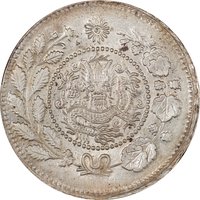
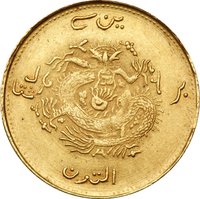
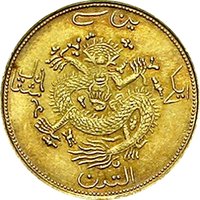
Dragon encircling a central pearl.
Edge
Reeded.
Mintings
| Year | Mint Mark | Mintage | Quality | Collection |
|---|---|---|---|---|
| 1906 | — | — | ||
| 1907 | — | — | ||
| 1908 | — | — | ||
| 1909 | — | — | ||
| 1911 | — | — |
Historical background
In 1906, the currency situation in Sinkiang (Xinjiang) Province was a complex and fragmented system reflecting the region's unique position at the crossroads of empires. The official currency was the Xinjiang Tael (Xinjiang liang), a silver-based unit issued in paper notes and sycee (silver ingots) by the provincial government in Dihua (Ürümqi). However, these notes were not backed by a standardized silver reserve and their value fluctuated wildly, often trading at a steep discount, especially the farther one traveled from the provincial capital. This instability was exacerbated by chronic fiscal deficits, as the Qing court in Beijing provided limited subsidies, leaving the local administration to fund its own military and bureaucratic expenses through currency issuance.
Alongside this fragile official system, a multitude of other currencies circulated, creating a bewildering monetary landscape. Russian Imperial Rubles (known locally as Yangpiao or "foreign notes") were dominant in northern and western Sinkiang due to extensive cross-border trade through the Ili and Tarbagatay regions. These ruble notes, issued by the Russian State Bank, were often more trusted than local paper. In the south, particularly in Kashgaria, the Kashgar Tael (Kashgar liang)—a separate silver ingot currency—and small, hand-stamped pul coins of copper or silver remained the daily mediums of exchange. Older Chinese cash coins (with square holes) also persisted for small transactions, while barter was still common in remote areas.
This monetary fragmentation severely hampered trade and economic integration within the province itself. Merchants and officials constantly dealt with confusing exchange rates and the inherent risk of depreciation. The situation was symptomatic of the weakening Qing dynasty's struggle to project unified economic governance to its frontier territories. It created an environment ripe for exploitation by foreign commercial interests, primarily Russian, and contributed to local inflationary pressures, imposing a significant burden on the population and complicating all forms of commerce and taxation.
Alongside this fragile official system, a multitude of other currencies circulated, creating a bewildering monetary landscape. Russian Imperial Rubles (known locally as Yangpiao or "foreign notes") were dominant in northern and western Sinkiang due to extensive cross-border trade through the Ili and Tarbagatay regions. These ruble notes, issued by the Russian State Bank, were often more trusted than local paper. In the south, particularly in Kashgaria, the Kashgar Tael (Kashgar liang)—a separate silver ingot currency—and small, hand-stamped pul coins of copper or silver remained the daily mediums of exchange. Older Chinese cash coins (with square holes) also persisted for small transactions, while barter was still common in remote areas.
This monetary fragmentation severely hampered trade and economic integration within the province itself. Merchants and officials constantly dealt with confusing exchange rates and the inherent risk of depreciation. The situation was symptomatic of the weakening Qing dynasty's struggle to project unified economic governance to its frontier territories. It created an environment ripe for exploitation by foreign commercial interests, primarily Russian, and contributed to local inflationary pressures, imposing a significant burden on the population and complicating all forms of commerce and taxation.

✨ Legendary