

10 pahlavī (Rezā Pahlavī) – Iran
Add to wishlist
Non-circulating coins
Commemoration: 100th Anniversary of the Birth of Rezā Pahlavī
Iran
Context
Year: 1977
Iranian imperial Year:: 2536
Issuer: Iran
Issuing organization: Bank Melli Iran
Ruler: Mohammad Reza
Currency:
Demonetization: 1979
Material
References
KM: #
Numista: #29173
Value
Bullion value: $11163.40
Obverse
Description:
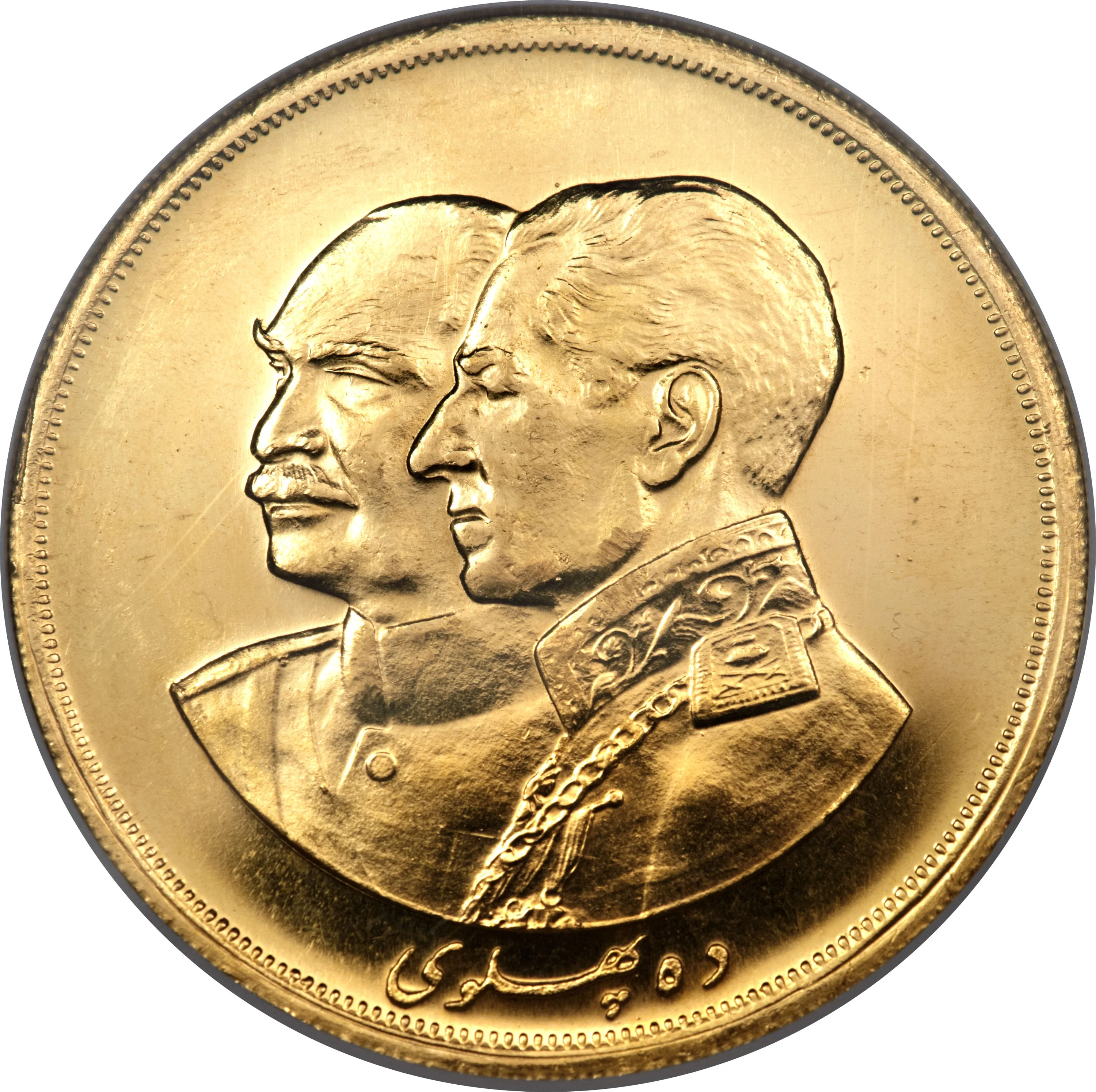
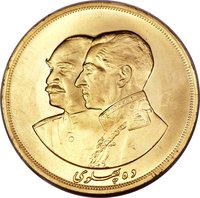
Left Pahlavi II head and left Pahlavi I triple portrait.
Inscription:
ده پهــلوی
Translation:
Gold Coin
Script: Persian (nastaliq)
Language: Persian
Reverse
Description:
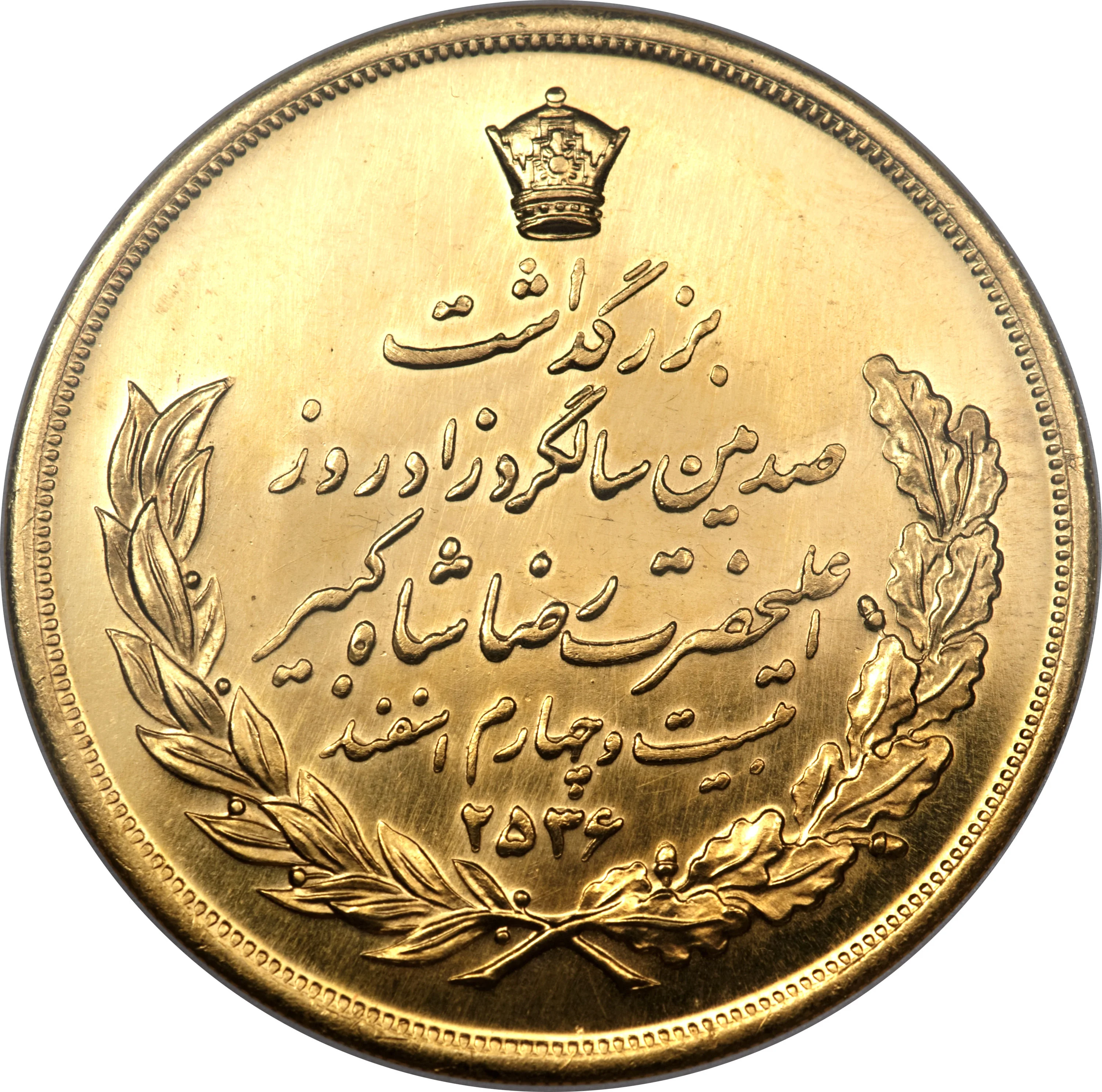
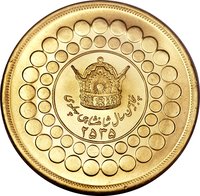
Crown of oak and olive leaves.
Inscription:
بزرگداشت
صدمین سالگرد زادروز
اعلیحضرت رضا شاه کبیر
بیست و چهارم اسفند
۲۵۳۶
صدمین سالگرد زادروز
اعلیحضرت رضا شاه کبیر
بیست و چهارم اسفند
۲۵۳۶
Translation:
Commemoration
of the One Hundredth Anniversary of the Birth
of His Imperial Majesty Reza Shah the Great
Twenty-fourth of Esfand
2536
of the One Hundredth Anniversary of the Birth
of His Imperial Majesty Reza Shah the Great
Twenty-fourth of Esfand
2536
Script: Persian (nastaliq)
Language: Persian
Edge
Reeded
Categories
| Event> Birth anniversary |
Mints
| Name | Mark |
|---|---|
| Tehran | — |
Mintings
| Year | Mint Mark | Mintage | Quality | Collection |
|---|---|---|---|---|
| 1977 | — | — |
Historical background
In 1977, Iran's currency situation was characterized by relative stability and strength, but it existed within an economy showing signs of increasing strain under the final years of Mohammad Reza Pahlavi's rule. The Iranian rial was a strong, pegged currency, fixed at approximately 70.5 rials to the U.S. dollar, a rate maintained since 1957. This stability was underpinned by booming oil revenues, which had quintupled following the 1973 oil crisis, filling state coffers and financing massive industrialization and military modernization projects. The country enjoyed high foreign exchange reserves, low external debt, and a seemingly robust fiscal position, presenting an image of economic prosperity to the international community.
However, this superficial strength masked profound structural weaknesses and growing inflationary pressures. The Shah's ambitious "Great Civilization" development program, funded by petrodollars, had led to overheated economic growth, severe bottlenecks in infrastructure, and rampant government spending. This fueled an inflation rate estimated between 15-25% annually, which severely eroded the purchasing power of ordinary Iranians, especially in urban areas. While the rial's official peg remained firm, the real economy was experiencing distortions, with a growing disparity between the wealthy elite connected to the state and the rural poor, alongside a frustrated middle class facing a rising cost of living.
The currency stability, therefore, became increasingly detached from the socioeconomic realities on the ground. Public discontent over economic mismanagement, corruption, and perceived "Westoxification" was simmering, setting the stage for the political upheaval to come. The fixed exchange rate and high reserves provided a false sense of security, as the fundamental pressures of inflation, income inequality, and wasteful expenditure were weakening the economy's foundations. Within two years, the revolution would unleash a currency crisis, but in 1977, the rial stood as a potent symbol of a regime whose economic policies had created both impressive macro-indicators and deep-seated popular resentment.
However, this superficial strength masked profound structural weaknesses and growing inflationary pressures. The Shah's ambitious "Great Civilization" development program, funded by petrodollars, had led to overheated economic growth, severe bottlenecks in infrastructure, and rampant government spending. This fueled an inflation rate estimated between 15-25% annually, which severely eroded the purchasing power of ordinary Iranians, especially in urban areas. While the rial's official peg remained firm, the real economy was experiencing distortions, with a growing disparity between the wealthy elite connected to the state and the rural poor, alongside a frustrated middle class facing a rising cost of living.
The currency stability, therefore, became increasingly detached from the socioeconomic realities on the ground. Public discontent over economic mismanagement, corruption, and perceived "Westoxification" was simmering, setting the stage for the political upheaval to come. The fixed exchange rate and high reserves provided a false sense of security, as the fundamental pressures of inflation, income inequality, and wasteful expenditure were weakening the economy's foundations. Within two years, the revolution would unleash a currency crisis, but in 1977, the rial stood as a potent symbol of a regime whose economic policies had created both impressive macro-indicators and deep-seated popular resentment.
✨ Legendary