

10 pahlavī (Pahlavi Rule) – Iran
Add to wishlist
Non-circulating coins
Commemoration: 50th Anniversary of the Pahlavi Rule
Iran
Context
Year: 1976
Iranian imperial Year:: 2535
Issuer: Iran
Issuing organization: Bank Melli Iran
Ruler: Mohammad Reza
Currency:
Demonetized: Yes
Material
References
KM: #
Numista: #29172
Value
Bullion value: $11233.79
Obverse
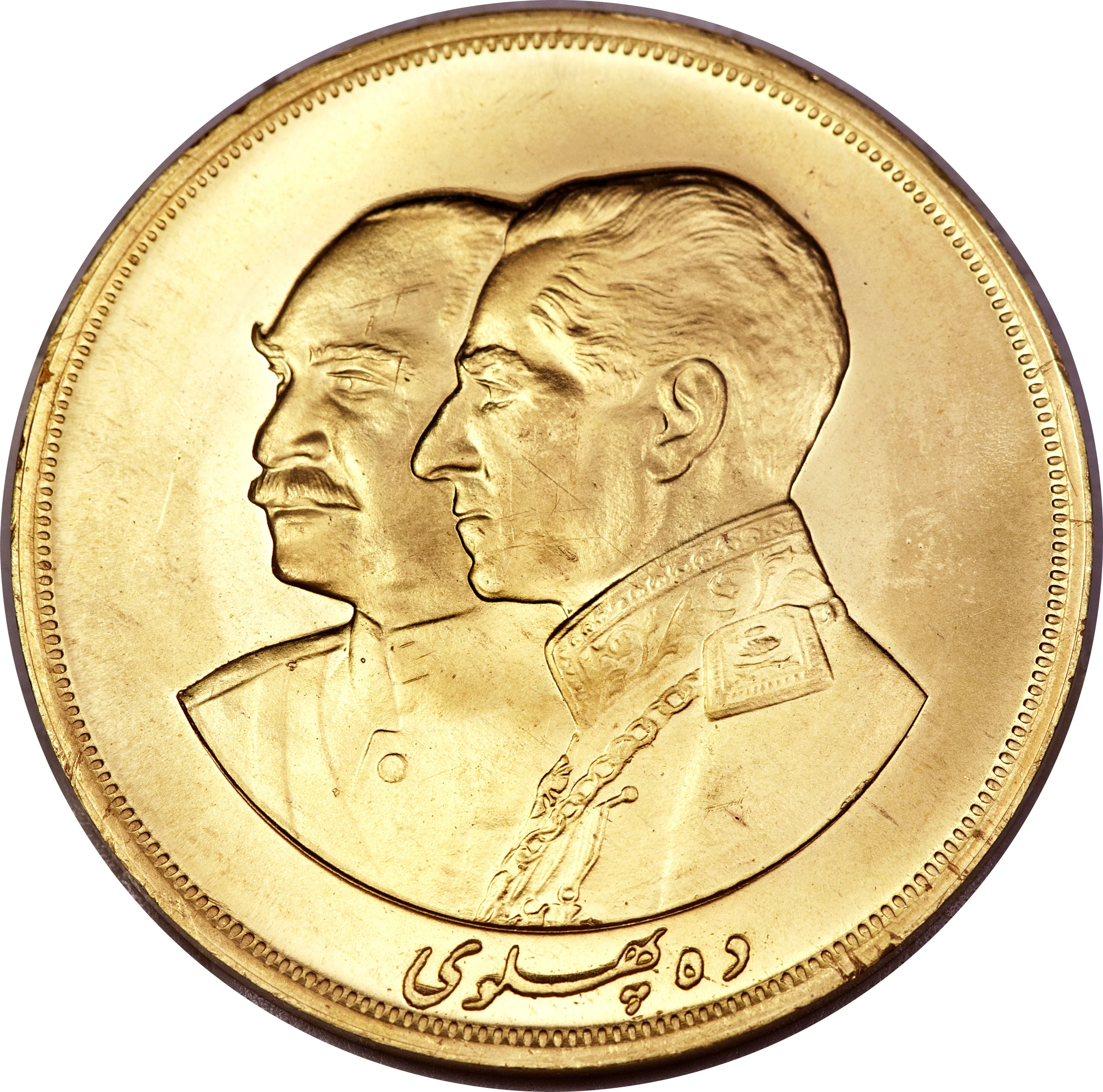
Description:
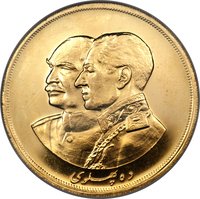
Left Pahlavi II head and left triple portrait of Pahlavi I.
Inscription:
ده پهــلوی
Translation:
Gold Coin
Script: Persian (nastaliq)
Language: Persian
Reverse
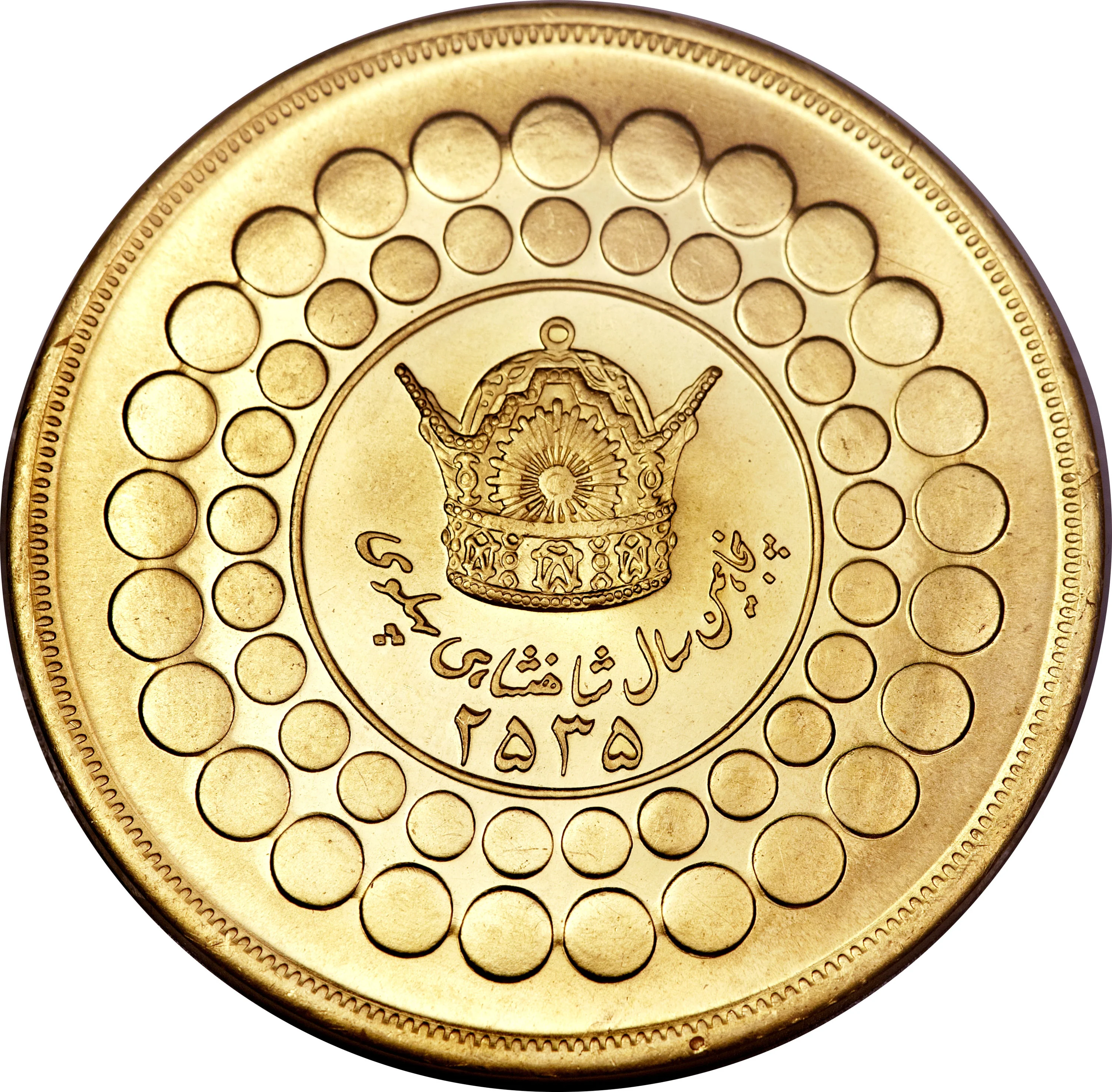
Description:
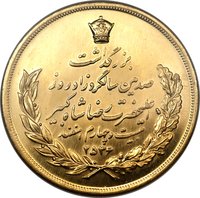
Pahlavi Crown Golden Jubilee coin, commemorating 50 years of Pahlavi rule.
Inscription:
پنجاهمین سال شاهنشاهی پهلوی
۲۵۳۵
۲۵۳۵
Translation:
Fiftieth year of the Pahlavi monarchy
2535
2535
Script: Persian (nastaliq)
Language: Persian
Edge
Reeded
Mints
| Name | Mark |
|---|---|
| Tehran | — |
Mintings
| Year | Mint Mark | Mintage | Quality | Collection |
|---|---|---|---|---|
| 1976 | — | — |
Historical background
In 1976, Iran's currency situation was characterized by an artificial strength buoyed by the peak of the Pahlavi monarchy's oil-fueled economic ambitions. The Iranian Rial was officially pegged to the U.S. dollar at a fixed rate of approximately 70.5 Rials per dollar, a rate maintained by the Central Bank through substantial foreign exchange reserves. These reserves, swollen by the quadrupling of oil prices following the 1973 oil embargo, created an illusion of profound stability and purchasing power. The strong Rial facilitated a surge in imports of luxury goods, military hardware, and technology for the Shah's ambitious modernization projects, contributing to a facade of a prosperous, rapidly westernizing nation.
Beneath this surface, however, significant structural weaknesses were festering. The economy was dangerously over-reliant on oil revenues, which financed grandiose state-led industrialization while other sectors, particularly agriculture, stagnated. This led to high inflation, estimated at around 25% annually, which the fixed exchange rate helped to mask but could not eliminate. The strong Rial also made non-oil exports uncompetitive, hurting domestic industries and fostering a growing dependence on imported goods and foodstuffs. Furthermore, massive government spending fueled by petrodollars created overheating and bottlenecks, while wealth inequality and rural-to-urban migration generated social tensions.
Consequently, the currency stability of 1976 was precarious, existing in a bubble sustained by volatile oil markets and authoritarian control. It was not reflective of a diversified, productive economy but was instead a monetary manifestation of the regime's centralized power and its vulnerability to external shocks. Within two years, this facade would collapse under the weight of falling oil revenues, political upheaval, and the chaos of the Islamic Revolution, leading to a dramatic devaluation and the end of the fixed exchange rate regime.
Beneath this surface, however, significant structural weaknesses were festering. The economy was dangerously over-reliant on oil revenues, which financed grandiose state-led industrialization while other sectors, particularly agriculture, stagnated. This led to high inflation, estimated at around 25% annually, which the fixed exchange rate helped to mask but could not eliminate. The strong Rial also made non-oil exports uncompetitive, hurting domestic industries and fostering a growing dependence on imported goods and foodstuffs. Furthermore, massive government spending fueled by petrodollars created overheating and bottlenecks, while wealth inequality and rural-to-urban migration generated social tensions.
Consequently, the currency stability of 1976 was precarious, existing in a bubble sustained by volatile oil markets and authoritarian control. It was not reflective of a diversified, productive economy but was instead a monetary manifestation of the regime's centralized power and its vulnerability to external shocks. Within two years, this facade would collapse under the weight of falling oil revenues, political upheaval, and the chaos of the Islamic Revolution, leading to a dramatic devaluation and the end of the fixed exchange rate regime.
✨ Legendary