

1 rand – South Africa
Add to wishlist
South Africa
Context
Years: 1977–1989
Issuer: South Africa
Period:
(since 1961)
Currency:
(since 1961)
Total mintage: 94,624,061
Material
References
KM: #
Numista: #2909
Value
Exchange value: 1 ZAR
Inflation-adjusted value: 50.58 ZAR
Obverse
Description:
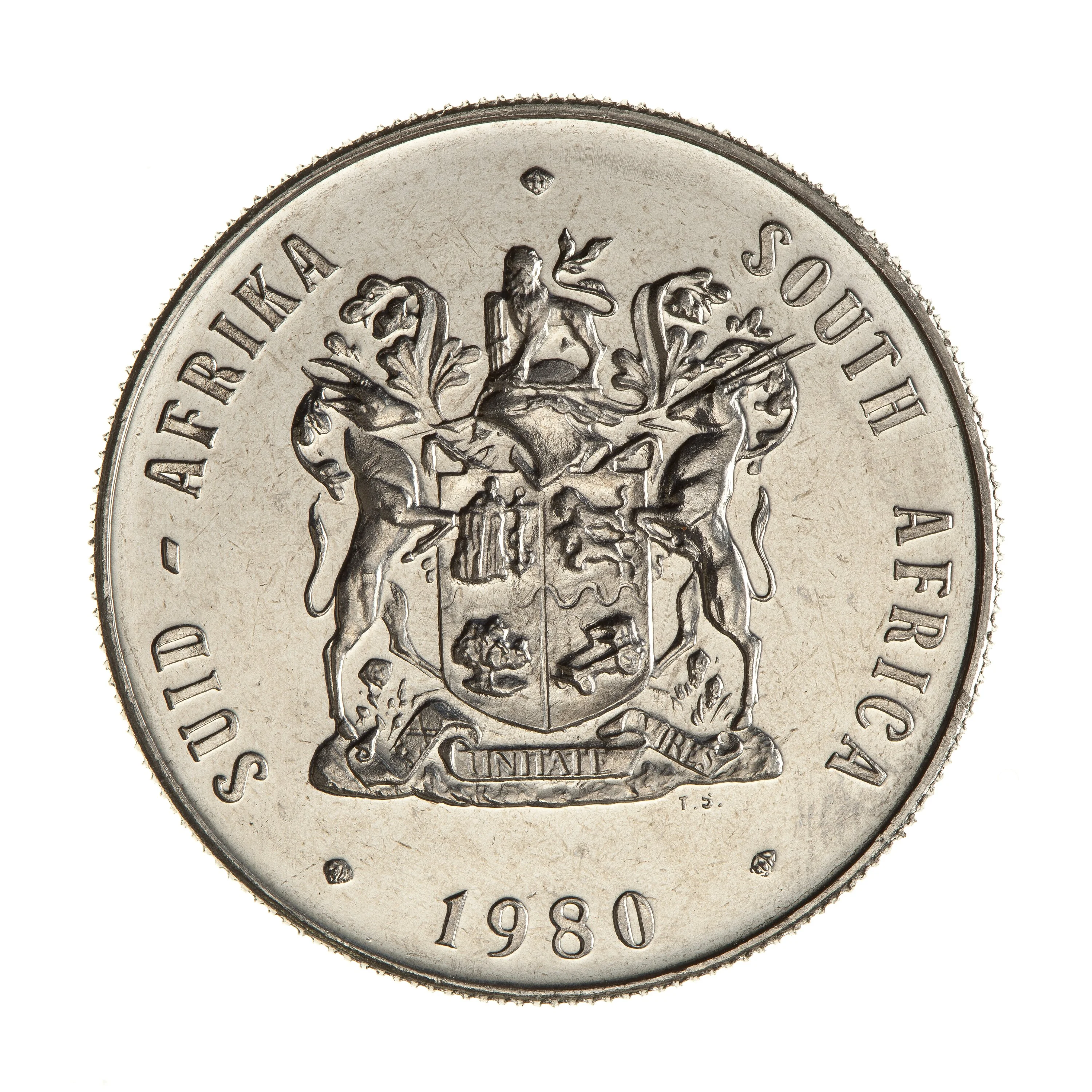
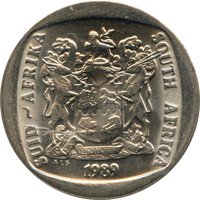
South African coat of arms with the motto "Ex Unitate Vires" (Power Through Unity). Country name in Afrikaans and English.
Inscription:
SUID-AFRIKA · SOUTH AFRICA
EX UNITATE VIRES
A L S
1988
EX UNITATE VIRES
A L S
1988
Script: Latin
Engraver: Arthur Sutherland
Reverse
Description:
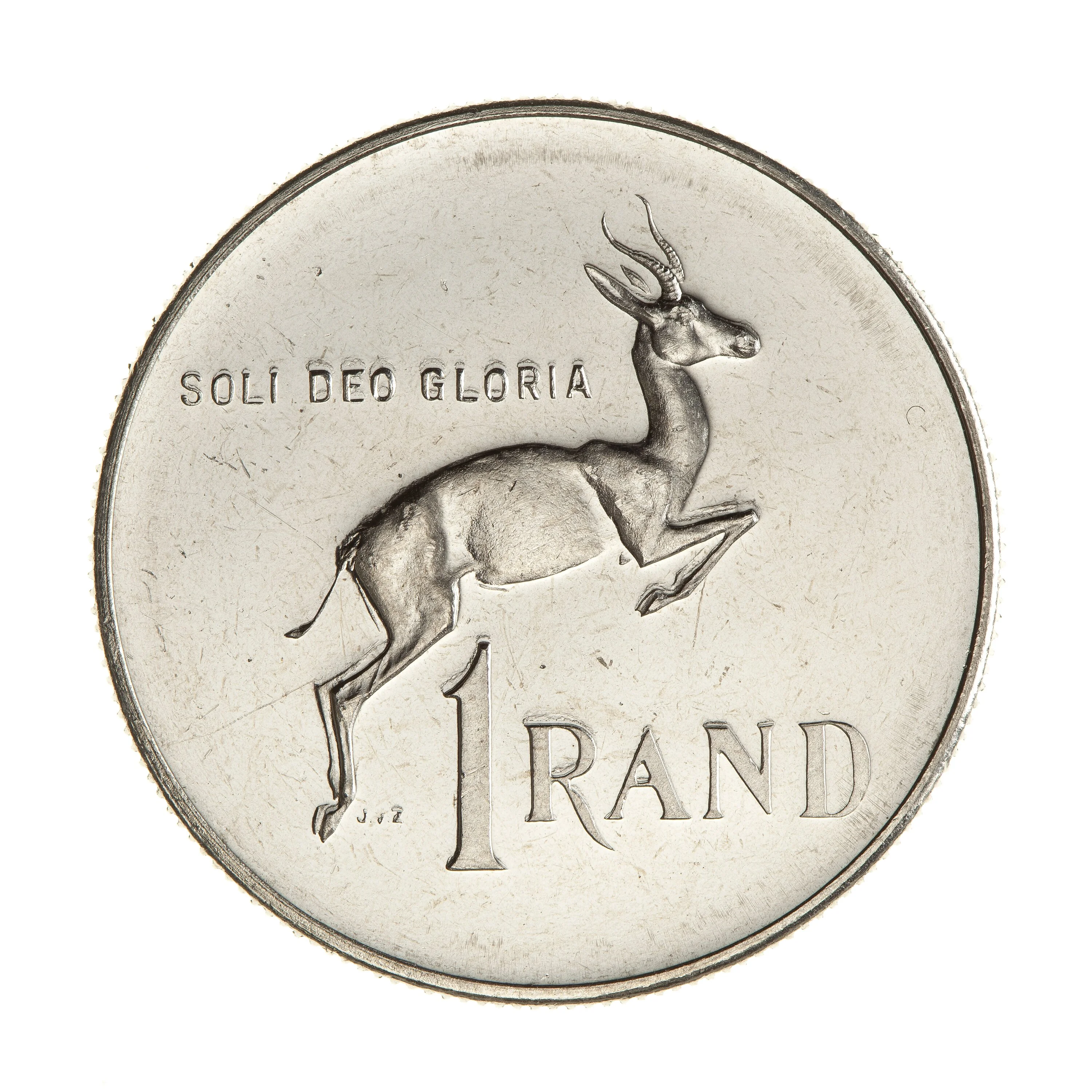
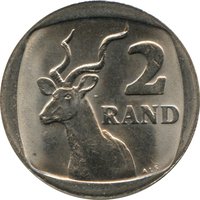
Springbok. "Soli Deo gloria," meaning "Glory to God alone," was a core belief of the Protestant Reformation.
Inscription:
SOLI DEO GLORIA
1 RAND
J.v.Z
1 RAND
J.v.Z
Script: Latin
Engraver: Jan van Zyl
Edge
Reeded
Categories
| Animal> Cow |
| Symbols> Coat of Arms |
Mints
| Name | Mark |
|---|---|
| Pretoria | — |
Mintings
| Year | Mint Mark | Mintage | Quality | Collection |
|---|---|---|---|---|
| 1977 | — | 29,871,000 | ||
| 1977 | — | 10 | Proof | |
| 1978 | — | 12,021,000 | ||
| 1978 | — | 10 | Proof | |
| 1980 | — | 2,690,000 | ||
| 1981 | — | 2,035,000 | ||
| 1983 | — | 7,182,000 | ||
| 1983 | — | 10 | Proof | |
| 1984 | — | 5,736,000 | ||
| 1984 | — | 11,000 | Proof | |
| 1986 | — | 1,570,000 | ||
| 1986 | — | 7,000 | Proof | |
| 1987 | — | 12,152,000 | ||
| 1987 | — | 6,781 | Proof | |
| 1988 | — | 21,335,000 | ||
| 1988 | — | 7,250 | Proof | |
| 1989 | — | — | ||
| 1989 | — | — | Proof |
Historical background
In 1977, South Africa's currency situation was defined by the dual pressures of international isolation and domestic economic strain. The apartheid government, facing escalating global condemnation, contended with significant capital flight and trade restrictions that weakened the Rand. Domestically, the economy was burdened by the immense cost of maintaining the apartheid state—including a large security apparatus and inefficient parastatals—while also grappling with high inflation, which averaged over 11% that year.
The financial system operated under strict exchange controls to prevent a collapse of the currency, segregating the financial Rand (used by foreign investors) from the commercial Rand. This mechanism aimed to insulate the currency from direct political divestment, but it underscored the economy's vulnerability. The Reserve Bank struggled to balance defending the Rand's value with the need to stimulate a stagnant economy, leading to a period of volatile and managed depreciation against major currencies.
Ultimately, the currency dynamics of 1977 were a financial mirror of the country's political crisis. The weakening Rand reflected a loss of international confidence and foreshadowed the deeper economic crises of the 1980s. The government's attempts to control the currency were a defensive holding action, unable to address the fundamental unsustainability of an apartheid economy cut off from the global financial mainstream.
The financial system operated under strict exchange controls to prevent a collapse of the currency, segregating the financial Rand (used by foreign investors) from the commercial Rand. This mechanism aimed to insulate the currency from direct political divestment, but it underscored the economy's vulnerability. The Reserve Bank struggled to balance defending the Rand's value with the need to stimulate a stagnant economy, leading to a period of volatile and managed depreciation against major currencies.
Ultimately, the currency dynamics of 1977 were a financial mirror of the country's political crisis. The weakening Rand reflected a loss of international confidence and foreshadowed the deeper economic crises of the 1980s. The government's attempts to control the currency were a defensive holding action, unable to address the fundamental unsustainability of an apartheid economy cut off from the global financial mainstream.
🌱 Very Common