

2 tambala – Malawi
Add to wishlist
Malawi
Context
Years: 1984–1994
Issuer: Malawi
Period:
(since 1966)
Ruler: Hastings Kamuzu Banda
Currency:
(since 1971)
Total mintage: 10,710,000
Material
References
KM: #
Numista: #13481
Value
Exchange value: 0.02 MWK
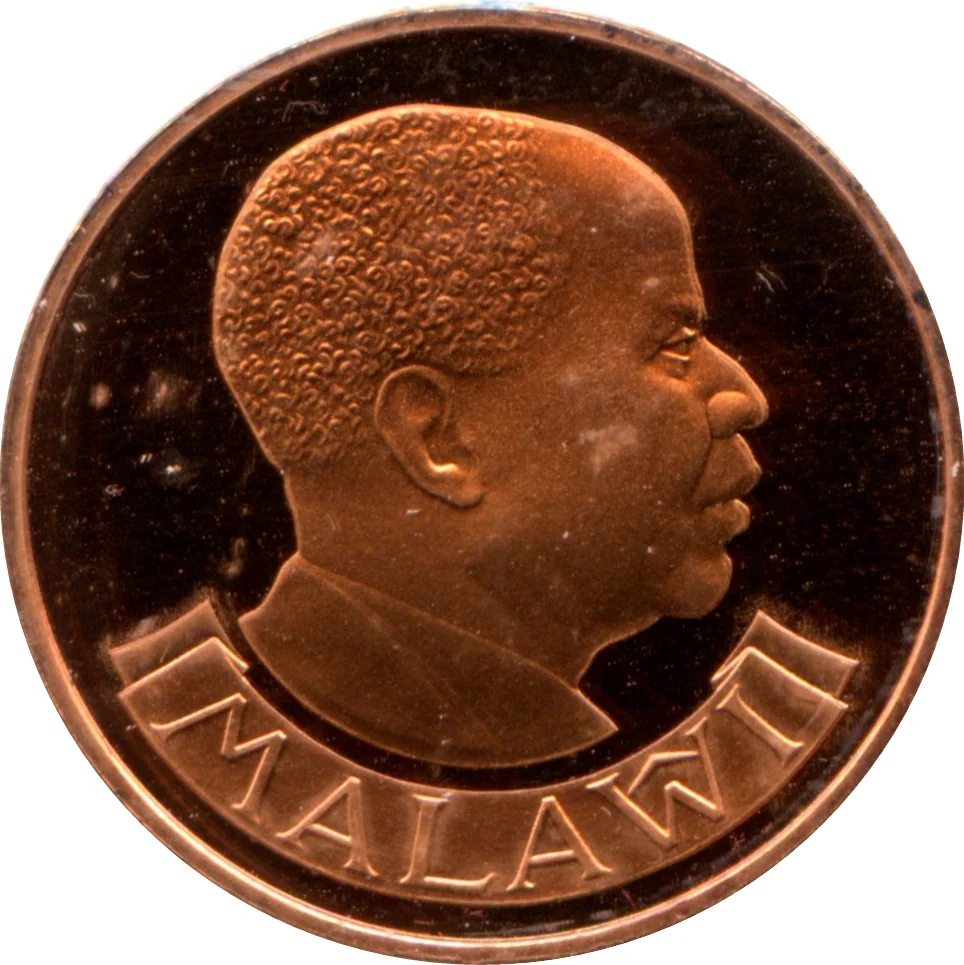
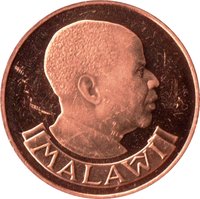
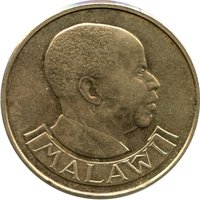
Obverse
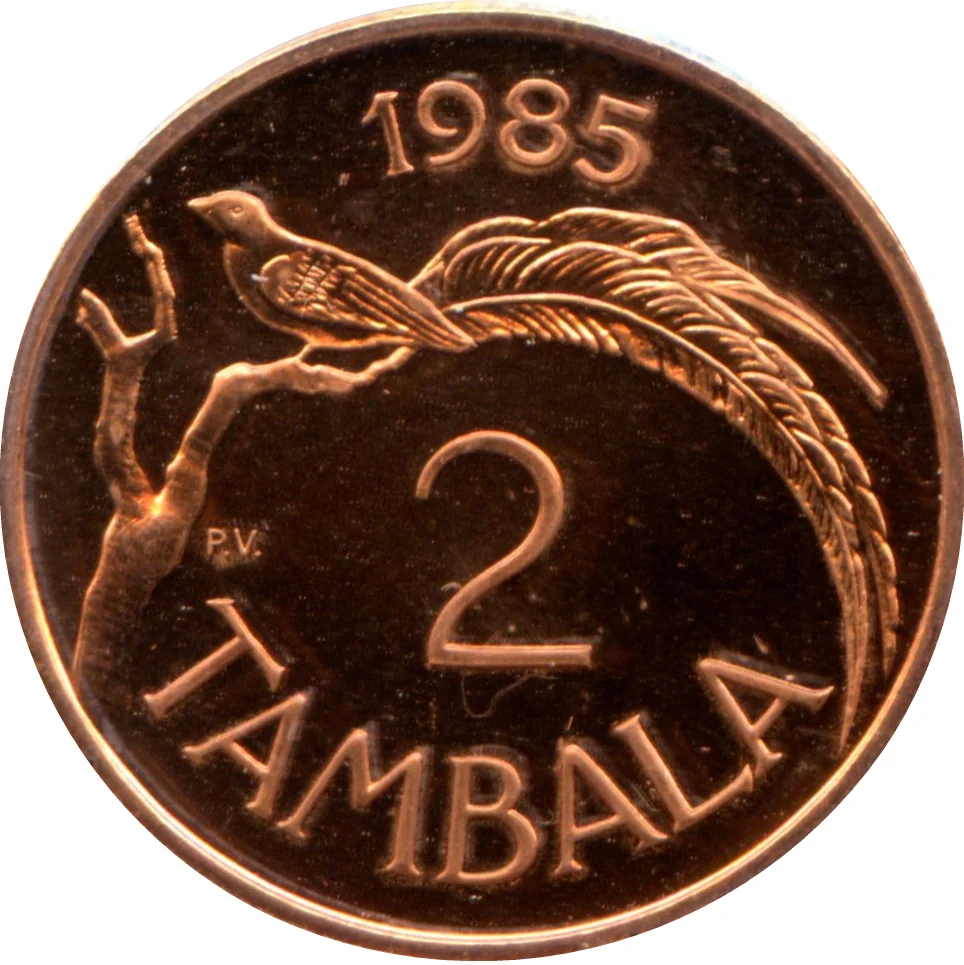
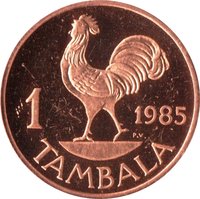
Reverse
Description:
Paradise whydah: date versus value.
Inscription:
1985
2
TAMBALA
2
TAMBALA
Script: Latin
Designer: Paul Vincze
Edge
Plain
Categories
| Animal> Bird |
| Person> Politician |
Mints
| Name | Mark |
|---|---|
| Royal Mint | — |
Mintings
| Year | Mint Mark | Mintage | Quality | Collection |
|---|---|---|---|---|
| 1984 | — | 150,000 | ||
| 1985 | — | 10,000 | Proof | |
| 1987 | — | — | ||
| 1989 | — | 10,550,000 | ||
| 1991 | — | — | ||
| 1994 | — | — |
Historical background
In 1984, Malawi's currency situation was defined by the tight control of the long-ruling President Hastings Kamuzu Banda and his economic advisors. The country operated a fixed exchange rate system, pegging the Malawian Kwacha (MWK) to a basket of currencies, though it was effectively managed in close relation to the British Pound Sterling and the US Dollar. This peg was maintained at an artificially high official rate, which did not reflect the country's underlying economic realities, including a growing trade deficit and heavy reliance on agricultural exports like tobacco, tea, and sugar, whose prices were volatile on the global market.
The overvalued Kwacha created significant distortions. It made imports artificially cheap for the urban elite and the political class, but it severely hurt the competitiveness of Malawi's exports, discouraging potential foreign investment. Furthermore, it fueled a burgeoning black market for foreign exchange, where the Kwacha traded at a much-depreciated rate compared to the official parity. This dual system benefited those with access to official channels while crippling businesses and individuals forced to use the parallel market, creating widespread inefficiency and corruption.
Underneath these monetary policies lay a broader context of economic strain. Malawi had borrowed heavily in the 1970s to fund ambitious development projects and was now grappling with substantial foreign debt. The overvalued currency, combined with poor harvests and the second oil shock, exacerbated balance of payments pressures. While the government maintained a facade of stability through strict control, the situation in 1984 was increasingly unsustainable, setting the stage for the structural adjustment programs and painful currency devaluations that would be demanded by the International Monetary Fund and World Bank in the late 1980s.
The overvalued Kwacha created significant distortions. It made imports artificially cheap for the urban elite and the political class, but it severely hurt the competitiveness of Malawi's exports, discouraging potential foreign investment. Furthermore, it fueled a burgeoning black market for foreign exchange, where the Kwacha traded at a much-depreciated rate compared to the official parity. This dual system benefited those with access to official channels while crippling businesses and individuals forced to use the parallel market, creating widespread inefficiency and corruption.
Underneath these monetary policies lay a broader context of economic strain. Malawi had borrowed heavily in the 1970s to fund ambitious development projects and was now grappling with substantial foreign debt. The overvalued currency, combined with poor harvests and the second oil shock, exacerbated balance of payments pressures. While the government maintained a facade of stability through strict control, the situation in 1984 was increasingly unsustainable, setting the stage for the structural adjustment programs and painful currency devaluations that would be demanded by the International Monetary Fund and World Bank in the late 1980s.
🌱 Common