

1 Mithqual – Sinkiang Province
China
Context
Year: 1904
Islamic (Hijri) Year: 1322
Country: China 
Issuer: Sinkiang Province
Ruler: Guangxu
Demonetized: Yes
Material
References
Y: #Click to copy to clipboardC16
Numista: #290460
Value
Bullion value: $10.12
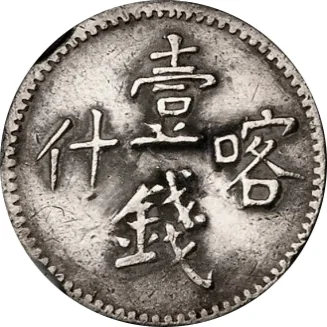
Obverse
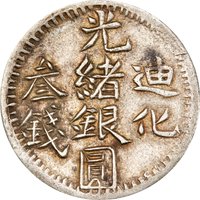
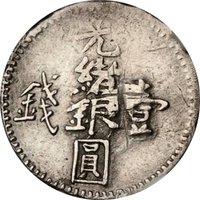
Description:
Four Chinese characters read vertically, right to left.
Inscription:
壹
什 喀
錢
什 喀
錢
Translation:
One Tanka Coin
Language: Chinese
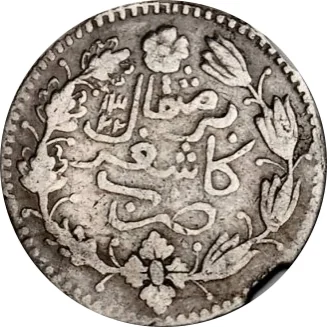
Reverse
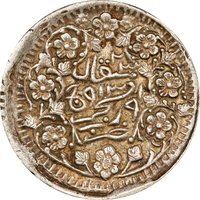
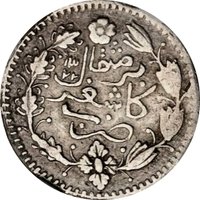
Description:
Arabic legend encircled by wreath.
Inscription:
١٣٢٢
ی مثقال
كاشنو
ضو ب
ی مثقال
كاشنو
ضو ب
Translation:
1322
One Mithqal
Kashan
Twenty
One Mithqal
Kashan
Twenty
Language: Persian
Edge
Plain
Mintings
| Year | Mint Mark | Mintage | Quality | Collection |
|---|---|---|---|---|
| 1904 | — | — |
Historical background
In 1904, the currency situation in Sinkiang (Xinjiang) Province was characterized by extreme complexity and fragmentation, a direct reflection of the region's geographical position and political dynamics. As a distant frontier of the Qing Empire, central monetary control was weak, leading to a circulation of multiple, often unofficial, currencies. The primary official tender was the Xinjiang red cash coin (Hongqian), a locally minted copper coin with a lower copper content and smaller size than standard Zhiqian cash coins from China proper. Its value was unstable and it circulated alongside older pul coins from Kashgaria, silver yambus (ingots), and even Russian Tsarist rubles, which were increasingly dominant in northern Xinjiang due to cross-border trade.
This monetary chaos was exacerbated by the financial strain on the Qing administration. To cover local military and administrative costs, the Xinjiang government, under Governor Pan Duo, engaged in excessive issuance of red cash coins and printed official notes (Guanpiao), which were poorly backed and subject to severe depreciation. The result was a multi-tiered system where the exchange rates between silver, copper coins, and paper notes fluctuated wildly, varying not only over time but also from one city to another. Merchants in Kashgar, Ürümqi, and Ili often dealt with completely different sets of preferred media of exchange.
Consequently, the currency environment created significant hardship for the local population and impeded commerce. Ordinary transactions were burdened by the constant need to calculate exchange rates and assess the authenticity and acceptability of various coins and notes. This financial instability underscored the Qing's tenuous grasp on its northwestern frontier, highlighting the region's economic integration with Russian Central Asia as much as with Beijing. The situation would persist until the more unified currency reforms attempted by Yang Zengxin in the subsequent Republican era.
This monetary chaos was exacerbated by the financial strain on the Qing administration. To cover local military and administrative costs, the Xinjiang government, under Governor Pan Duo, engaged in excessive issuance of red cash coins and printed official notes (Guanpiao), which were poorly backed and subject to severe depreciation. The result was a multi-tiered system where the exchange rates between silver, copper coins, and paper notes fluctuated wildly, varying not only over time but also from one city to another. Merchants in Kashgar, Ürümqi, and Ili often dealt with completely different sets of preferred media of exchange.
Consequently, the currency environment created significant hardship for the local population and impeded commerce. Ordinary transactions were burdened by the constant need to calculate exchange rates and assess the authenticity and acceptability of various coins and notes. This financial instability underscored the Qing's tenuous grasp on its northwestern frontier, highlighting the region's economic integration with Russian Central Asia as much as with Beijing. The situation would persist until the more unified currency reforms attempted by Yang Zengxin in the subsequent Republican era.
✨ Legendary