

5 mithqual – Sinkiang Province
Add to wishlist
China
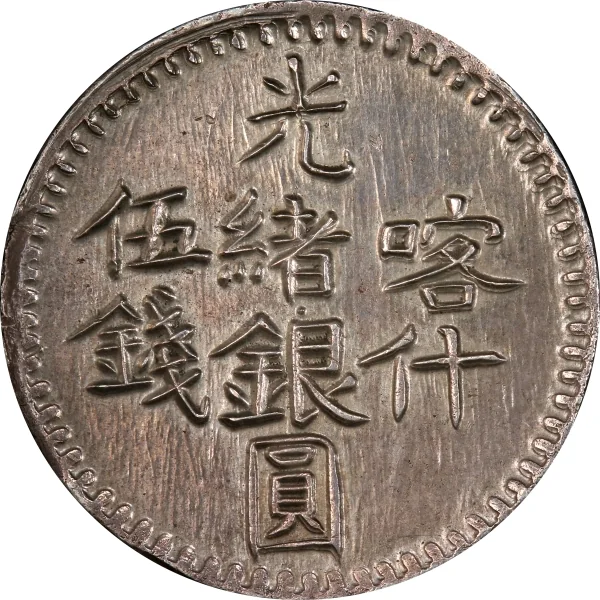
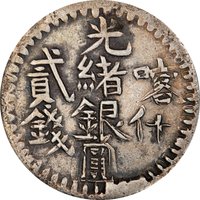
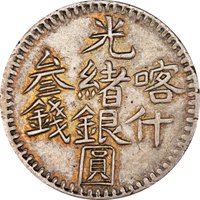
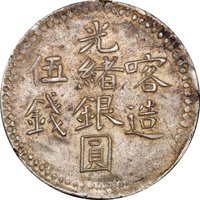
Obverse
Description:
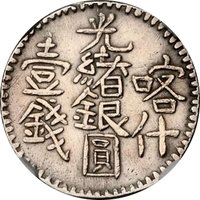
Eight Chinese characters read vertically.
Inscription:
光
伍緒喀
錢銀什
圓
伍緒喀
錢銀什
圓
Translation:
Five Zhejiang Provinces
Silver Coinage Ten
Yuan
Silver Coinage Ten
Yuan
Language: Chinese
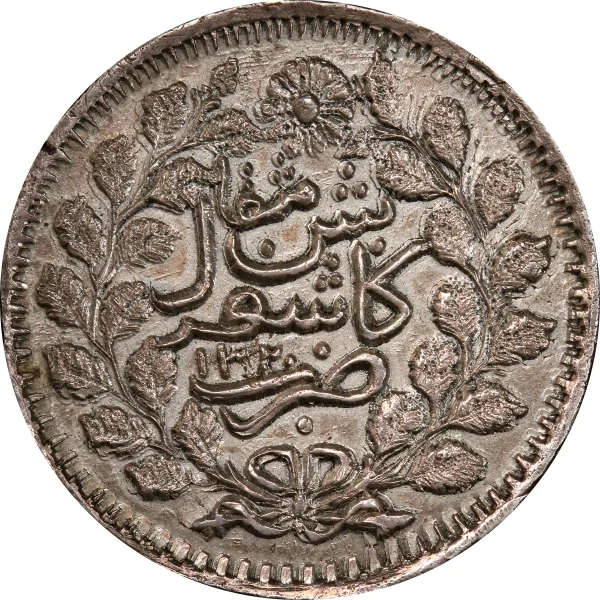
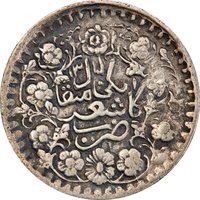
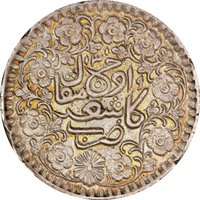
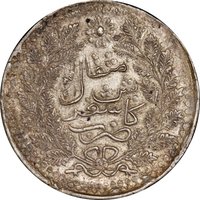
Reverse
Description:
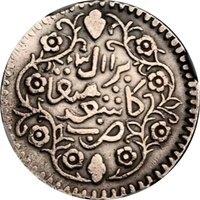
Arabic legend encircled by wreath.
Inscription:
١٣٢٠
بش مثقال
كاشنو
ضو ب
بش مثقال
كاشنو
ضو ب
Translation:
1320
Twenty Mashqals
Kashan
Struck at
Twenty Mashqals
Kashan
Struck at
Language: Persian
Edge
Plain
Mintings
| Year | Mint Mark | Mintage | Quality | Collection |
|---|---|---|---|---|
| 1894 | — | — | ||
| 1896 | — | — | ||
| 1897 | — | — | ||
| 1898 | — | — | ||
| 1899 | — | — | ||
| 1900 | — | — | ||
| 1902 | — | — | ||
| 1903 | — | — |
Historical background
In 1894, the currency situation in Sinkiang (Xinjiang) was characterized by extreme complexity and fragmentation, a direct legacy of the region's position at the crossroads of Central Asian trade and its loose administrative integration into the Qing Empire. The monetary system was not unified, operating with multiple parallel currencies that reflected diverse political and economic influences. The primary currencies in circulation were the Xinjiang tangka (or tenga), a silver coin minted locally in Kashgar and other centers, and the pul, a copper-based coin used for smaller transactions. Their values and metal content varied significantly between different localities like Ili, Kashgar, and Urumqi, leading to bewildering exchange rates.
This chaotic landscape was further complicated by the influx of foreign currencies, a testament to Sinkiang's integration into wider Eurasian networks. Russian imperial rubles and kopecks, brought in via thriving caravan trade, circulated widely, especially in the north. Chinese sycee (silver ingots) and cash coins (with square holes) from interior China also had a presence, representing Qing authority but were often insufficient for local needs. Additionally, older Kokandi tenga and other Central Asian coins from former khanates remained in use. This multi-currency environment created a thriving but exploitative business for money-changers and made commercial transactions fraught with uncertainty due to fluctuating values and widespread counterfeiting.
The underlying cause of this monetary disorder was the Qing government's relative neglect and a fiscal policy that treated Xinjiang as a distant frontier. The province suffered from a chronic shortage of centrally issued standard currency, forcing reliance on local minting. These local mints often debased their coins to cover provincial military and administrative expenses, further eroding public trust. Consequently, in 1894, on the eve of the First Sino-Japanese War which would further drain Qing resources, Sinkiang's currency system was a patchwork of declining local coins and competing foreign currencies, reflecting the region's precarious economic stability and the weak reach of centralized financial control from Beijing.
This chaotic landscape was further complicated by the influx of foreign currencies, a testament to Sinkiang's integration into wider Eurasian networks. Russian imperial rubles and kopecks, brought in via thriving caravan trade, circulated widely, especially in the north. Chinese sycee (silver ingots) and cash coins (with square holes) from interior China also had a presence, representing Qing authority but were often insufficient for local needs. Additionally, older Kokandi tenga and other Central Asian coins from former khanates remained in use. This multi-currency environment created a thriving but exploitative business for money-changers and made commercial transactions fraught with uncertainty due to fluctuating values and widespread counterfeiting.
The underlying cause of this monetary disorder was the Qing government's relative neglect and a fiscal policy that treated Xinjiang as a distant frontier. The province suffered from a chronic shortage of centrally issued standard currency, forcing reliance on local minting. These local mints often debased their coins to cover provincial military and administrative expenses, further eroding public trust. Consequently, in 1894, on the eve of the First Sino-Japanese War which would further drain Qing resources, Sinkiang's currency system was a patchwork of declining local coins and competing foreign currencies, reflecting the region's precarious economic stability and the weak reach of centralized financial control from Beijing.
✨ Legendary