

5 euro (Lithuanian independence) – Lithuania
Add to wishlist
Non-circulating coins
Commemoration: 100th anniversary of Lithuanian independence (1918-2018); Diplomacy.
Series: Independent Baltic States
Lithuania
Context
Material
Diameter: 32 mm
Weight: 12.44 g
Silver Weight:: 11.51 g
Shape: Round with a round hole
Composition: 92.5% Silver
Magnetic: No
Technique: Milled
Alignment: Medal alignment
flip
References
KM: #
Numista: #134790
Value
Exchange value: 5 EUR
Bullion value: $28.53
Inflation-adjusted value: 7.37 EUR
Obverse
Description:
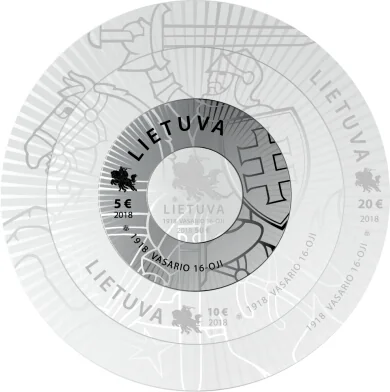
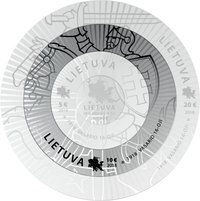
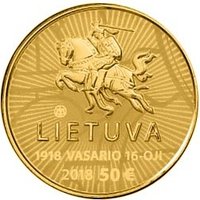
The obverse features Lithuania's Vytis coat of arms, inscriptions of LIETUVA, 1918 VASARIO 16-OJI, the issue year, denomination, and the mintmark.
Inscription:
LIETUVA
5 €
2018
LMK
1918 VASARIO 16-OJI
5 €
2018
LMK
1918 VASARIO 16-OJI
Translation:
LITHUANIA
5 €
2018
LMK
THE 16TH OF FEBRUARY 1918
5 €
2018
LMK
THE 16TH OF FEBRUARY 1918
Script: Latin
Language: Lithuanian
Designer: Liudas Parulskis
Reverse
Description:
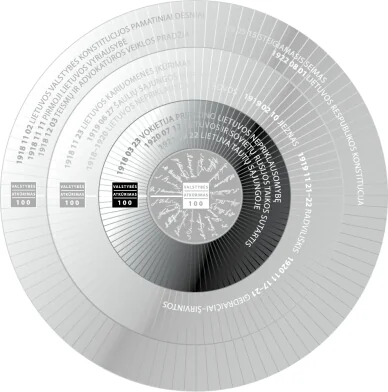
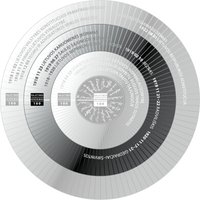
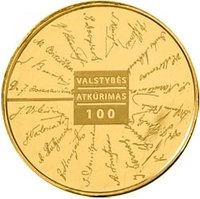
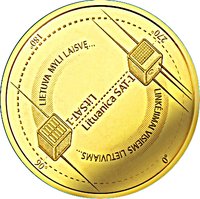
Coin reverse: 1918 03 23 Germany recognized Lithuania's independence; 1920 07 12 Lithuania–Soviet Russia peace treaty; 1921 09 22 Lithuania in the League of Nations.
Inscription:
1918 03 23 VOKIETIJA PRIPAŽINO LIETUVOS NEPRIKLAUSOMYBĘ
1920 07 12 LIETUVOS IR SOVIETŲ RUSIJOS TAIKOS SUTARTIS
1921 09 22 LIETUVA TAUTŲ SĄJUNGOJE
VALSTYBĖS
ATKŪRIMAS
100
1920 07 12 LIETUVOS IR SOVIETŲ RUSIJOS TAIKOS SUTARTIS
1921 09 22 LIETUVA TAUTŲ SĄJUNGOJE
VALSTYBĖS
ATKŪRIMAS
100
Translation:
1918 03 23 GERMANY RECOGNIZED LITHUANIA'S INDEPENDENCE
1920 07 12 LITHUANIA AND SOVIET RUSSIA PEACE TREATY
1921 09 22 LITHUANIA IN THE LEAGUE OF NATIONS
STATE
RESTORATION
100
1920 07 12 LITHUANIA AND SOVIET RUSSIA PEACE TREATY
1921 09 22 LITHUANIA IN THE LEAGUE OF NATIONS
STATE
RESTORATION
100
Script: Latin
Language: Lithuanian
Designer: Liudas Parulskis
Edge
Plain
Categories
| Animal> Horse |
| Object> Cold weapons |
| Event> Independence |
Mints
| Name | Mark |
|---|---|
| Lithuanian Mint | (LMK) |
Mintings
| Year | Mint Mark | Mintage | Quality | Collection |
|---|---|---|---|---|
| 2018 | LMK | 4,000 | Proof |
Historical background
In 2018, Lithuania was firmly established within the Eurozone, having adopted the euro as its official currency on January 1, 2015. This move replaced the former national currency, the litas, which had been pegged to the euro at a fixed rate of 3.4528 since 2002. By 2018, the transition was complete, with the euro deeply integrated into the financial system and daily life. The primary focus was no longer on currency adoption but on leveraging the benefits of euro membership, such as reduced transaction costs, eliminated exchange rate risk for trade with the Eurozone, and enhanced macroeconomic stability.
The economic backdrop in 2018 was positive, with Lithuania experiencing strong GDP growth (approximately 3.5% for the year) and low inflation. As part of the Eurozone, the country's monetary policy was set by the European Central Bank (ECB), which continued its accommodative stance, including historically low interest rates and a quantitative easing program. This environment supported borrowing and investment within Lithuania. However, it also meant that Vilnius had no independent monetary tools to address domestic overheating risks, relying instead on fiscal policy and macroprudential measures for economic management.
A significant legacy issue from the euro changeover was still present in 2018: the redemption of litas banknotes and coins. The Bank of Lithuania maintained an indefinite exchange period for litas, allowing residents and collectors to convert old currency at the fixed rate. This process served as a final administrative footnote to the currency transition. Overall, 2018 represented a period of normalization and consolidation, where the euro was the uncontested and stable foundation for Lithuania's growing economy within the European single market.
The economic backdrop in 2018 was positive, with Lithuania experiencing strong GDP growth (approximately 3.5% for the year) and low inflation. As part of the Eurozone, the country's monetary policy was set by the European Central Bank (ECB), which continued its accommodative stance, including historically low interest rates and a quantitative easing program. This environment supported borrowing and investment within Lithuania. However, it also meant that Vilnius had no independent monetary tools to address domestic overheating risks, relying instead on fiscal policy and macroprudential measures for economic management.
A significant legacy issue from the euro changeover was still present in 2018: the redemption of litas banknotes and coins. The Bank of Lithuania maintained an indefinite exchange period for litas, allowing residents and collectors to convert old currency at the fixed rate. This process served as a final administrative footnote to the currency transition. Overall, 2018 represented a period of normalization and consolidation, where the euro was the uncontested and stable foundation for Lithuania's growing economy within the European single market.
Series: Independent Baltic States
💎 Very Rare