

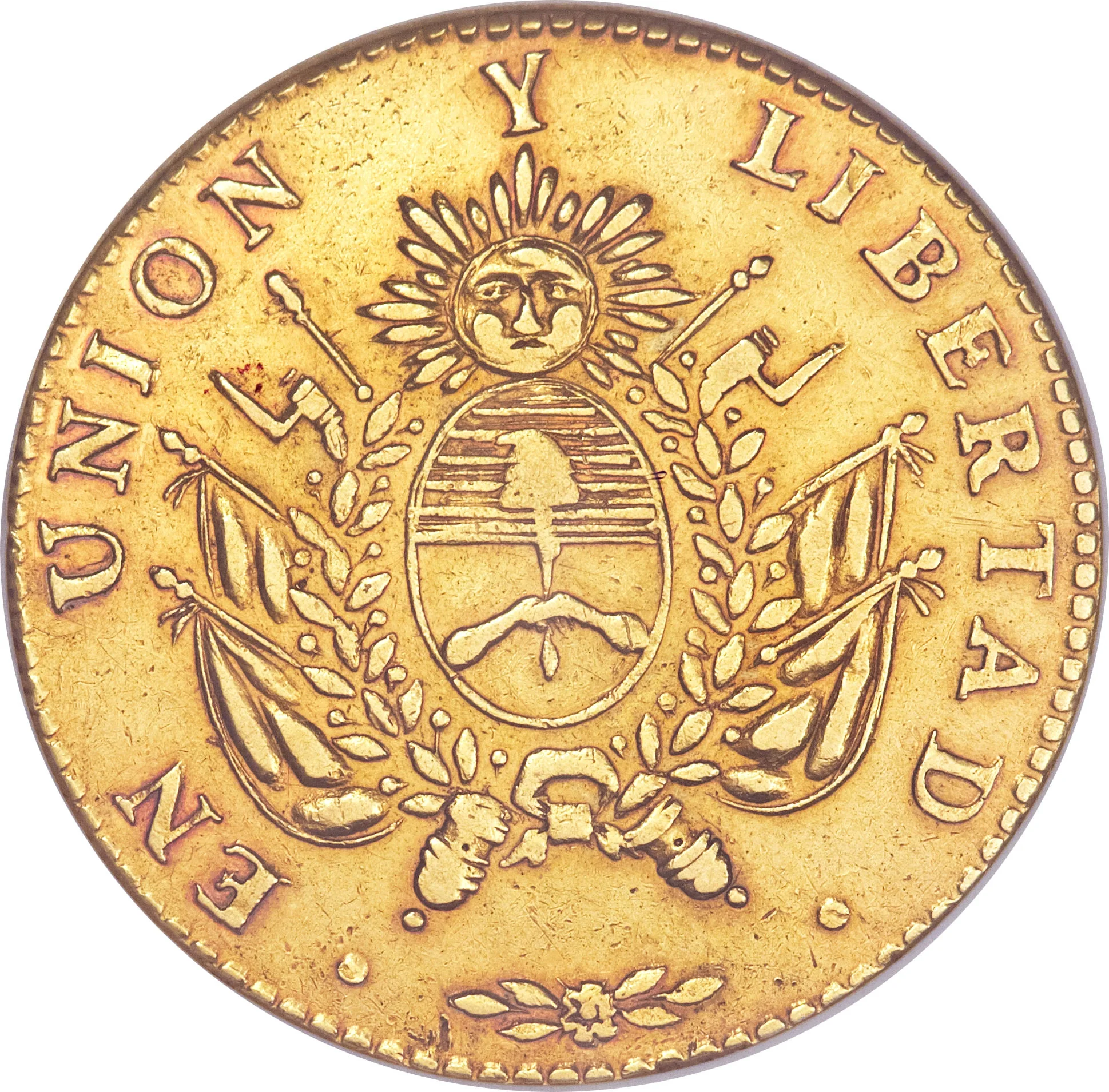
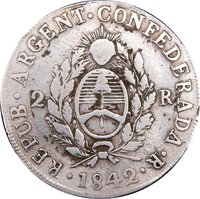
Obverse
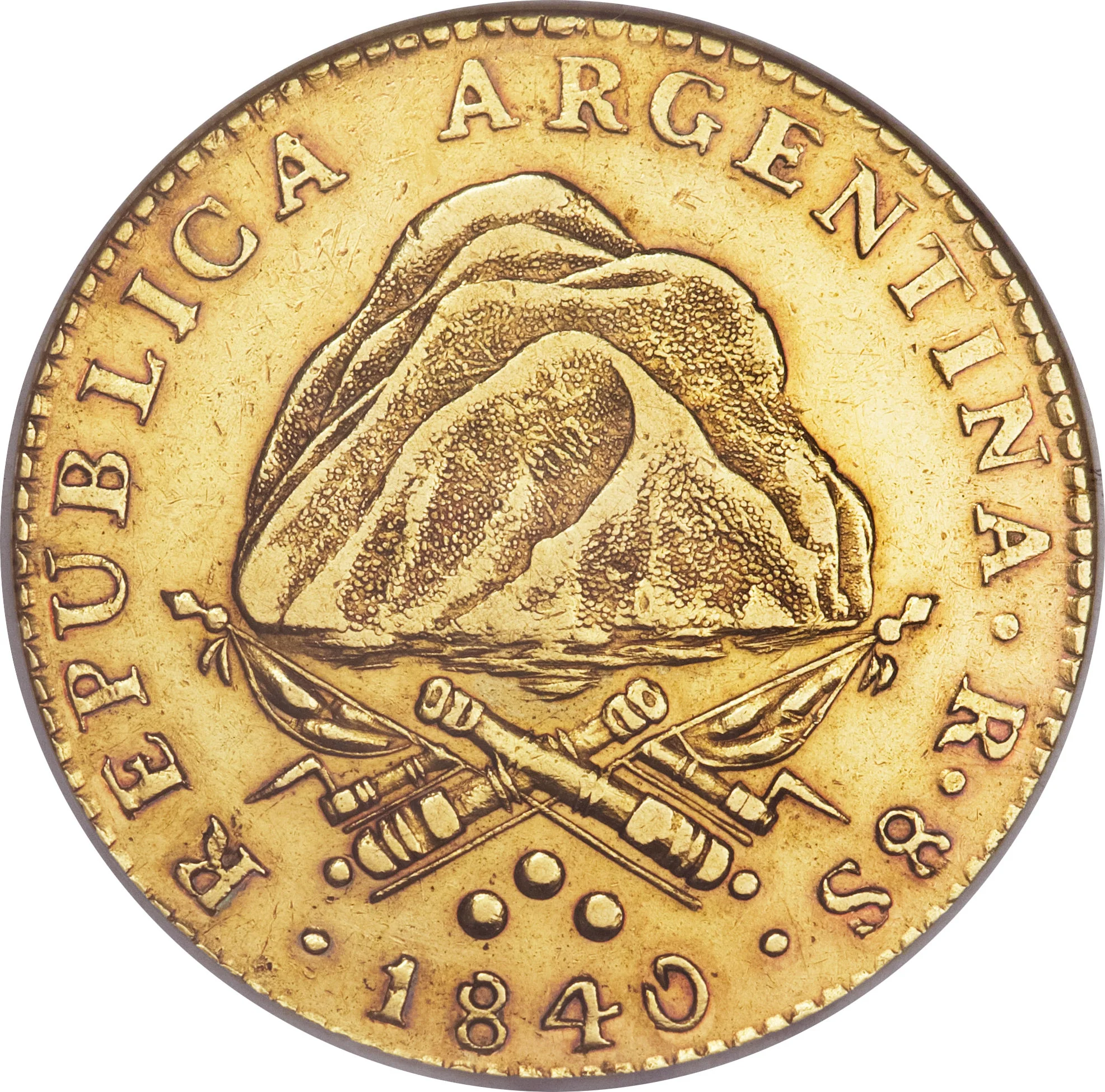
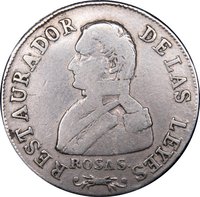
Reverse
Edge
Categories
| Symbol> Sun |
| Symbol> Flag |
| Symbol> Hand |
| Geography> Mountain |
| Symbols> Coat of Arms |
| Symbol> Phrygian cap |
| Symbol> Wreath |
| Object> Firearms |
Mintings
| Year | Mint Mark | Mintage | Quality | Collection |
|---|---|---|---|---|
| 1840 | R | — |
Historical background
In 1840, the Argentine province of La Rioja was embroiled in the larger Argentine Civil Wars, a conflict primarily between the Federalist forces, led by local caudillo Juan Facundo Quiroga (until his 1835 assassination) and his successors, and the Unitarian centralists from Buenos Aires. This constant state of warfare devastated the local economy, which was traditionally based on wine, livestock, and crafts. The provincial treasury, drained by military expenditures and cut off from the port revenues of Buenos Aires, faced a chronic shortage of hard currency (specie), crippling its ability to pay soldiers and civil servants and to facilitate basic trade.
To address this fiscal crisis, the government of La Rioja, like other interior provinces, resorted to issuing its own paper money. These were billetes or vales, essentially promissory notes from the provincial treasury, which were declared legal tender within its borders. However, without sufficient gold or silver reserves to back them, and with the instability of the governing authority, this currency suffered from rapid devaluation and low public confidence. Its acceptance was often enforced by decree rather than trust, and its value could fluctuate wildly based on the military fortunes of the ruling caudillo.
Consequently, the monetary situation in 1840 La Rioja was one of fragmentation and instability. Multiple forms of money circulated simultaneously: the devalued provincial paper, any remaining Spanish or republican coins, and the more stable currencies from rival provinces or even foreign coins that entered through trade. This environment severely hampered commerce, encouraged barter, and placed a heavy burden on the local populace, who were caught between the demands of war and an increasingly worthless medium of exchange. The currency chaos was a direct symptom of the political fragmentation and economic isolation that characterized Argentina during the Guerras Civiles.
To address this fiscal crisis, the government of La Rioja, like other interior provinces, resorted to issuing its own paper money. These were billetes or vales, essentially promissory notes from the provincial treasury, which were declared legal tender within its borders. However, without sufficient gold or silver reserves to back them, and with the instability of the governing authority, this currency suffered from rapid devaluation and low public confidence. Its acceptance was often enforced by decree rather than trust, and its value could fluctuate wildly based on the military fortunes of the ruling caudillo.
Consequently, the monetary situation in 1840 La Rioja was one of fragmentation and instability. Multiple forms of money circulated simultaneously: the devalued provincial paper, any remaining Spanish or republican coins, and the more stable currencies from rival provinces or even foreign coins that entered through trade. This environment severely hampered commerce, encouraged barter, and placed a heavy burden on the local populace, who were caught between the demands of war and an increasingly worthless medium of exchange. The currency chaos was a direct symptom of the political fragmentation and economic isolation that characterized Argentina during the Guerras Civiles.
💎 Extremely Rare