

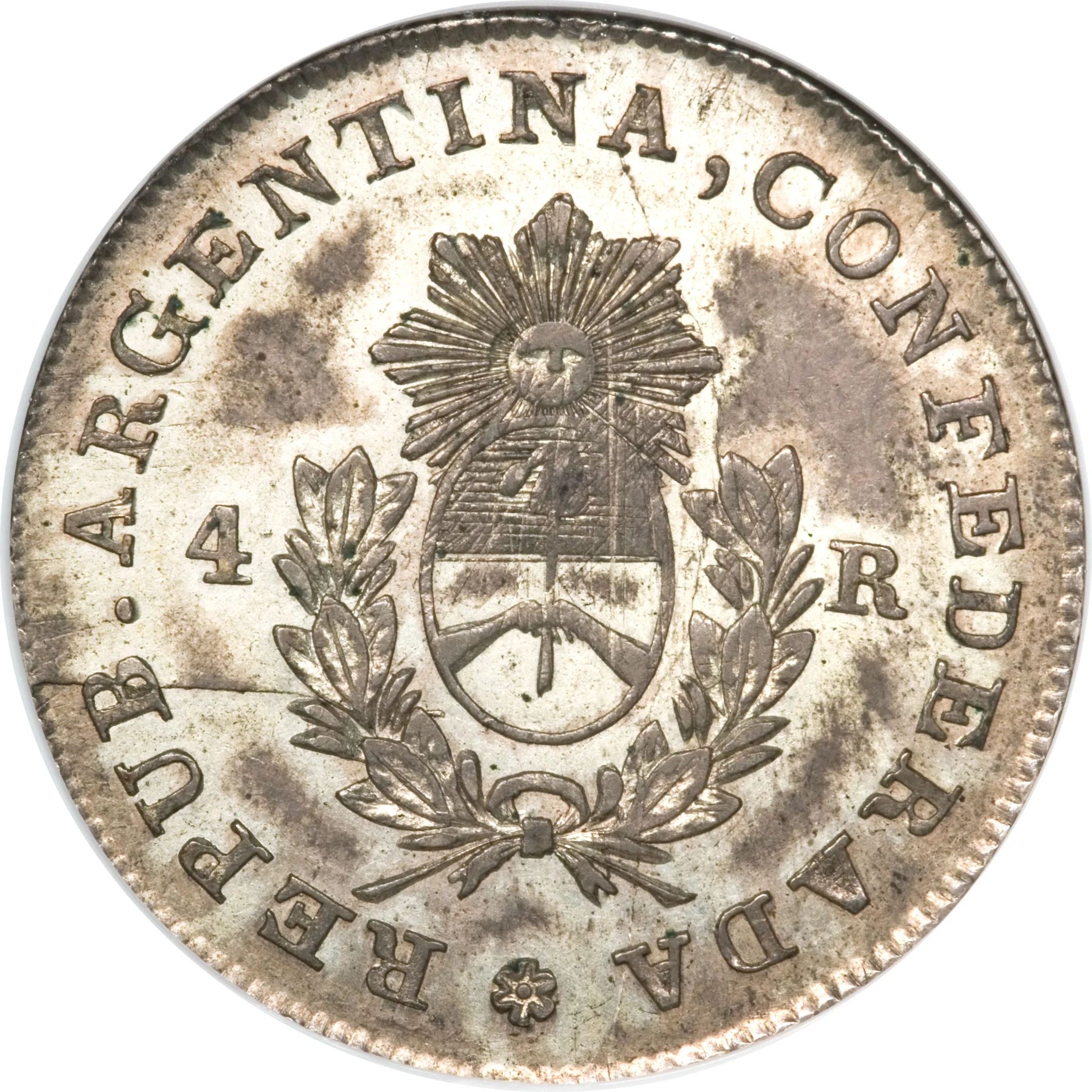
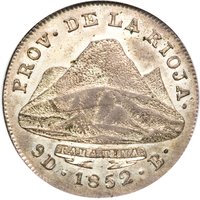
Obverse
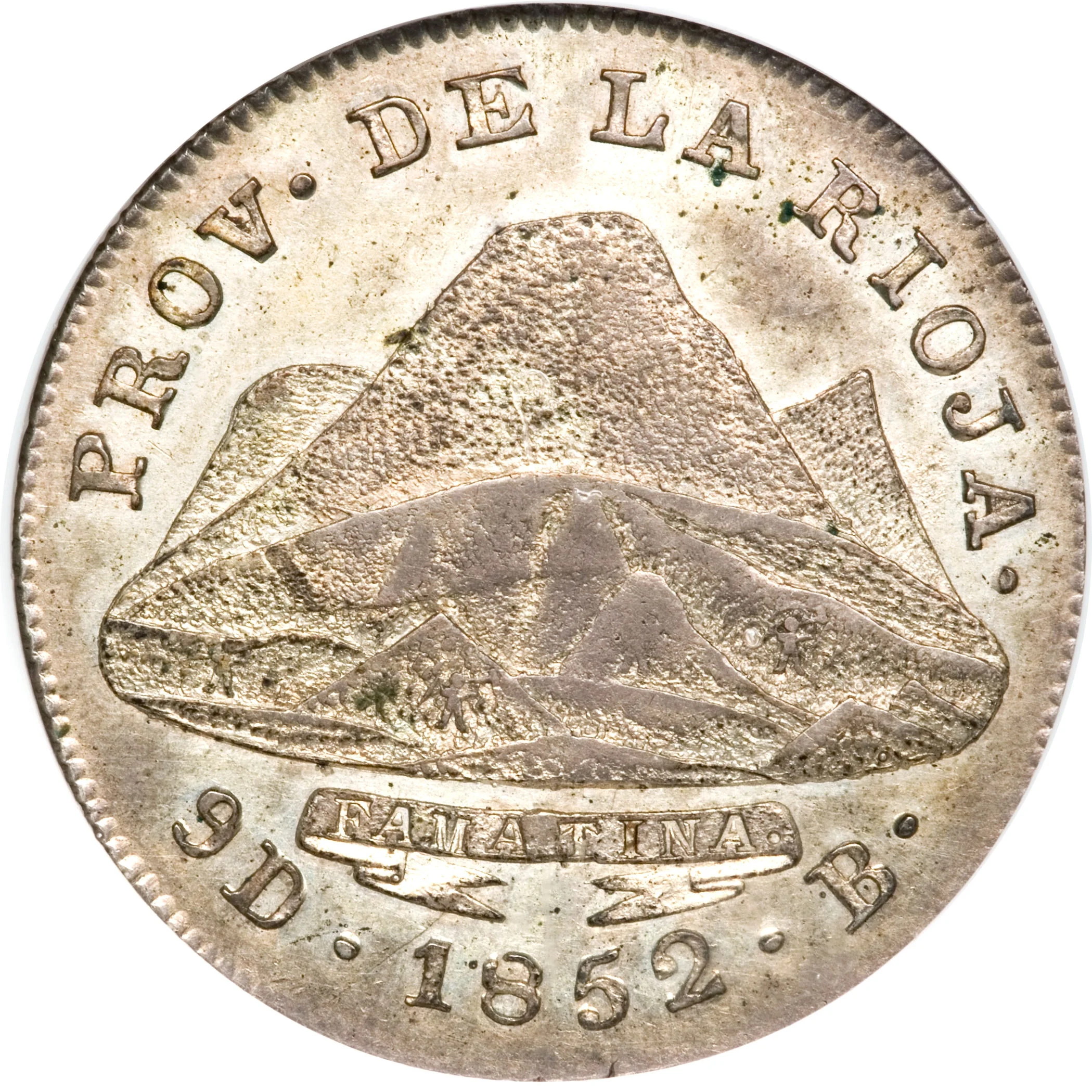
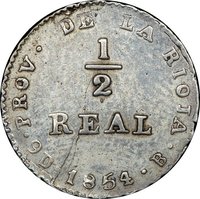
Reverse
Edge
Categories
| Symbols> Coat of Arms |
| Symbol> Phrygian cap |
| Symbol> Sun |
| Symbol> Hand |
| Geography> Mountain |
| Symbol> Wreath |
Mintings
| Year | Mint Mark | Mintage | Quality | Collection |
|---|---|---|---|---|
| 1852 | — | — |
Historical background
In 1852, La Rioja, a province in the Argentine Confederation, was embroiled in the broader national struggle between Federalist and Unitarian forces, which directly shaped its chaotic currency situation. Following the fall of Juan Manuel de Rosas in the Battle of Caseros that year, the central authority of the Confederation weakened, allowing provincial caudillos like La Rioja's "El Chacho" Peñaloza greater autonomy. With the national treasury depleted and no centralized monetary authority, La Rioja, like many provinces, was forced to issue its own currency to fund its government and militias.
This provincial currency consisted primarily of low-value copper coins and paper money, often hastily printed and of dubious quality. These emissions were not backed by gold or silver reserves but by the promise of future provincial tax revenues, a promise that held little weight given the region's economic devastation from years of civil war. Consequently, the currency suffered from severe inflation and was widely distrusted, even within La Rioja itself, where barter remained a common practice for basic goods.
The monetary chaos was a direct reflection of political fragmentation. La Rioja's currency circulated alongside a confusing array of notes from other provinces and remnants of earlier national currencies, all trading at wildly fluctuating discount rates. This situation stifled internal trade and investment, perpetuating the province's economic isolation and poverty. Thus, in 1852, La Rioja's currency was not a tool of economic stability but a symptom and instrument of ongoing political strife and fiscal desperation.
This provincial currency consisted primarily of low-value copper coins and paper money, often hastily printed and of dubious quality. These emissions were not backed by gold or silver reserves but by the promise of future provincial tax revenues, a promise that held little weight given the region's economic devastation from years of civil war. Consequently, the currency suffered from severe inflation and was widely distrusted, even within La Rioja itself, where barter remained a common practice for basic goods.
The monetary chaos was a direct reflection of political fragmentation. La Rioja's currency circulated alongside a confusing array of notes from other provinces and remnants of earlier national currencies, all trading at wildly fluctuating discount rates. This situation stifled internal trade and investment, perpetuating the province's economic isolation and poverty. Thus, in 1852, La Rioja's currency was not a tool of economic stability but a symptom and instrument of ongoing political strife and fiscal desperation.
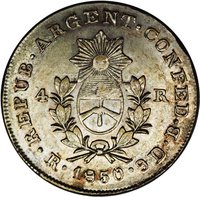
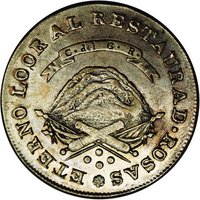
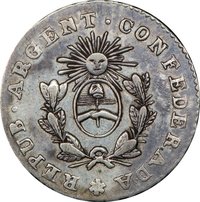
💎 Extremely Rare