

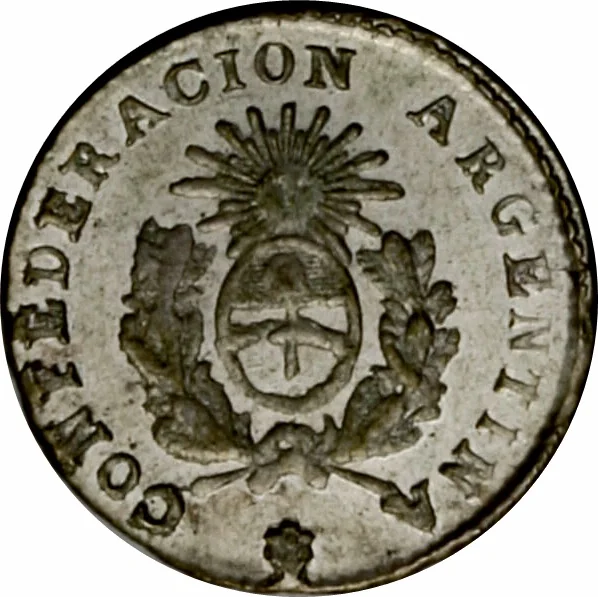
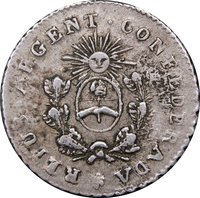
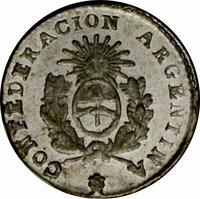
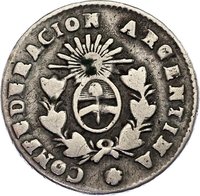
Obverse
Inscription:
CONFEDERACION ARGENTINA
Translation:
Argentine Confederation
Script: Latin
Language: Spanish
Engraver: JOSÉ BARROS
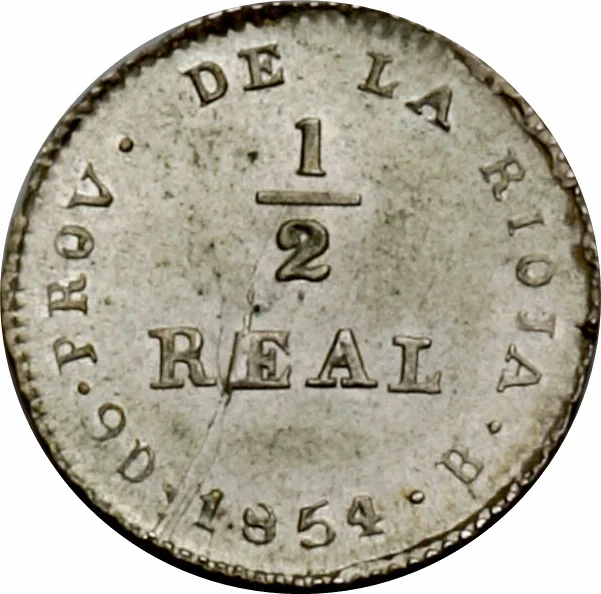
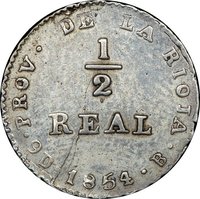
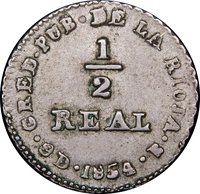
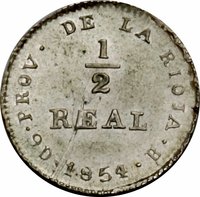
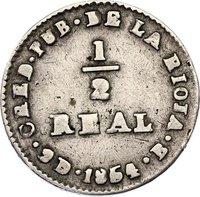
Reverse
Edge
Laureate
Mintings
| Year | Mint Mark | Mintage | Quality | Collection |
|---|---|---|---|---|
| 1854 | B | 24,000 |
Historical background
In 1854, the Argentine province of La Rioja was embroiled in the broader national civil war between the Federalist forces of the Confederation, led by Justo José de Urquiza, and the dissident Province of Buenos Aires. This conflict created severe economic strain and monetary chaos. The provincial government, under Federalist control and facing the immense costs of war, resorted to issuing its own paper currency to fund its militias and administrative functions. This local currency, lacking substantial backing and issued in a context of political instability, rapidly depreciated in value, leading to inflation and a loss of public confidence.
The monetary situation was further complicated by the pre-existing scarcity of hard currency (gold and silver) across the interior provinces. La Rioja's economy, traditionally based on livestock and wine, was not highly monetized, and trade often relied on barter. The introduction of unstable provincial paper money disrupted what little formal commerce existed. Furthermore, the province was subject to the monetary policies of the Confederation, which also issued its own paper pesos, creating a confusing and multi-layered currency environment where different notes competed and fluctuated wildly.
Ultimately, the currency crisis of 1854 in La Rioja was a direct symptom of political fragmentation and chronic fiscal shortage. The provincial issues were not instruments of economic development but desperate measures for wartime survival. This financial instability would only begin to resolve after the national unification following the Battle of Pavón in 1861, which allowed for the gradual imposition of a single, stronger national currency, phasing out the chaotic provincial emissions that had characterized the Guerras Civiles period.
The monetary situation was further complicated by the pre-existing scarcity of hard currency (gold and silver) across the interior provinces. La Rioja's economy, traditionally based on livestock and wine, was not highly monetized, and trade often relied on barter. The introduction of unstable provincial paper money disrupted what little formal commerce existed. Furthermore, the province was subject to the monetary policies of the Confederation, which also issued its own paper pesos, creating a confusing and multi-layered currency environment where different notes competed and fluctuated wildly.
Ultimately, the currency crisis of 1854 in La Rioja was a direct symptom of political fragmentation and chronic fiscal shortage. The provincial issues were not instruments of economic development but desperate measures for wartime survival. This financial instability would only begin to resolve after the national unification following the Battle of Pavón in 1861, which allowed for the gradual imposition of a single, stronger national currency, phasing out the chaotic provincial emissions that had characterized the Guerras Civiles period.
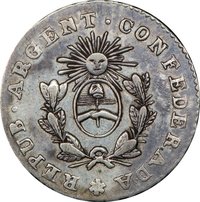
💎 Very Rare