

1 Gramo – Tierra del Fuego
Argentina
Context
Year: 1889
Country: Argentina 
Issuer: Tierra del Fuego
Period:
(1884—1943)
Currency:
(since 1889)
Demonetized: Yes
Material
References
KM: #Click to copy to clipboardTn5
Numista: #28924
Value
Bullion value: $144.52
Obverse
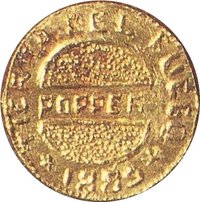
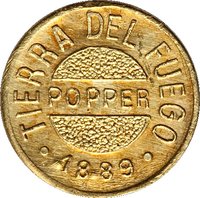
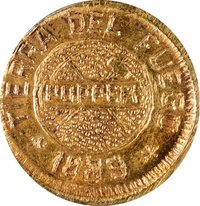
Description:
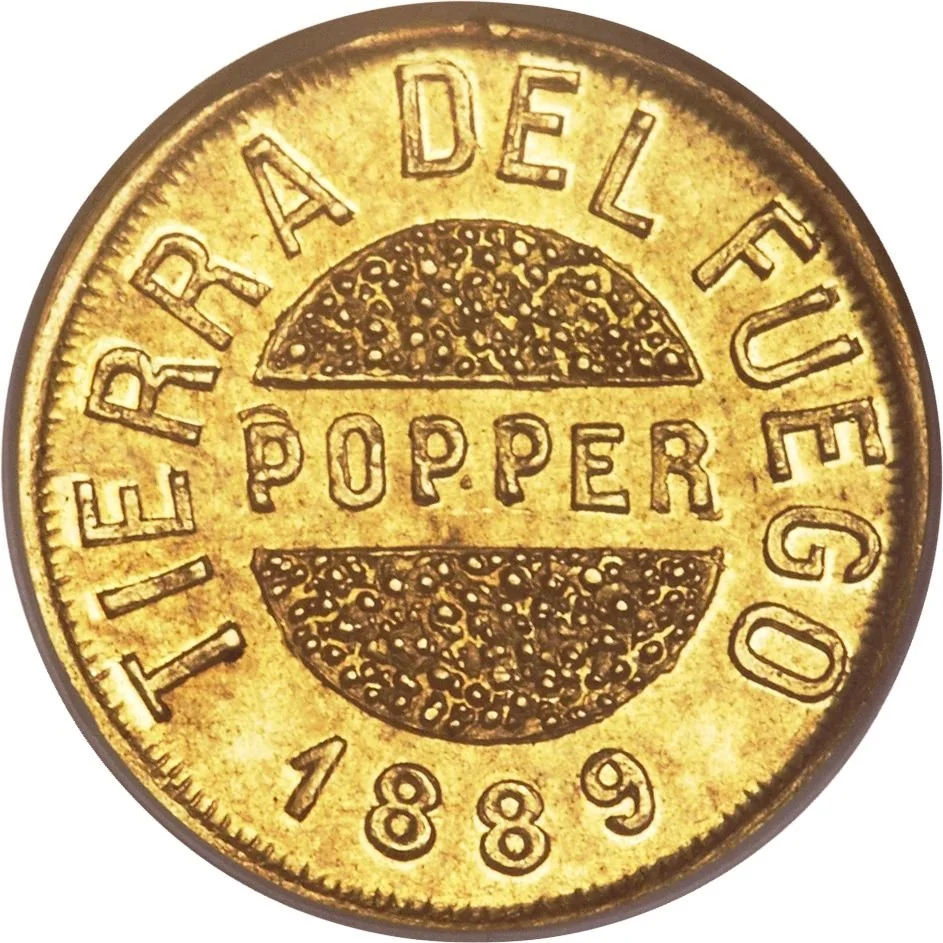
"POPPER" centered on dotted mineral soil.
Inscription:
TIERRA DEL FUEGO
POPPER
1889
POPPER
1889
Script: Latin
Reverse
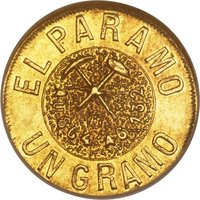
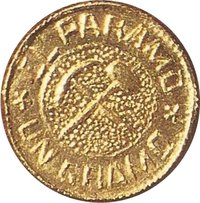
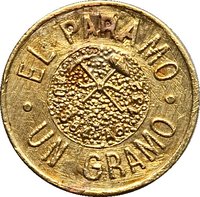
Description:
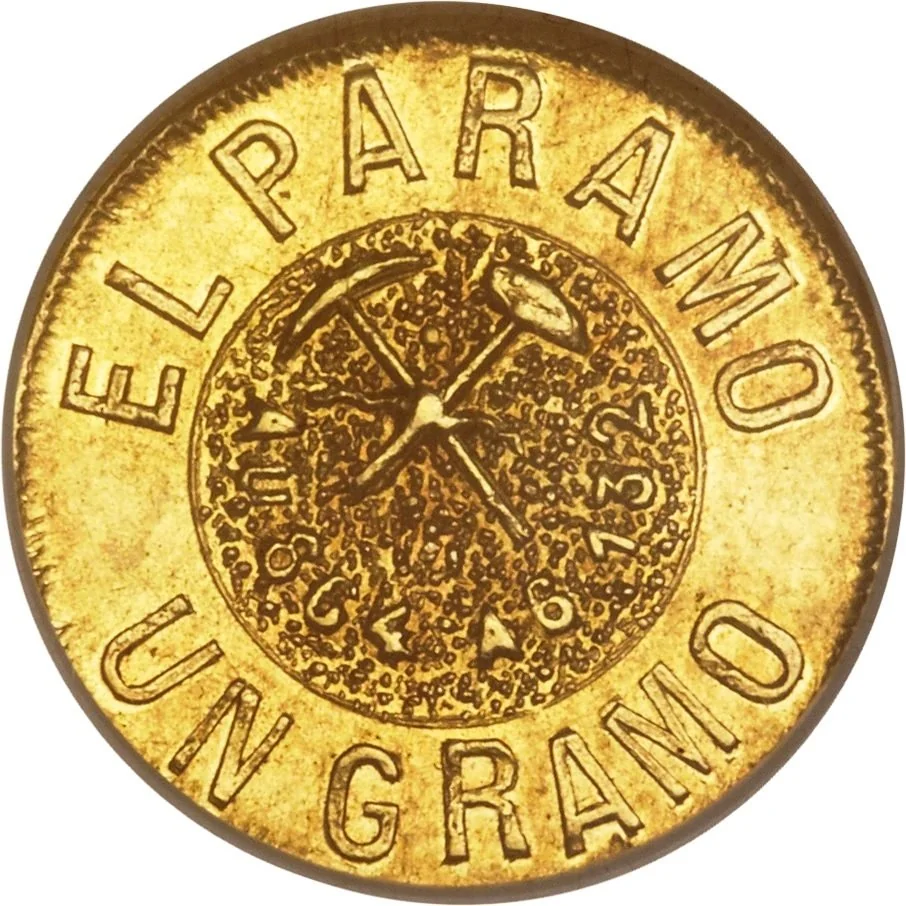
A cross of pick and hammer on a dotted mineral soil background.
Inscription:
EL PARAMO UN GRAMO
au 364 ag 132
au 364 ag 132
Script: Latin
Edge
Plain
Mints
| Name | Mark |
|---|---|
| Buenos Aires | — |
Mintings
| Year | Mint Mark | Mintage | Quality | Collection |
|---|---|---|---|---|
| 1889 | — | — |
Historical background
In 1889, the currency situation in Tierra del Fuego was a direct reflection of its unique status as a remote, sparsely populated, and economically nascent territory. The region was divided between Argentina and Chile, with the Argentine portion centered around the nascent penal colony of Ushuaia and the Chilean around the gold rush town of Porvenir. Neither national government had established a strong formal banking or monetary system on this distant frontier. Consequently, the local economy operated on a complex and improvised system of multiple currencies, barter, and commodity exchange.
The primary currencies in circulation were those of the two claimant nations: the Argentine peso and the Chilean peso. However, their physical supply was scarce. More commonly, transactions were conducted using gold dust and nuggets, particularly following the discovery of alluvial gold in the 1880s on the Chilean side, which triggered a small but significant rush. Merchants and sheep ranchers (the other growing industry) also often engaged in direct barter, trading goods, supplies, and labor. Furthermore, due to the presence of British missionaries and the influence of international trading vessels, British pounds and even other European coins occasionally found their way into transactions.
This monetary patchwork created a challenging environment for commerce. Exchange rates between the various mediums were fluid and often negotiated on the spot, leading to confusion and potential exploitation. The lack of a standardized, reliable currency hindered larger economic development and integration. Thus, in 1889, Tierra del Fuego’s currency was not a unified system but a pragmatic, chaotic adaptation to isolation, shaped more by the practical needs of miners, ranchers, and adventurers than by any central financial authority.
The primary currencies in circulation were those of the two claimant nations: the Argentine peso and the Chilean peso. However, their physical supply was scarce. More commonly, transactions were conducted using gold dust and nuggets, particularly following the discovery of alluvial gold in the 1880s on the Chilean side, which triggered a small but significant rush. Merchants and sheep ranchers (the other growing industry) also often engaged in direct barter, trading goods, supplies, and labor. Furthermore, due to the presence of British missionaries and the influence of international trading vessels, British pounds and even other European coins occasionally found their way into transactions.
This monetary patchwork created a challenging environment for commerce. Exchange rates between the various mediums were fluid and often negotiated on the spot, leading to confusion and potential exploitation. The lack of a standardized, reliable currency hindered larger economic development and integration. Thus, in 1889, Tierra del Fuego’s currency was not a unified system but a pragmatic, chaotic adaptation to isolation, shaped more by the practical needs of miners, ranchers, and adventurers than by any central financial authority.

💎 Extremely Rare