

6¼ Centimes – Haiti
Haiti
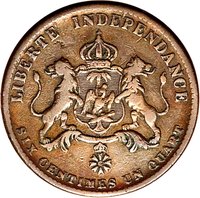
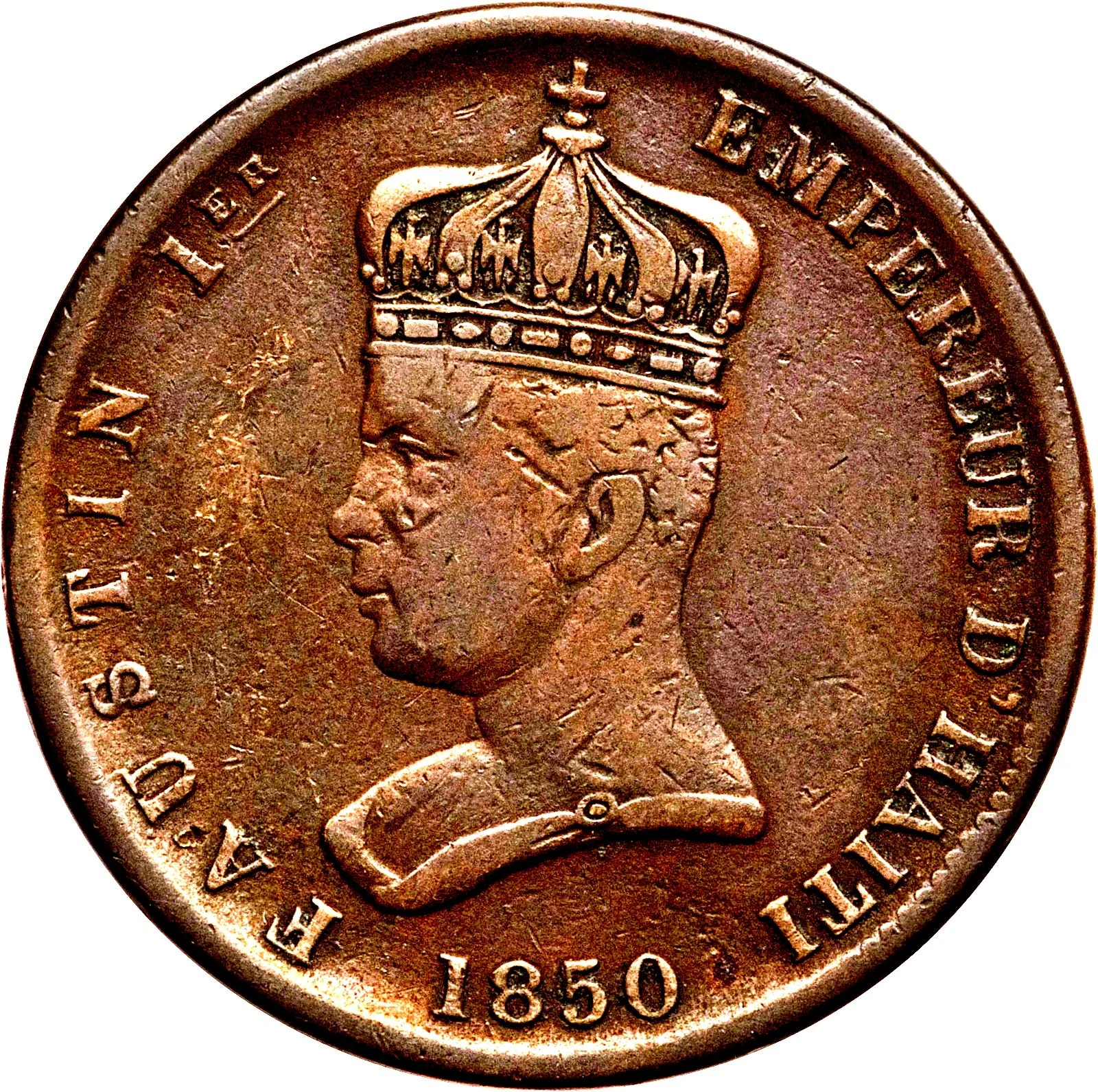
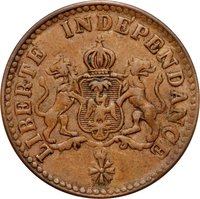
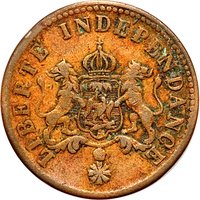
Obverse
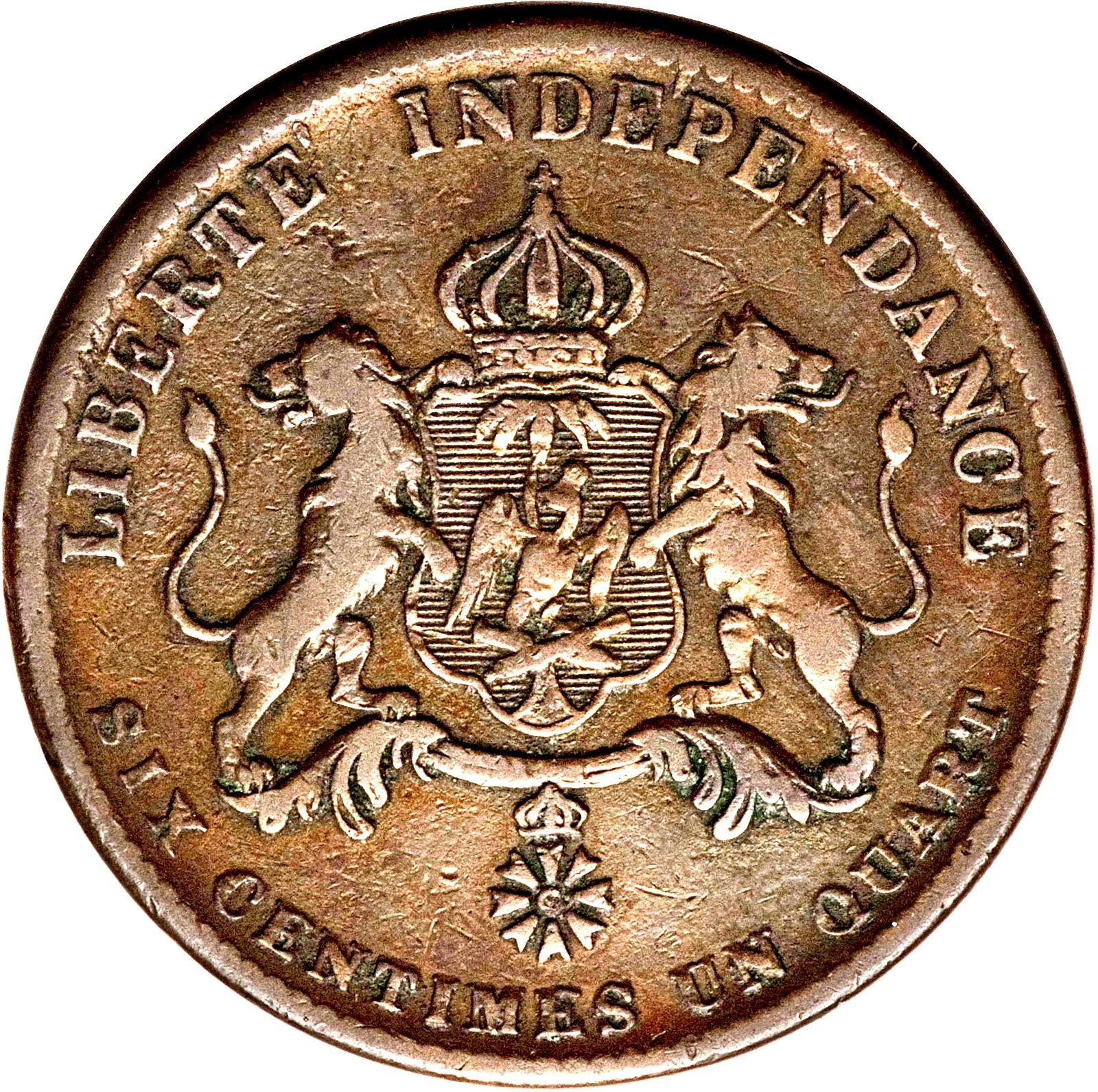
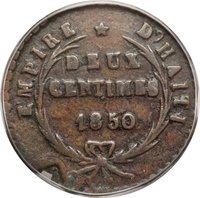
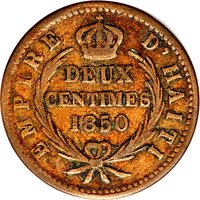
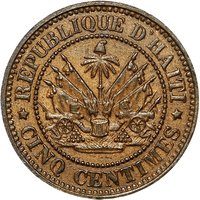
Reverse
Edge
Plain
Categories
| Symbol> Crown |
| Symbols> Coat of Arms |
Mintings
| Year | Mint Mark | Mintage | Quality | Collection |
|---|---|---|---|---|
| 1850 | — | — |
Historical background
In 1850, Haiti’s currency situation was a complex legacy of its revolutionary founding and international isolation. Following independence in 1804, the nation was burdened by a massive French indemnity, agreed to in 1825 to secure diplomatic recognition. This debt, equivalent to 150 million francs (later reduced to 90 million), drained the treasury and dictated fiscal policy for decades. The primary circulating currency was the Haitian gourde, which was pegged at a fixed rate to the French franc. However, the state's desperate need for hard currency to service the debt led to chronic budget shortfalls and repeated debasement of the coinage, eroding public trust in the monetary system.
Alongside the official gourde, a multitude of foreign coins circulated widely, reflecting Haiti’s integration into broader Atlantic trade networks despite its political ostracism. Spanish, American, British, and particularly French coins were commonly used in port cities and commercial transactions. This created a dual system where large-scale commerce and international debt payments relied on stable foreign specie, while the domestic gourde, often in the form of low-quality copper or debased silver coins, facilitated local markets and tax collection. The government struggled to control this heterogeneous monetary environment, and the scarcity of sound coinage frequently hampered economic activity.
The monetary instability of this period directly reflected the broader economic stagnation of post-revolutionary Haiti. The indemnity payments consumed resources that could have been invested in infrastructure, while the nation's plantation-based economy had collapsed, giving way to a subsistence-oriented smallholder system that generated little export revenue. Consequently, the state had a weak fiscal base from which to support a stable currency. The currency situation in 1850 was therefore a symptom of a deeper crisis: a fragile new nation caught between the oppressive financial demands of former colonial powers and the immense challenge of building a self-sufficient economy from the ground up.
Alongside the official gourde, a multitude of foreign coins circulated widely, reflecting Haiti’s integration into broader Atlantic trade networks despite its political ostracism. Spanish, American, British, and particularly French coins were commonly used in port cities and commercial transactions. This created a dual system where large-scale commerce and international debt payments relied on stable foreign specie, while the domestic gourde, often in the form of low-quality copper or debased silver coins, facilitated local markets and tax collection. The government struggled to control this heterogeneous monetary environment, and the scarcity of sound coinage frequently hampered economic activity.
The monetary instability of this period directly reflected the broader economic stagnation of post-revolutionary Haiti. The indemnity payments consumed resources that could have been invested in infrastructure, while the nation's plantation-based economy had collapsed, giving way to a subsistence-oriented smallholder system that generated little export revenue. Consequently, the state had a weak fiscal base from which to support a stable currency. The currency situation in 1850 was therefore a symptom of a deeper crisis: a fragile new nation caught between the oppressive financial demands of former colonial powers and the immense challenge of building a self-sufficient economy from the ground up.
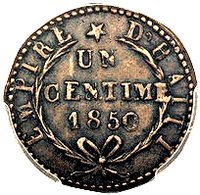
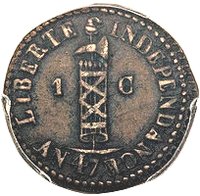
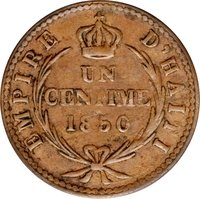
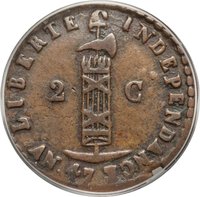
Series: 1850 Haiti circulation coins
🌟 Uncommon