

Obverse
Description:
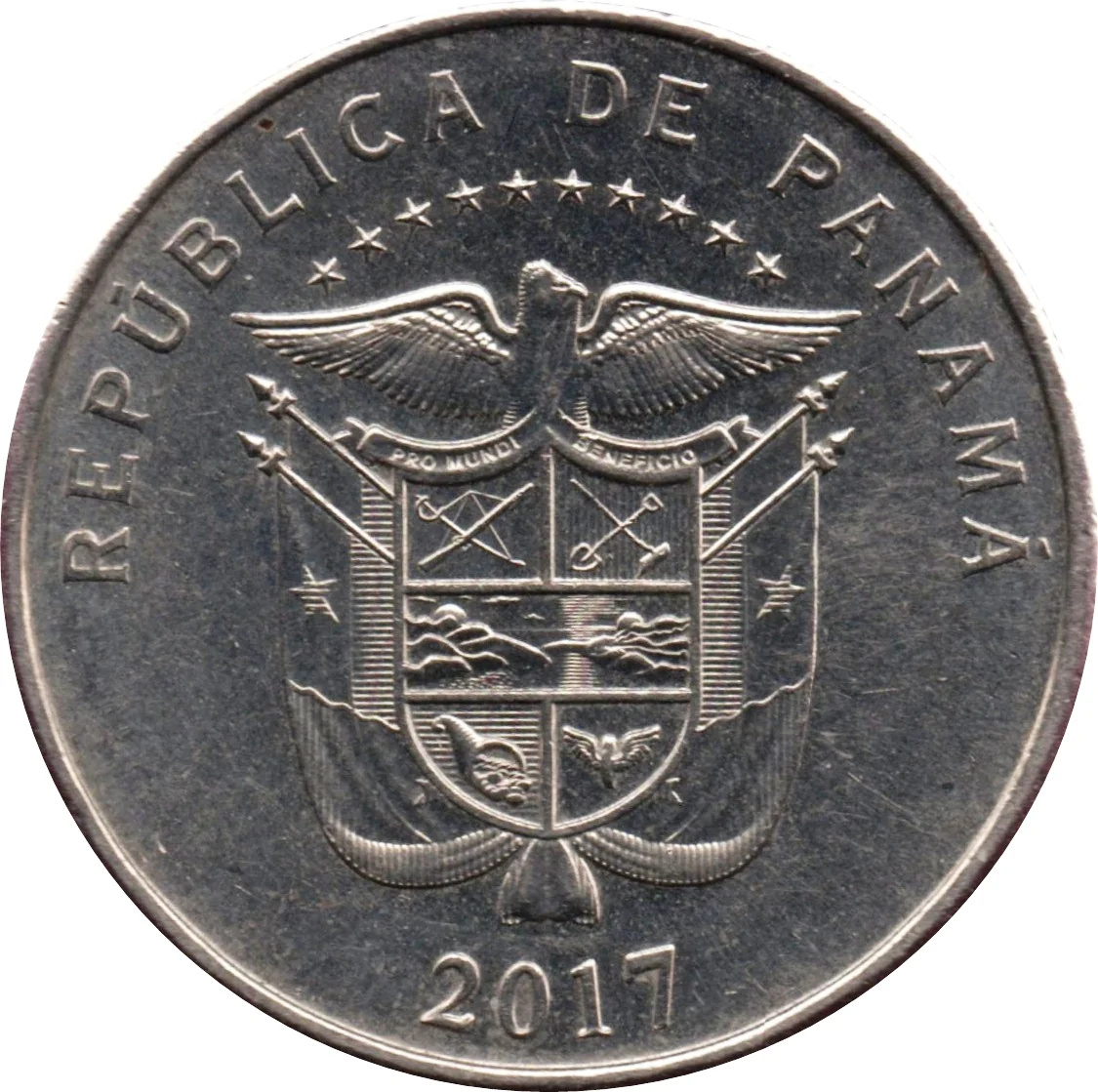
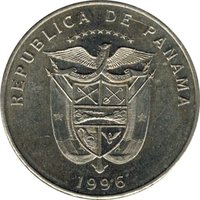
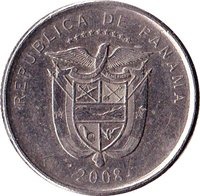
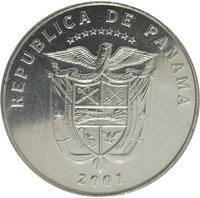
Panama's coat of arms features nine or ten stars (for the original and current number of provinces), the country name above, and the date below.
Inscription:
REPUBLICA DE PANAMA
*********
PRO MUNDI BENEFICIO
2017
*********
PRO MUNDI BENEFICIO
2017
Translation:
REPUBLIC OF PANAMA
FOR THE BENEFIT OF THE WORLD
2017
FOR THE BENEFIT OF THE WORLD
2017
Script: Latin
Reverse
Description:
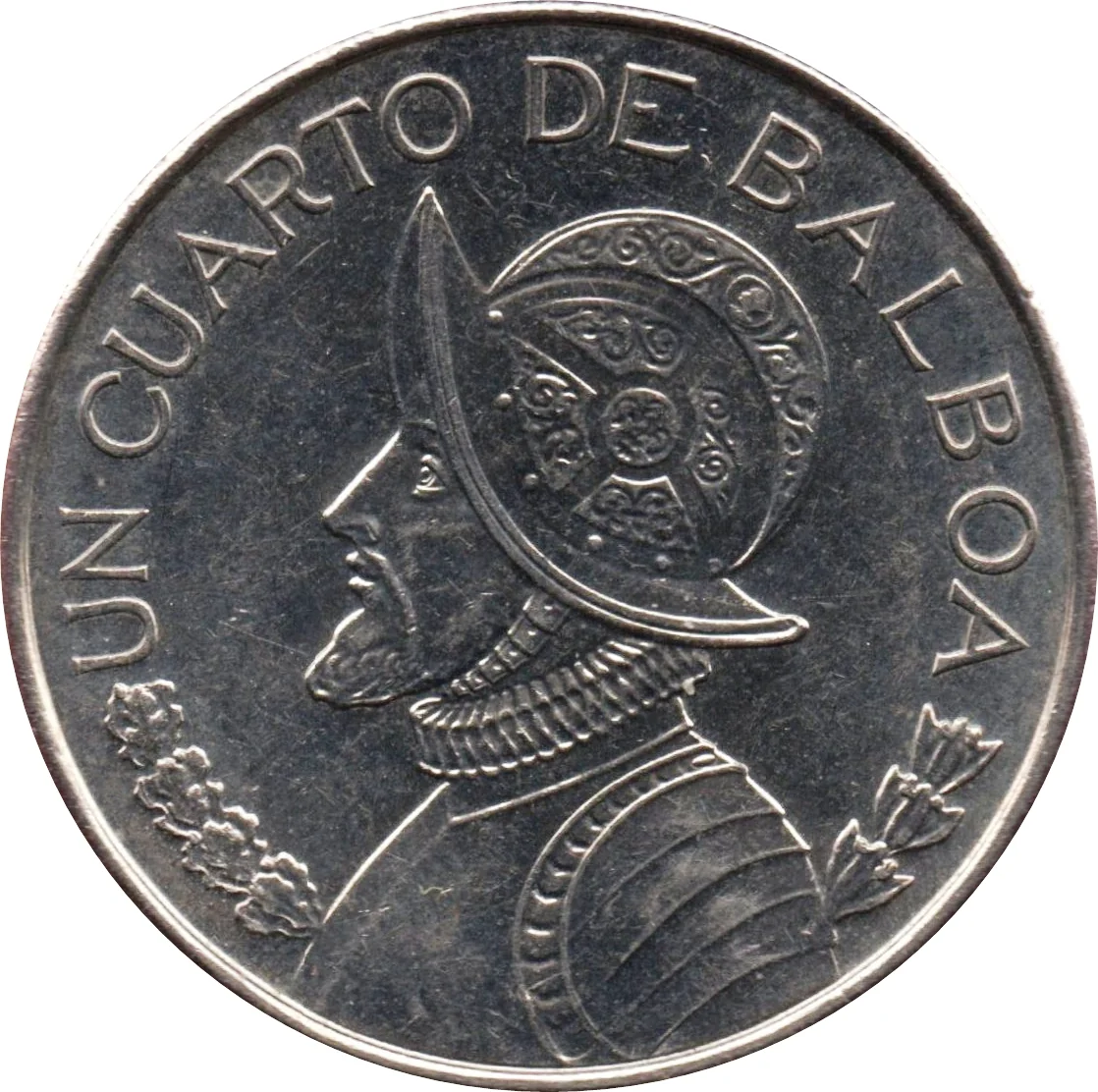
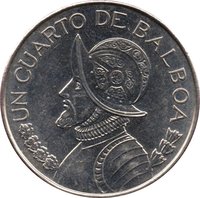
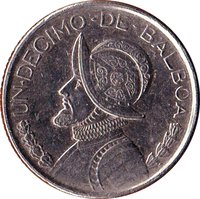
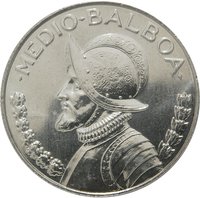
Armored bust of Spanish explorer Vasco Núñez de Balboa facing left, helmeted, within a wreath. Commemorates his 1513 crossing of the Isthmus to the Pacific and discovery of the Perlas Archipelago.
Inscription:
UN · CUARTO · DE · BALBOA
Translation:
A Quarter of Balboa
Script: Latin
Language: Spanish
Edge
Reeded
Categories
| Symbols> Coat of Arms |
| Person> Explorer |
Mints
| Name | Mark |
|---|---|
| Royal Canadian Mint of Winnipeg | — |
Mintings
| Year | Mint Mark | Mintage | Quality | Collection |
|---|---|---|---|---|
| 1996 | — | 7,200,000 | ||
| 2001 | — | 12,000,000 | ||
| 2006 | — | — | ||
| 2008 | — | — | ||
| 2017 | — | 1,500,000 | ||
| 2018 | — | 1,500,000 | ||
| 2019 | — | — |
Historical background
In 1996, Panama's currency situation was uniquely stable and dollarized, a direct legacy of its 1904 monetary agreement with the United States following independence. The country operated without a central bank and used the US dollar as its official legal tender. Alongside the dollar, Panama issued its own fractional currency, the Balboa, which was pegged at a strict 1:1 parity and existed only in coin form. This full dollarization provided significant macroeconomic benefits, including low inflation, monetary stability, and ease of trade, which were particularly evident in the mid-1990s as other Latin American nations grappled with currency volatility.
The system functioned through the National Banking Commission (predecessor to the Superintendency of Banks), which regulated a robust international banking center. While the government could not print paper money or conduct independent monetary policy, it enjoyed seigniorage revenue from coin issuance and benefited from the automatic credibility of the US Federal Reserve's policies. This framework fostered deep financial integration and made Panama's economy highly resilient to the speculative attacks that triggered crises in neighboring countries during that decade.
However, this arrangement also meant Panama had no control over its interest rates or the money supply, ceding these tools to US monetary authorities. In 1996, this was not a pressing concern, as the US economy was stable, and Panama was experiencing steady growth. The primary domestic economic debates of the period focused on fiscal discipline, banking sector regulation, and public infrastructure projects rather than currency issues, as the dollarized regime was widely accepted by the population and the political establishment as a cornerstone of the nation's economic identity.
The system functioned through the National Banking Commission (predecessor to the Superintendency of Banks), which regulated a robust international banking center. While the government could not print paper money or conduct independent monetary policy, it enjoyed seigniorage revenue from coin issuance and benefited from the automatic credibility of the US Federal Reserve's policies. This framework fostered deep financial integration and made Panama's economy highly resilient to the speculative attacks that triggered crises in neighboring countries during that decade.
However, this arrangement also meant Panama had no control over its interest rates or the money supply, ceding these tools to US monetary authorities. In 1996, this was not a pressing concern, as the US economy was stable, and Panama was experiencing steady growth. The primary domestic economic debates of the period focused on fiscal discipline, banking sector regulation, and public infrastructure projects rather than currency issues, as the dollarized regime was widely accepted by the population and the political establishment as a cornerstone of the nation's economic identity.
Series: 1996 Panama circulation coins
🌱 Very Common