

10 Cash – Shantung Province
China
Context
Years: 1904–1905
Country: China 
Issuer: Shantung Province
Ruler: Guangxu
Currency:
(1904—1949)
Demonetized: Yes
Material
References
Y: #Click to copy to clipboard221.3
Numista: #287968
Obverse
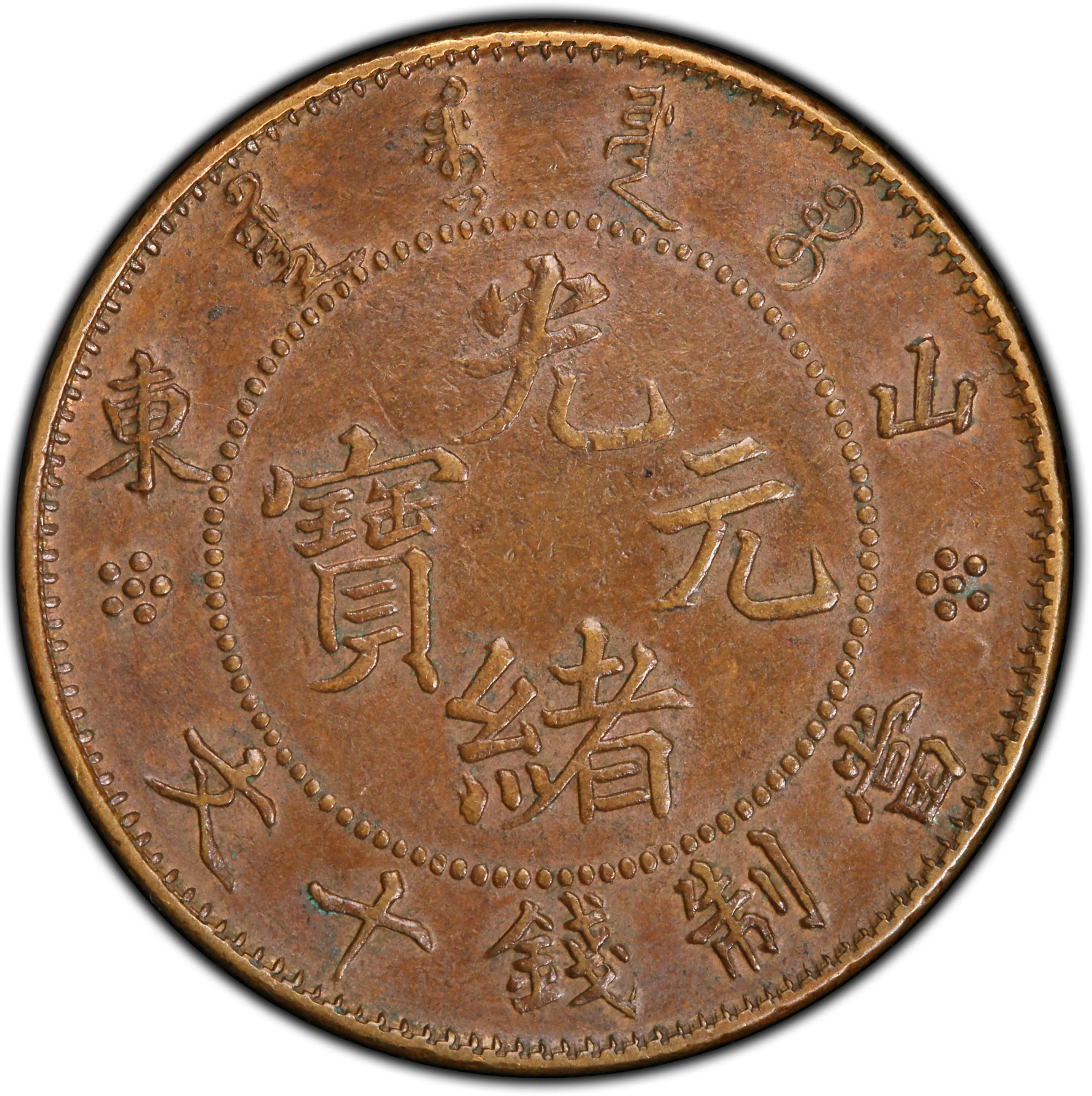
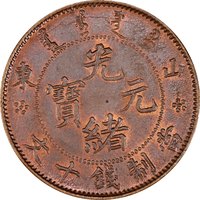
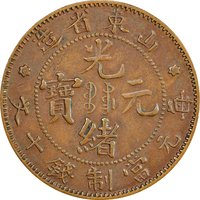
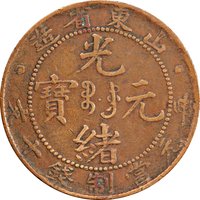
Description:
Four ideograms read vertically, right to left, encircled by more characters.
Inscription:
造省東山
光
寶元
緒
文十錢制當元每
光
寶元
緒
文十錢制當元每
Translation:
Made in the Eastern Provinces.
Guangxu
Treasure.
Yuan
Wen.
Ten-cash coin, equivalent to one yuan each.
Guangxu
Treasure.
Yuan
Wen.
Ten-cash coin, equivalent to one yuan each.
Scripts: Chinese, Mongolian / Manchu
Language: Chinese
Reverse
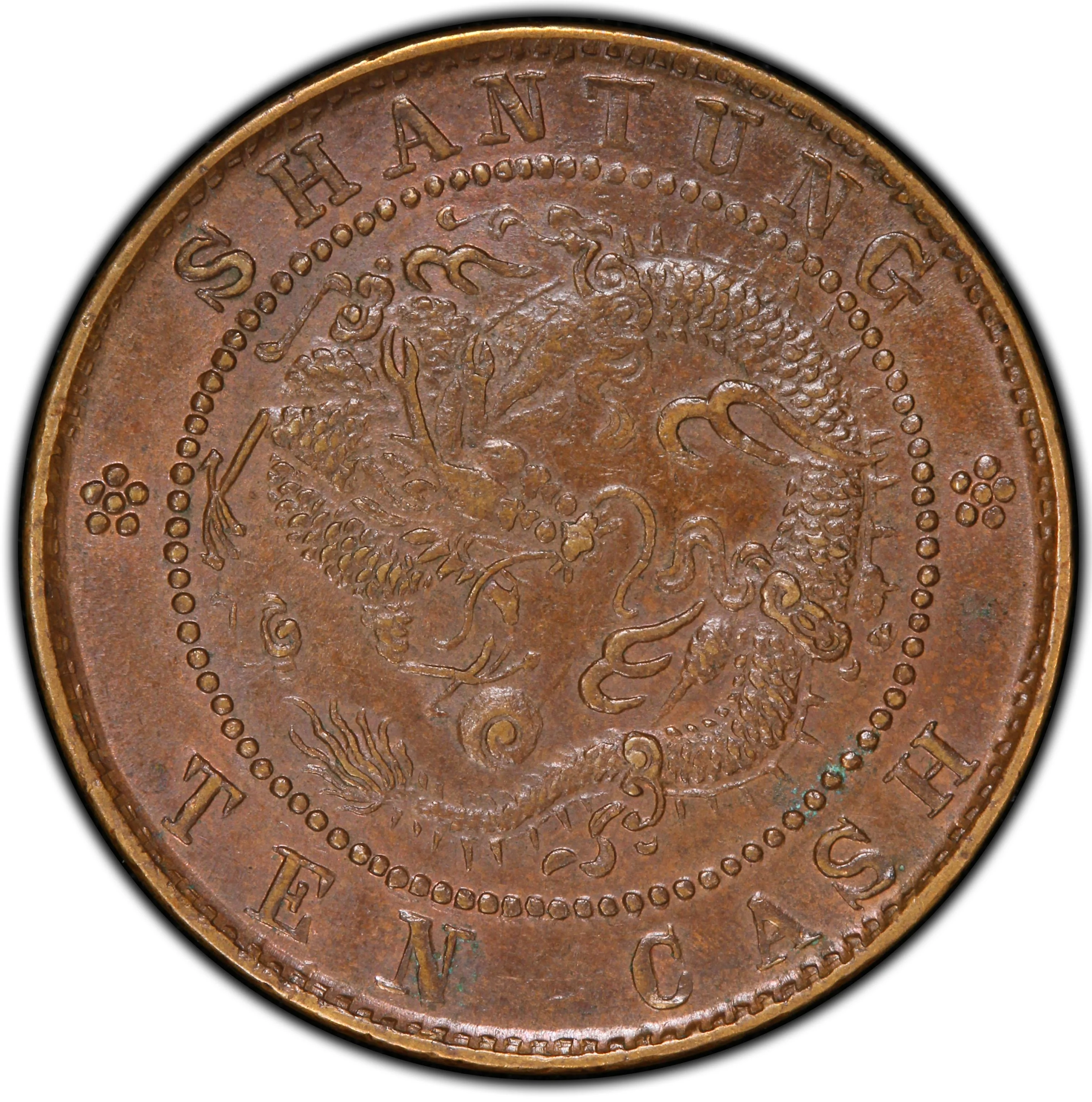
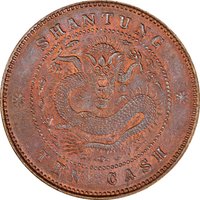
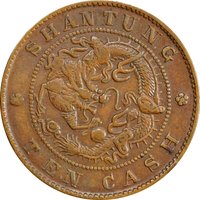
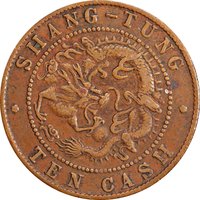
Description:
Dragon encircling a pearl, surrounded by English text.
Inscription:
SHANTUNG
TEN CASH
TEN CASH
Script: Latin
Edge
Plain
Categories
| Mythology> Fantastic animal |
Mintings
| Year | Mint Mark | Mintage | Quality | Collection |
|---|---|---|---|---|
| — | — | — |
Historical background
In 1904, the monetary landscape of Shantung (Shandong) Province was a complex and chaotic reflection of China's late Qing Dynasty decline. The province lacked a unified currency system, resulting in a confusing circulation of multiple forms of money. The primary mediums included silver sycee (irregular ingots weighed in taels), various copper cash coins (both genuine and debased), and a growing influx of foreign silver dollars, particularly the Mexican "Eagle" dollar, which was trusted for its consistent weight and purity. This multiplicity required constant exchange and valuation, complicating all commercial transactions.
The situation was exacerbated by severe copper cash inflation. Provincial mints, along with countless private and counterfeit operations, flooded the market with low-quality, lightweight copper coins to raise revenue. This led to a dramatic depreciation of copper cash against silver, severely harming peasants and laborers who were paid in copper but often paid taxes calculated in silver. Furthermore, the Boxer Indemnity imposed after 1901 pressured provincial finances, indirectly encouraging further currency debasement. The lack of a central banking authority meant exchange rates between silver, copper, and even paper notes (issued by local banks and pawnshops) fluctuated wildly between cities and markets.
This monetary disorder had direct consequences on Shantung's society and economy. It created fertile ground for exploitation by money changers and merchants, increased transaction costs for farmers and traders, and contributed to widespread social unrest and economic hardship. The chaos also highlighted the weakening sovereignty of the Qing state, as foreign coins and economic influence, particularly from German-occupied Jiaozhou Bay and Japanese commercial interests, competed with an failing imperial monetary system. This unstable environment set the stage for the eventual currency reforms attempted in the final years of the dynasty.
The situation was exacerbated by severe copper cash inflation. Provincial mints, along with countless private and counterfeit operations, flooded the market with low-quality, lightweight copper coins to raise revenue. This led to a dramatic depreciation of copper cash against silver, severely harming peasants and laborers who were paid in copper but often paid taxes calculated in silver. Furthermore, the Boxer Indemnity imposed after 1901 pressured provincial finances, indirectly encouraging further currency debasement. The lack of a central banking authority meant exchange rates between silver, copper, and even paper notes (issued by local banks and pawnshops) fluctuated wildly between cities and markets.
This monetary disorder had direct consequences on Shantung's society and economy. It created fertile ground for exploitation by money changers and merchants, increased transaction costs for farmers and traders, and contributed to widespread social unrest and economic hardship. The chaos also highlighted the weakening sovereignty of the Qing state, as foreign coins and economic influence, particularly from German-occupied Jiaozhou Bay and Japanese commercial interests, competed with an failing imperial monetary system. This unstable environment set the stage for the eventual currency reforms attempted in the final years of the dynasty.
✨ Legendary