

25 Mon – Mito Domain
Japan
Context
Material
Diameter: 29.8 mm
Weight: 6.4 g
Shape: Round with a square hole
Composition: Copper
Magnetic: No
Technique: Cast
References
Numista: #287877
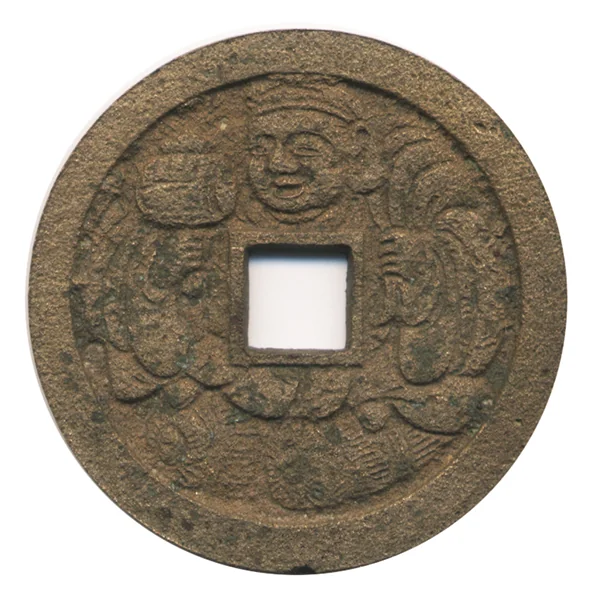
Obverse
Description:
Daikoku with hammer.
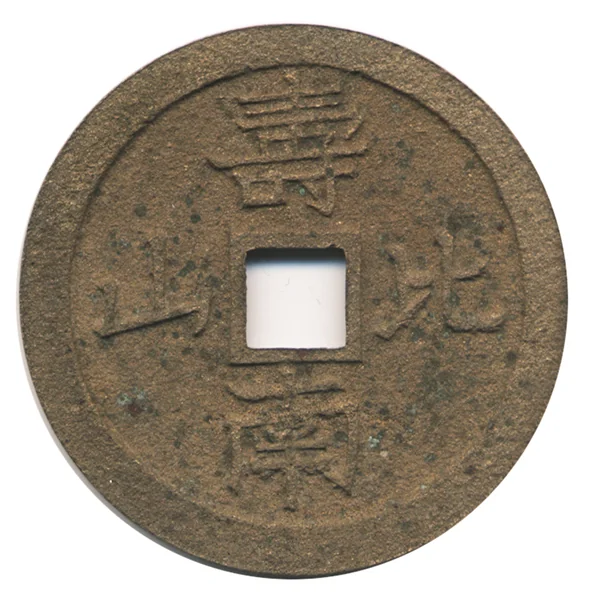
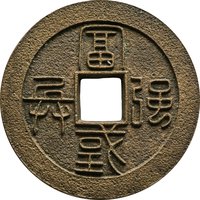
Reverse
Description:
Inscription clockwise around hole.
Inscription:
壽
山 比
南
山 比
南
Translation:
Longevity like the Southern Mountains.
Scripts: Chinese (traditional, regular script)
Language: Chinese
Edge
Categories
| Mythology |
Mintings
| Year | Mint Mark | Mintage | Quality | Collection |
|---|---|---|---|---|
| 1864 | — | — |
Historical background
In 1864, the Mito Domain, a prominent and politically influential han in eastern Japan, faced severe and compounding currency crises that reflected both national instability and its own internal turmoil. The domain's finances were critically strained by the immense costs incurred from its central role in the Sonnō jōi ("Revere the Emperor, Expel the Barbarians") movement, including the construction of coastal defenses and, most devastatingly, the bloody civil war (the Tengu Rebellion) that had just been fought within its own borders between pro-Imperial and pro-Shogunate factions. To meet these extraordinary expenses, the domain government resorted to the widespread issuance of hansatsu (domainal paper currency), which flooded the local economy and rapidly depreciated in value.
This depreciation was exacerbated by the complex and chaotic national monetary system. The Tokugawa shogunate itself was debasing its gold and silver coinage, leading to widespread inflation. Mito's hansatsu, not backed by sufficient specie reserves, became increasingly distrusted by merchants and peasants alike, especially as it often traded at a steep discount against official shogunate coin. The result was a vicious cycle of hyper-localized inflation, market disruption, and deepening poverty among the samurai and commoner classes, as real wages and stipends collapsed.
Consequently, the currency situation in 1864 was not merely an economic issue but a profound source of social unrest and a symbol of failed governance. The financial desperation directly fueled the lingering resentment and lawlessness that followed the civil war, undermining both domain authority and shogunate control. This economic distress, intertwined with intense political strife, left Mito weakened and unstable at a pivotal moment just before the Boshin War, demonstrating how fiscal collapse could accelerate the decline of a once-powerful feudal domain.
This depreciation was exacerbated by the complex and chaotic national monetary system. The Tokugawa shogunate itself was debasing its gold and silver coinage, leading to widespread inflation. Mito's hansatsu, not backed by sufficient specie reserves, became increasingly distrusted by merchants and peasants alike, especially as it often traded at a steep discount against official shogunate coin. The result was a vicious cycle of hyper-localized inflation, market disruption, and deepening poverty among the samurai and commoner classes, as real wages and stipends collapsed.
Consequently, the currency situation in 1864 was not merely an economic issue but a profound source of social unrest and a symbol of failed governance. The financial desperation directly fueled the lingering resentment and lawlessness that followed the civil war, undermining both domain authority and shogunate control. This economic distress, intertwined with intense political strife, left Mito weakened and unstable at a pivotal moment just before the Boshin War, demonstrating how fiscal collapse could accelerate the decline of a once-powerful feudal domain.
✨ Legendary