

Obverse
Description:
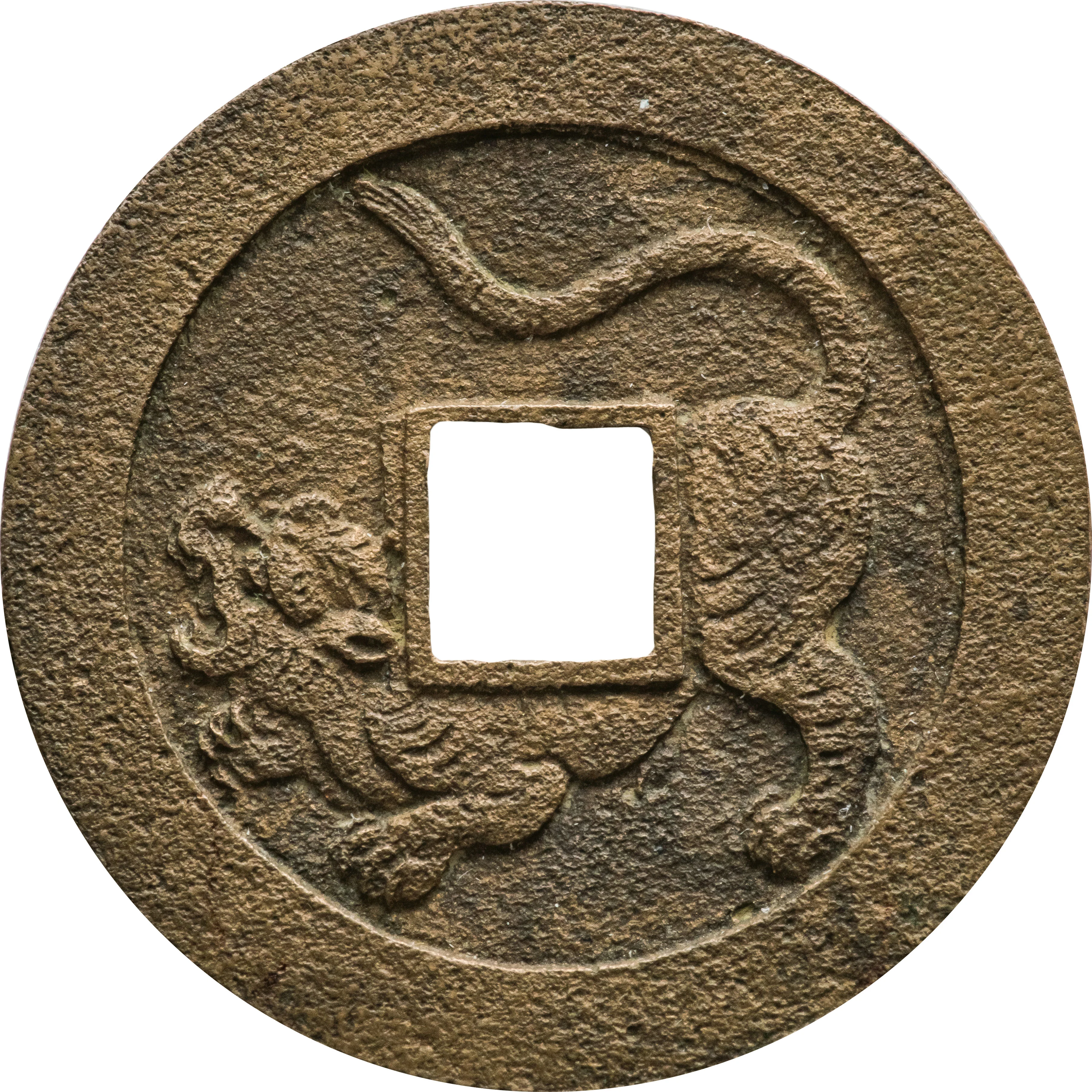
Tiger: a powerful striped predator.
Reverse
Description:
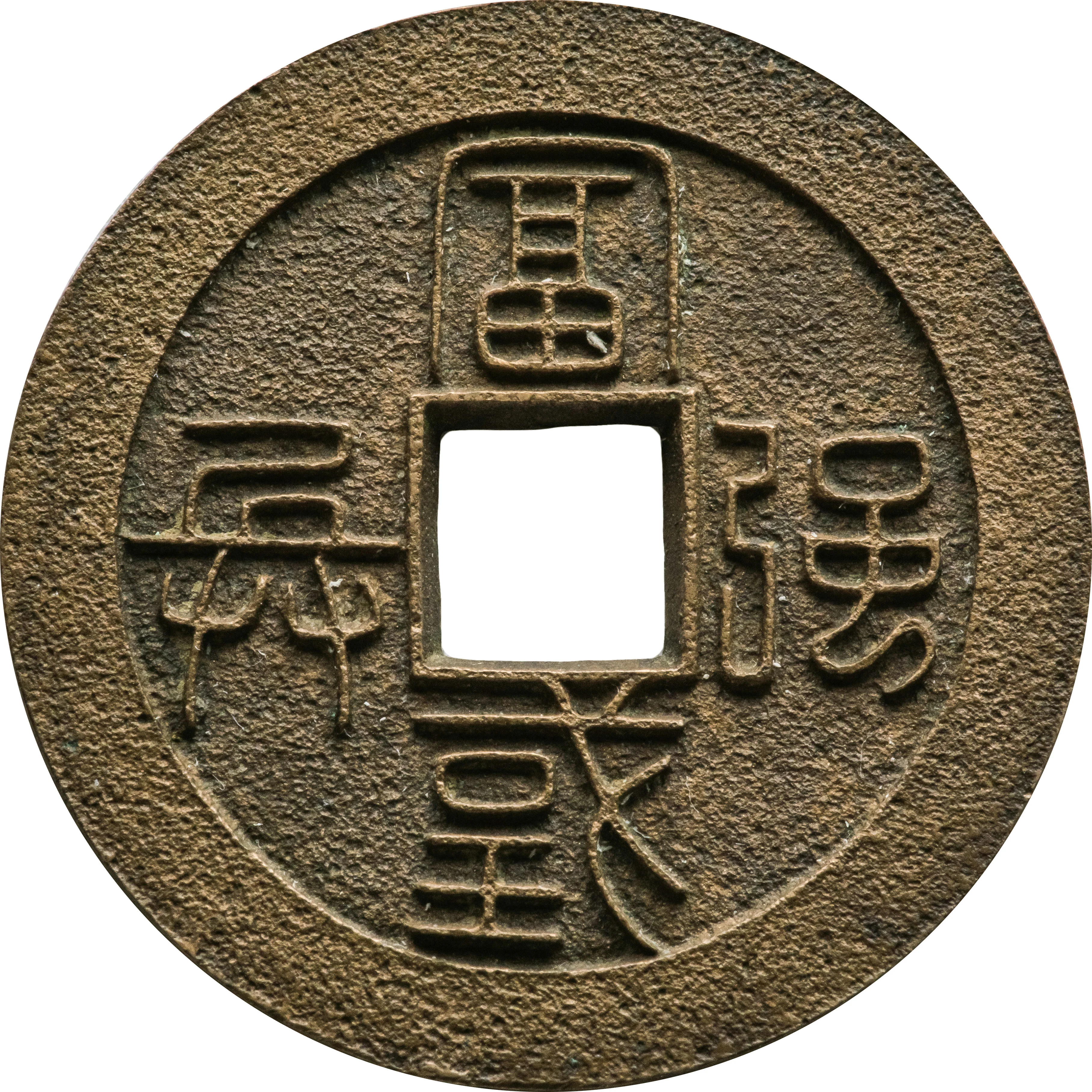
冨𢧌强兵 (modern: 富国強兵) inscribed top, bottom, right, left.
Inscription:
冨
兵 强
𢧌
兵 强
𢧌
Translation:
Rich and
Soldiers Strong
Able in Arms
Soldiers Strong
Able in Arms
Scripts: Chinese (traditional, seal script)
Language: Classical Chinese
Edge
Mintings
| Year | Mint Mark | Mintage | Quality | Collection |
|---|---|---|---|---|
| 1867 | — | — |
Historical background
In 1867, the Mito Domain, a prominent and politically influential han in late Tokugawa Japan, faced a severe and complex currency crisis rooted in both national policy and local desperation. The domain's finances had been crippled by decades of extravagant sankin-kōtai obligations, the immense cost of rebuilding from the devastating Tenpō Famine, and its heavy military expenditures following its radical anti-foreign sonnō jōi stance. Like many domains, Mito had long resorted to issuing its own paper scrip, known as hansatsu, to cover shortfalls. However, by the 1860s, the over-issuance of this scrip had led to drastic depreciation, causing rampant inflation and eroding the purchasing power of both the samurai and merchant classes.
The situation was acutely exacerbated by the monetary chaos at the shogunal level. The Tokugawa bakufu, itself near bankruptcy, had debased the gold and silver coinage and issued large quantities of poorly backed paper currency to pay for its own modernization and military campaigns against domestic rivals. This created a confusing multi-tiered system where domain notes, shogunate notes, and various metallic coins all circulated with wildly fluctuating values. For Mito, a domain already in economic distress, the instability of the national monetary system made recovery impossible and further undermined local trade and stipend payments.
Consequently, by the eve of the Boshin War (1868), Mito's currency situation reflected its broader political and social collapse. The domain's samurai, paid in devalued scrip, were plunged into poverty, fueling resentment and unrest. The local economy was strangled, weakening the domain's capacity to mobilize resources precisely when the imperial loyalist faction within Mito needed them most to support the coming restoration. Thus, the monetary disorder was not merely a financial issue but a critical factor that crippled the domain's stability and operational strength at a pivotal historical moment.
The situation was acutely exacerbated by the monetary chaos at the shogunal level. The Tokugawa bakufu, itself near bankruptcy, had debased the gold and silver coinage and issued large quantities of poorly backed paper currency to pay for its own modernization and military campaigns against domestic rivals. This created a confusing multi-tiered system where domain notes, shogunate notes, and various metallic coins all circulated with wildly fluctuating values. For Mito, a domain already in economic distress, the instability of the national monetary system made recovery impossible and further undermined local trade and stipend payments.
Consequently, by the eve of the Boshin War (1868), Mito's currency situation reflected its broader political and social collapse. The domain's samurai, paid in devalued scrip, were plunged into poverty, fueling resentment and unrest. The local economy was strangled, weakening the domain's capacity to mobilize resources precisely when the imperial loyalist faction within Mito needed them most to support the coming restoration. Thus, the monetary disorder was not merely a financial issue but a critical factor that crippled the domain's stability and operational strength at a pivotal historical moment.
✨ Legendary