

¼ penny – South Africa
Add to wishlist
South Africa
Context
Years: 1937–1947
Issuer: South Africa
Ruler: George VI
Currency:
(1825—1961)
Demonetization: 31 March 1961
Total mintage: 31,997,832
Material
References
KM: #
Numista: #2877
Obverse
Description:
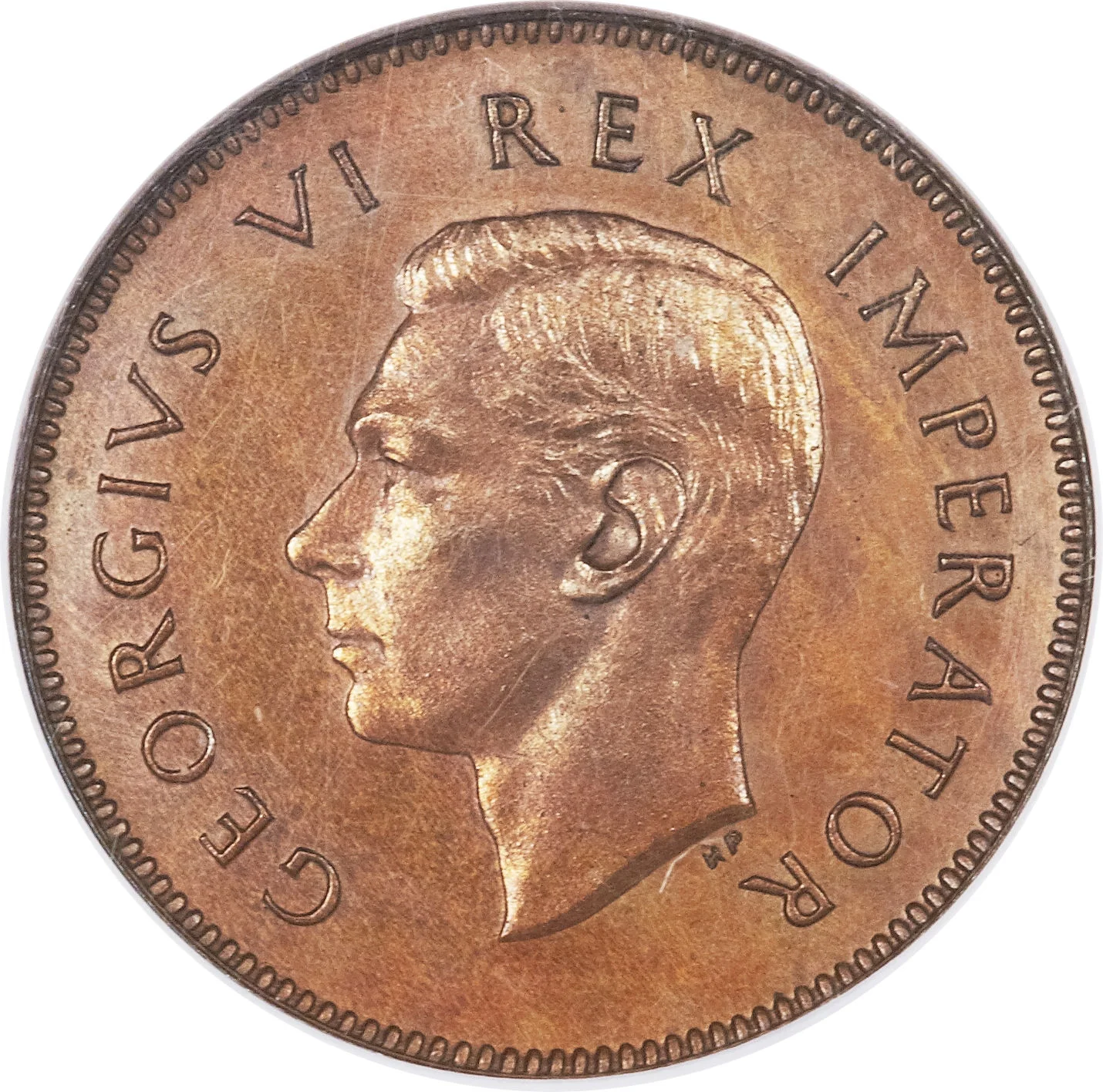
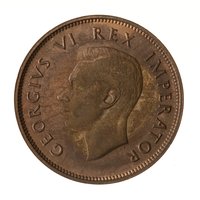
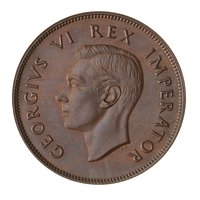
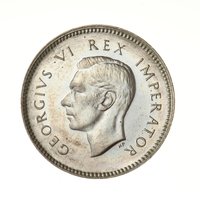
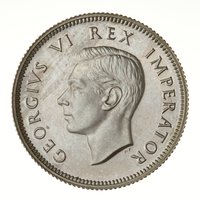
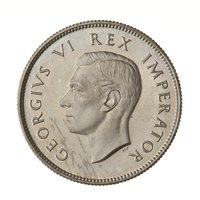
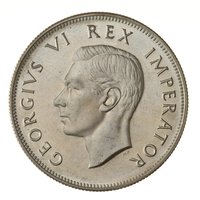
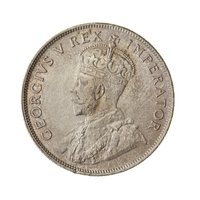
King George VI, uncrowned, left-facing portrait, legend encircling.
Inscription:
GEORGIVS VI REX IMPERATOR
HP
HP
Translation:
George VI King Emperor
Script: Latin
Language: Latin
Engraver: Thomas Humphrey Paget
Reverse
Description:
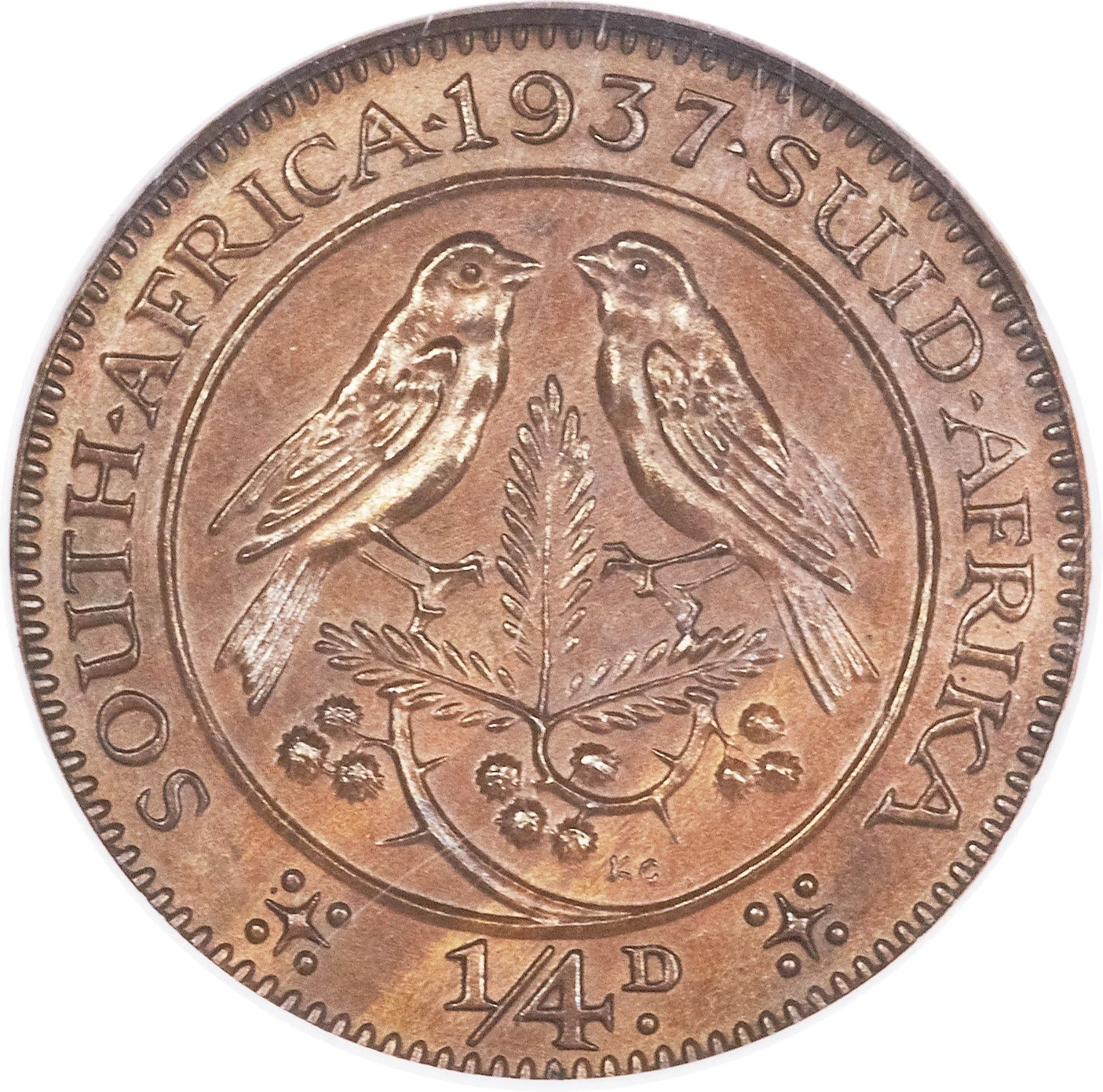
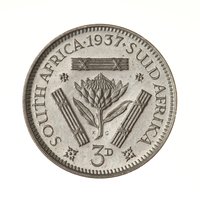
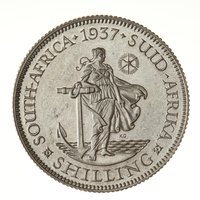
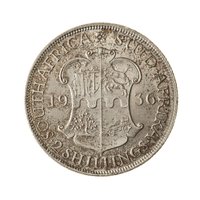
Cape Sparrows on an acacia branch in a circle, with date above, denomination below, and a dual-language legend.
Inscription:
SOUTH·AFRICA·1937·SUID·AFRICA
KG
* 1/4D. *
KG
* 1/4D. *
Script: Latin
Engraver: George Kruger Gray
Edge
Plain
Mints
| Name | Mark |
|---|---|
| Pretoria | — |
Mintings
| Year | Mint Mark | Mintage | Quality | Collection |
|---|---|---|---|---|
| 1937 | — | 38,254 | ||
| 1937 | — | 116 | Proof | |
| 1938 | — | 51,296 | ||
| 1938 | — | 44 | Proof | |
| 1939 | — | 101,584 | ||
| 1939 | — | 30 | Proof | |
| 1941 | — | 91,160 | ||
| 1942 | — | 3,756,124 | ||
| 1943 | — | 9,918,036 | ||
| 1943 | — | 104 | Proof | |
| 1944 | — | 4,467,987 | ||
| 1944 | — | 150 | Proof | |
| 1945 | — | 5,297,318 | ||
| 1945 | — | 150 | Proof | |
| 1946 | — | 150 | Proof | |
| 1946 | — | 4,378,103 | ||
| 1947 | — | 3,894,626 | ||
| 1947 | — | 2,600 | Proof |
Historical background
In 1937, South Africa's currency situation was defined by its position within the Sterling Area and the operation of the gold standard. The country had formally left the gold standard in 1932, following the United Kingdom, but remained tightly bound to the British pound sterling through the "Sterling Exchange Standard." The South African pound (ZAR) was fixed at parity with sterling, meaning one South African pound equaled one British pound. The Union’s currency reserves were held predominantly in sterling in London, and the issuance of local banknotes by the commercial banks (under a quota system) was backed by these sterling balances, ensuring convertibility.
This monetary arrangement was deeply intertwined with South Africa's dominant economic reality: gold mining. As the world's largest gold producer, the country's foreign exchange earnings and fiscal health were overwhelmingly dependent on the gold price, which was fixed by international agreement at £7.25 per fine ounce. The system provided stability for trade and capital flows with Britain, South Africa's primary trading partner, but it also meant that domestic monetary policy was largely subordinated to British interests and the management of the sterling bloc. The economy was highly vulnerable to fluctuations in gold production and shifts in the UK's economic policies.
However, the system faced significant internal strain. The fixed gold price, while profitable for mine owners, contributed to social tensions as it incentivized cost-cutting measures, including low wages for Black migrant labourers. Furthermore, the outflow of capital to London and the structure of the sterling reserves were subjects of political debate, with some Afrikaner nationalists and industrialists advocating for greater monetary independence and the use of gold reserves to foster local industrial development. Thus, in 1937, the currency regime was stable on the surface but contained the seeds of future contention over economic sovereignty and the distribution of the nation's mineral wealth.
This monetary arrangement was deeply intertwined with South Africa's dominant economic reality: gold mining. As the world's largest gold producer, the country's foreign exchange earnings and fiscal health were overwhelmingly dependent on the gold price, which was fixed by international agreement at £7.25 per fine ounce. The system provided stability for trade and capital flows with Britain, South Africa's primary trading partner, but it also meant that domestic monetary policy was largely subordinated to British interests and the management of the sterling bloc. The economy was highly vulnerable to fluctuations in gold production and shifts in the UK's economic policies.
However, the system faced significant internal strain. The fixed gold price, while profitable for mine owners, contributed to social tensions as it incentivized cost-cutting measures, including low wages for Black migrant labourers. Furthermore, the outflow of capital to London and the structure of the sterling reserves were subjects of political debate, with some Afrikaner nationalists and industrialists advocating for greater monetary independence and the use of gold reserves to foster local industrial development. Thus, in 1937, the currency regime was stable on the surface but contained the seeds of future contention over economic sovereignty and the distribution of the nation's mineral wealth.
🌱 Very Common