

100 forint – Hungary
Add to wishlist
Hungary
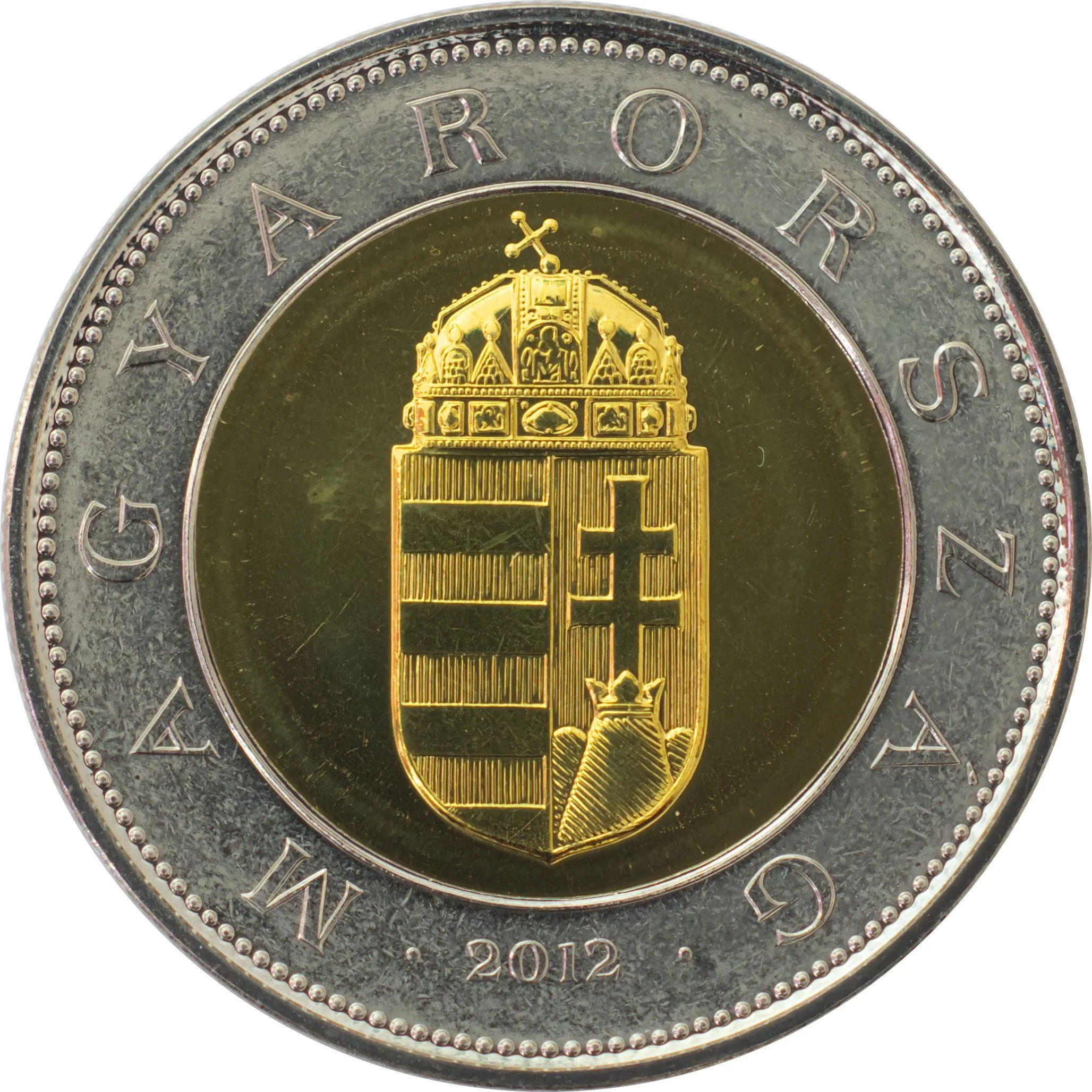
Obverse
Description:
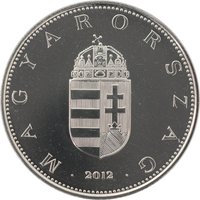
Hungary's coat of arms, dated below.
Inscription:
MAGYARORSZÁG
Translation:
HUNGARY
Script: Latin
Language: Hungarian
Engraver: István Kósa
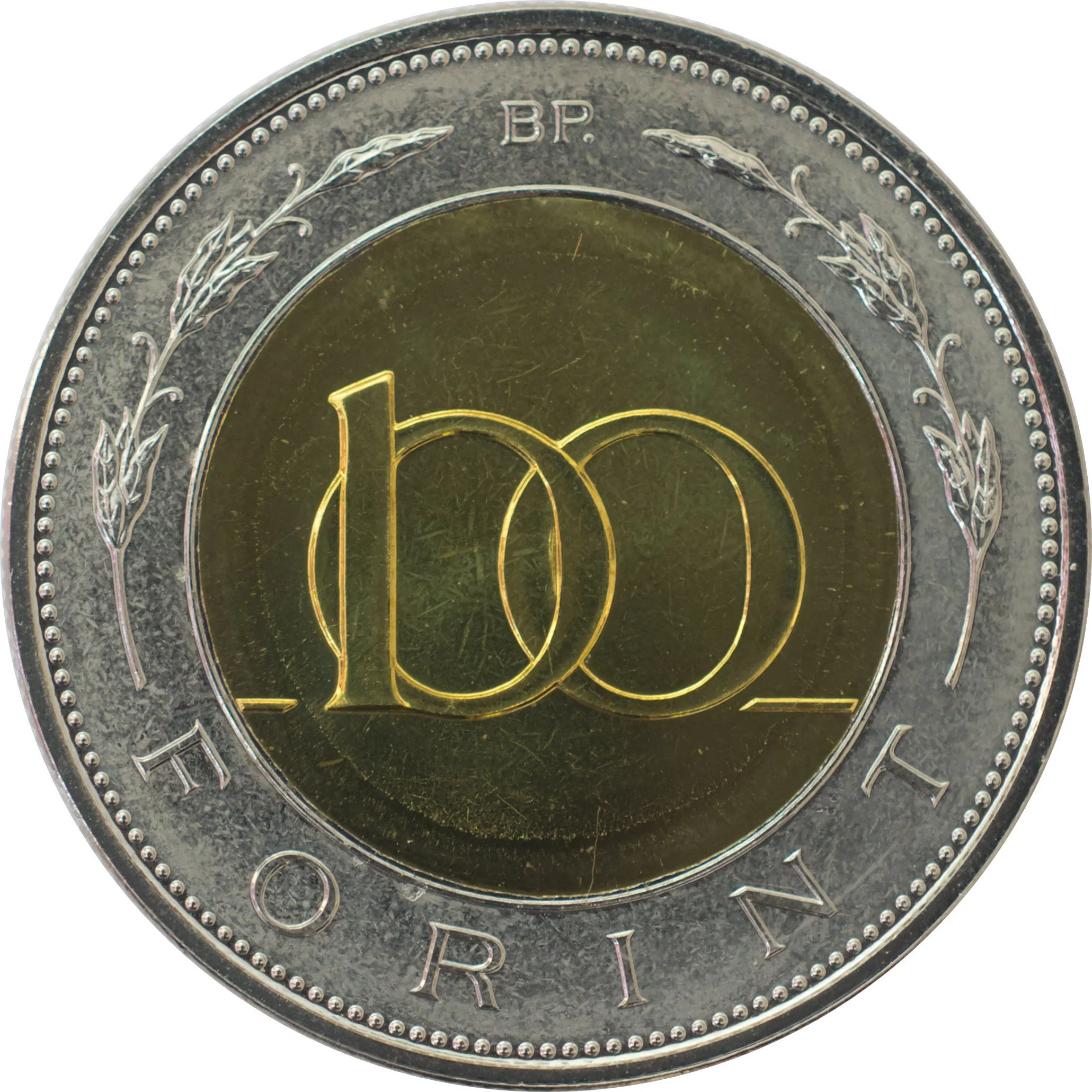
Reverse
Description:
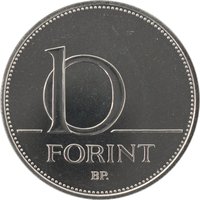
Central value, mintmark above.
Inscription:
BP.
100
FORINT
100
FORINT
Script: Latin
Engraver: István Kósa
Edge
Reeded
Mints
| Name | Mark |
|---|---|
| Hungarian mint | BP. |
Mintings
Historical background
In 2012, Hungary faced a severe currency crisis centered on the Hungarian forint (HUF), which was driven by a combination of domestic policy uncertainty and external European pressures. The country was still grappling with the aftermath of the 2008 global financial crisis, having required a €20 billion IMF/EU bailout in 2008. The government, led by Prime Minister Viktor Orbán's Fidesz party, had pursued unorthodox economic policies since 2010, including significant sectoral taxes on banks and multinationals, and the controversial nationalization of private pension funds. These actions, alongside concerns over the independence of the central bank, eroded investor confidence and led to credit rating downgrades to junk status, increasing the cost of borrowing and putting sustained pressure on the forint.
The situation reached a critical point in early 2012 as the forint weakened sharply against the euro and the Swiss franc. This was particularly devastating for many Hungarian households and businesses, as a large portion of mortgages and loans had been taken out in foreign currencies (especially Swiss francs) prior to the 2008 crisis. As the forint depreciated, the local currency cost of servicing these loans skyrocketed, creating a wave of household distress and non-performing loans that threatened the banking system's stability. The government's response, including a controversial scheme to force banks to absorb losses by allowing homeowners to repay foreign currency loans at below-market exchange rates, further strained relations with international financial institutions and creditors.
Consequently, Hungary found itself in a precarious position, cut off from international bond markets and in urgent need of a new financial safety net. Throughout 2012, the government engaged in protracted and difficult negotiations with the International Monetary Fund and the European Union to secure a potential new standby loan agreement of up to €20 billion. However, a deal remained elusive due to disagreements over Orbán's economic policies and central bank independence, leaving the country in a state of financial vulnerability. The forint's volatility only began to stabilize later in the year following verbal intervention from the European Central Bank and the government signaling a more conciliatory approach to negotiations, though the underlying structural and confidence issues persisted.
The situation reached a critical point in early 2012 as the forint weakened sharply against the euro and the Swiss franc. This was particularly devastating for many Hungarian households and businesses, as a large portion of mortgages and loans had been taken out in foreign currencies (especially Swiss francs) prior to the 2008 crisis. As the forint depreciated, the local currency cost of servicing these loans skyrocketed, creating a wave of household distress and non-performing loans that threatened the banking system's stability. The government's response, including a controversial scheme to force banks to absorb losses by allowing homeowners to repay foreign currency loans at below-market exchange rates, further strained relations with international financial institutions and creditors.
Consequently, Hungary found itself in a precarious position, cut off from international bond markets and in urgent need of a new financial safety net. Throughout 2012, the government engaged in protracted and difficult negotiations with the International Monetary Fund and the European Union to secure a potential new standby loan agreement of up to €20 billion. However, a deal remained elusive due to disagreements over Orbán's economic policies and central bank independence, leaving the country in a state of financial vulnerability. The forint's volatility only began to stabilize later in the year following verbal intervention from the European Central Bank and the government signaling a more conciliatory approach to negotiations, though the underlying structural and confidence issues persisted.
Series: 2012 Hungary circulation coins
🌱 Very Common