

1 Crown – Isle of Man
Context
Year: 1997
Country: British Crown dependencies
Issuer: Isle of Man 
Ruler: Elizabeth II
Currency:
(since 1971)
Total mintage: 30,000
Material
References
KM: #Click to copy to clipboard765a
Numista: #287199
Value
Exchange value: 0.25 IMP
Bullion value: $73.63
Obverse
Description:
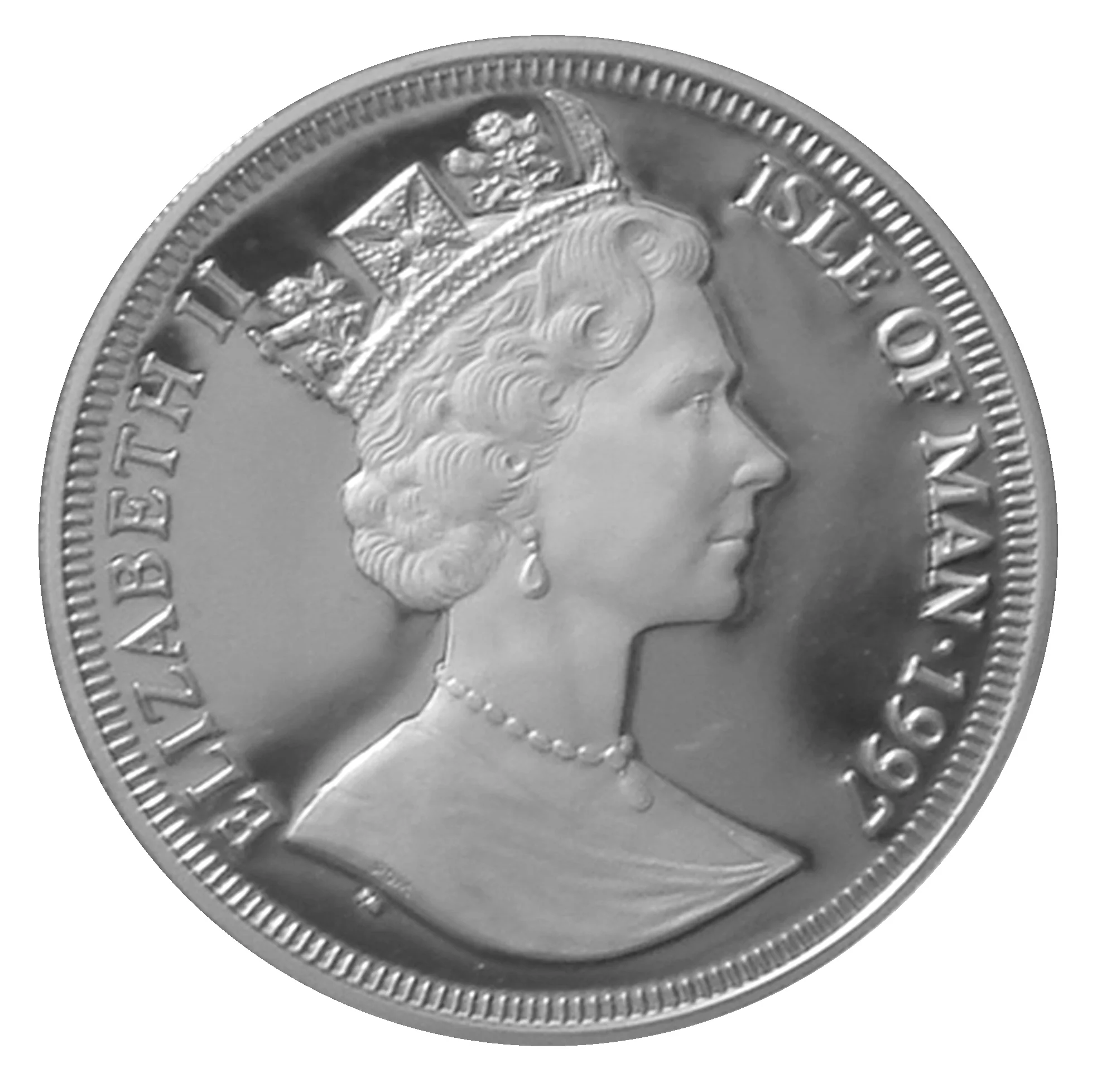
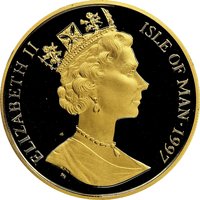
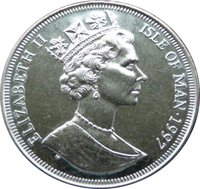
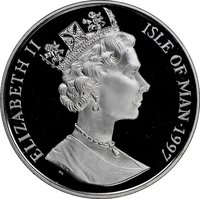
Queen Elizabeth II facing right, wearing the George IV State Diadem, surrounded by legend and date.
Inscription:
ELIZABETH II
ISLE OF MAN · 1997
RDM
PM
ISLE OF MAN · 1997
RDM
PM
Translation:
ELIZABETH II
ISLE OF MAN · 1997
RDM
PM
ISLE OF MAN · 1997
RDM
PM
Script: Latin
Designer: Raphael David Maklouf
Reverse
Description:
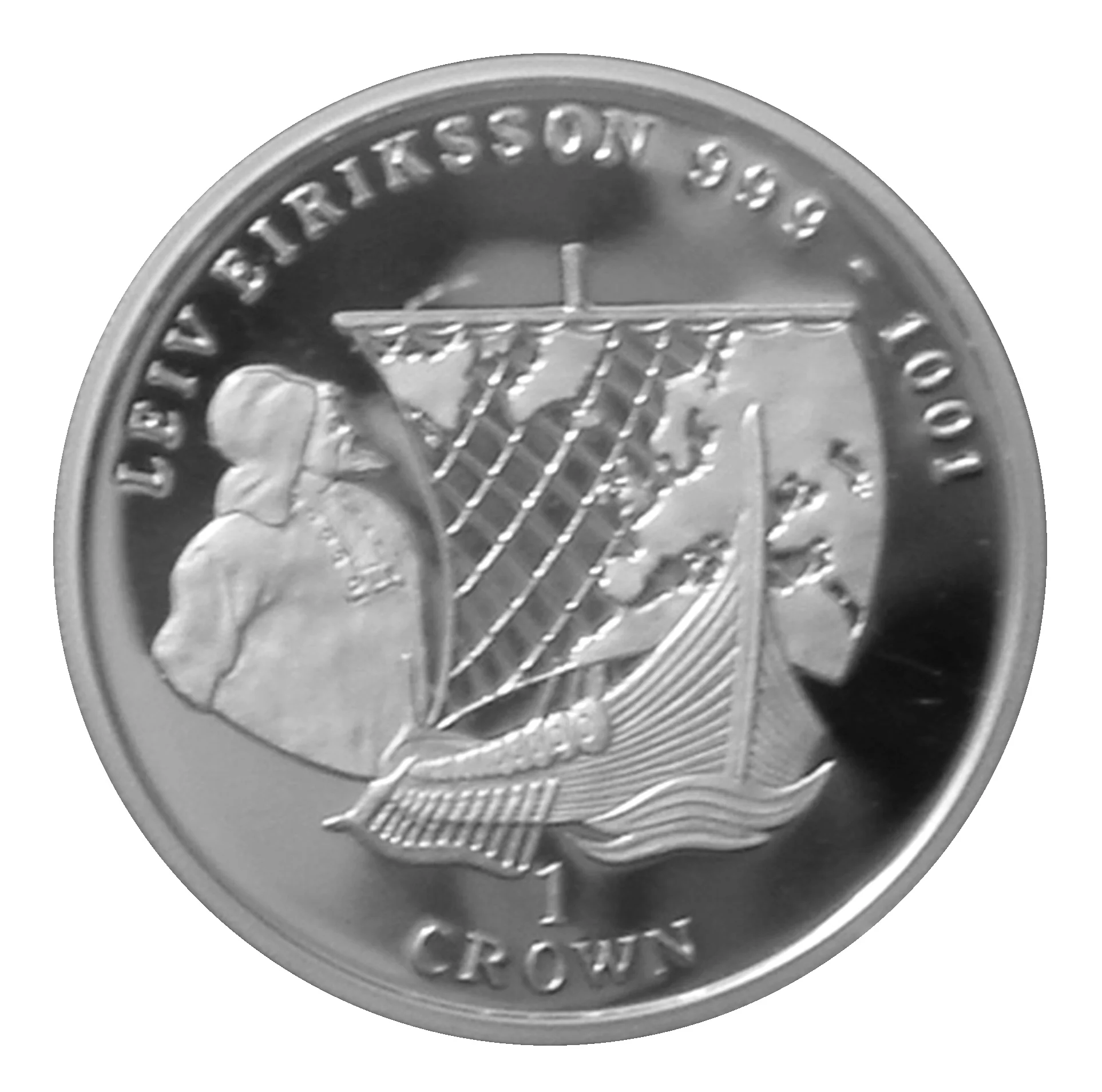
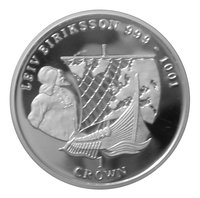
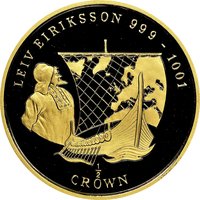
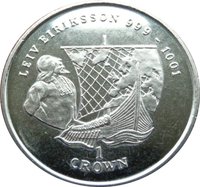
Leif Eriksson's 999-1001 voyage, depicted on a Viking ship with a map sail.
Inscription:
LEIV EIRIKSSON 999-1001
1
CROWN
1
CROWN
Script: Latin
Edge
Reeded
Categories
| Person> Explorer |
| Map |
| Transportation> Watercraft |
Mints
| Name | Mark |
|---|---|
| Pobjoy Mint | (PM) |
Mintings
| Year | Mint Mark | Mintage | Quality | Collection |
|---|---|---|---|---|
| 1997 | — | 30,000 | Proof |
Historical background
In 1997, the currency situation in the Isle of Man was one of formal alignment with the United Kingdom, coupled with unique local expressions of monetary sovereignty. The Isle of Man Government issued its own distinct banknotes and coins, known as Manx pounds, which were pegged at par with the British pound sterling. This meant that while the island's currency bore its own designs—featuring local symbols like the Manx Loaghtan sheep and the triskelion—it was legally a local issue of sterling and was not legal tender in the UK, though it was generally accepted there on a goodwill basis.
This system operated under the framework of a long-standing Currency Agreement with the UK Treasury, which ensured stability and guaranteed the convertibility of Manx currency. The Isle of Man's government held sufficient sterling reserves to fully back its note issue, a key requirement for maintaining confidence in the parity. Economically, 1997 was a period of growth for the island, driven by its expanding offshore finance sector, which increased the demand for and circulation of its local currency alongside Bank of England notes.
The year 1997 was significant as it preceded major changes in the UK's monetary landscape, namely the independence of the Bank of England and the subsequent debates around joining the European single currency. For the Isle of Man, which is not part of the United Kingdom or the European Union, these discussions reinforced its commitment to maintaining its own currency tied to sterling, a policy that provided economic stability while visibly asserting its constitutional identity as a Crown Dependency with domestic self-government.
This system operated under the framework of a long-standing Currency Agreement with the UK Treasury, which ensured stability and guaranteed the convertibility of Manx currency. The Isle of Man's government held sufficient sterling reserves to fully back its note issue, a key requirement for maintaining confidence in the parity. Economically, 1997 was a period of growth for the island, driven by its expanding offshore finance sector, which increased the demand for and circulation of its local currency alongside Bank of England notes.
The year 1997 was significant as it preceded major changes in the UK's monetary landscape, namely the independence of the Bank of England and the subsequent debates around joining the European single currency. For the Isle of Man, which is not part of the United Kingdom or the European Union, these discussions reinforced its commitment to maintaining its own currency tied to sterling, a policy that provided economic stability while visibly asserting its constitutional identity as a Crown Dependency with domestic self-government.
✨ Legendary