

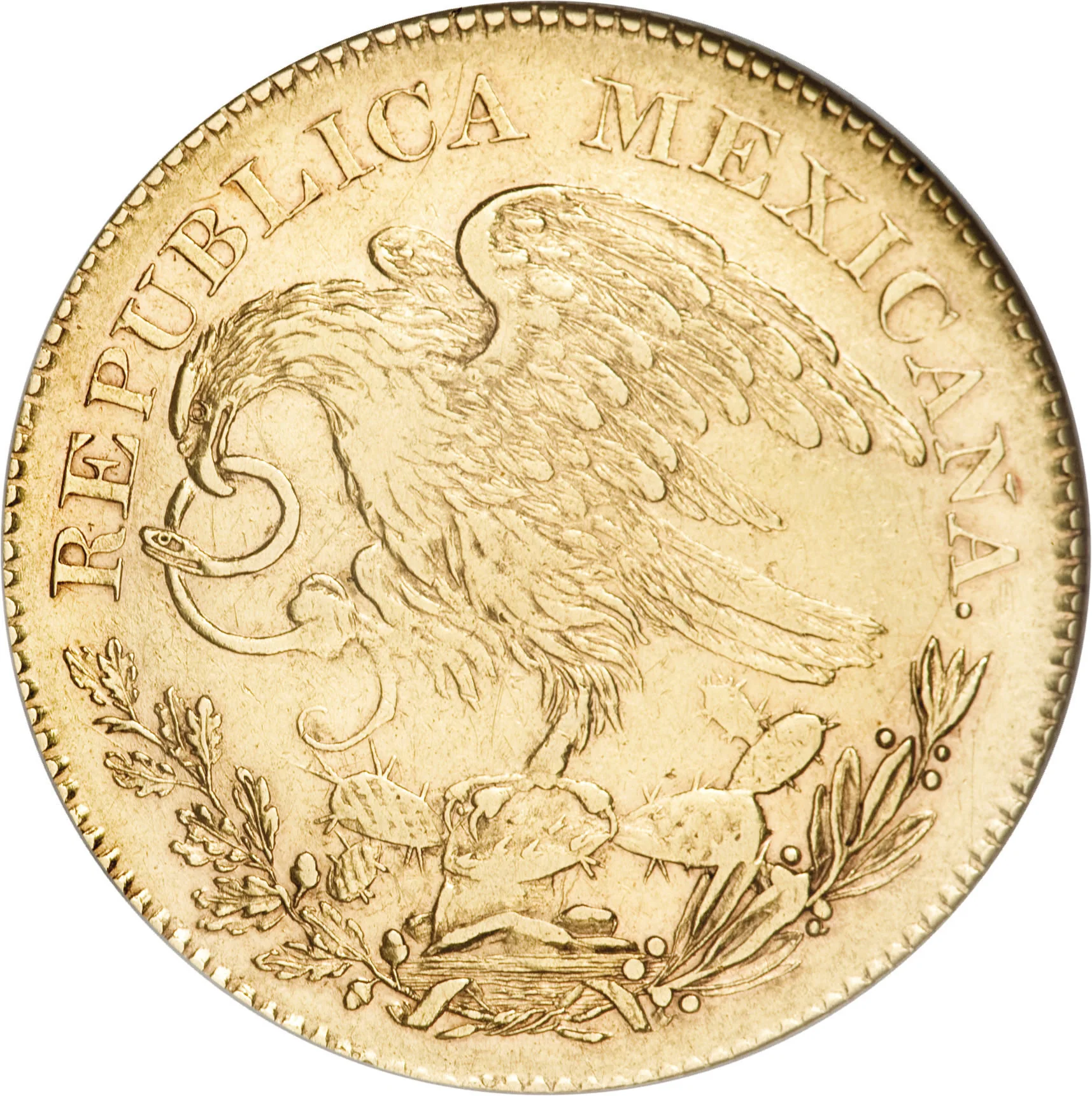
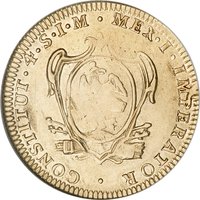
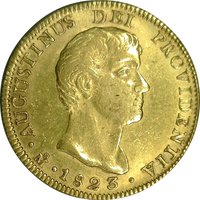
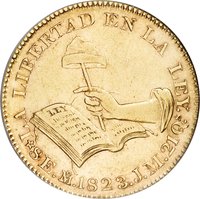
Obverse
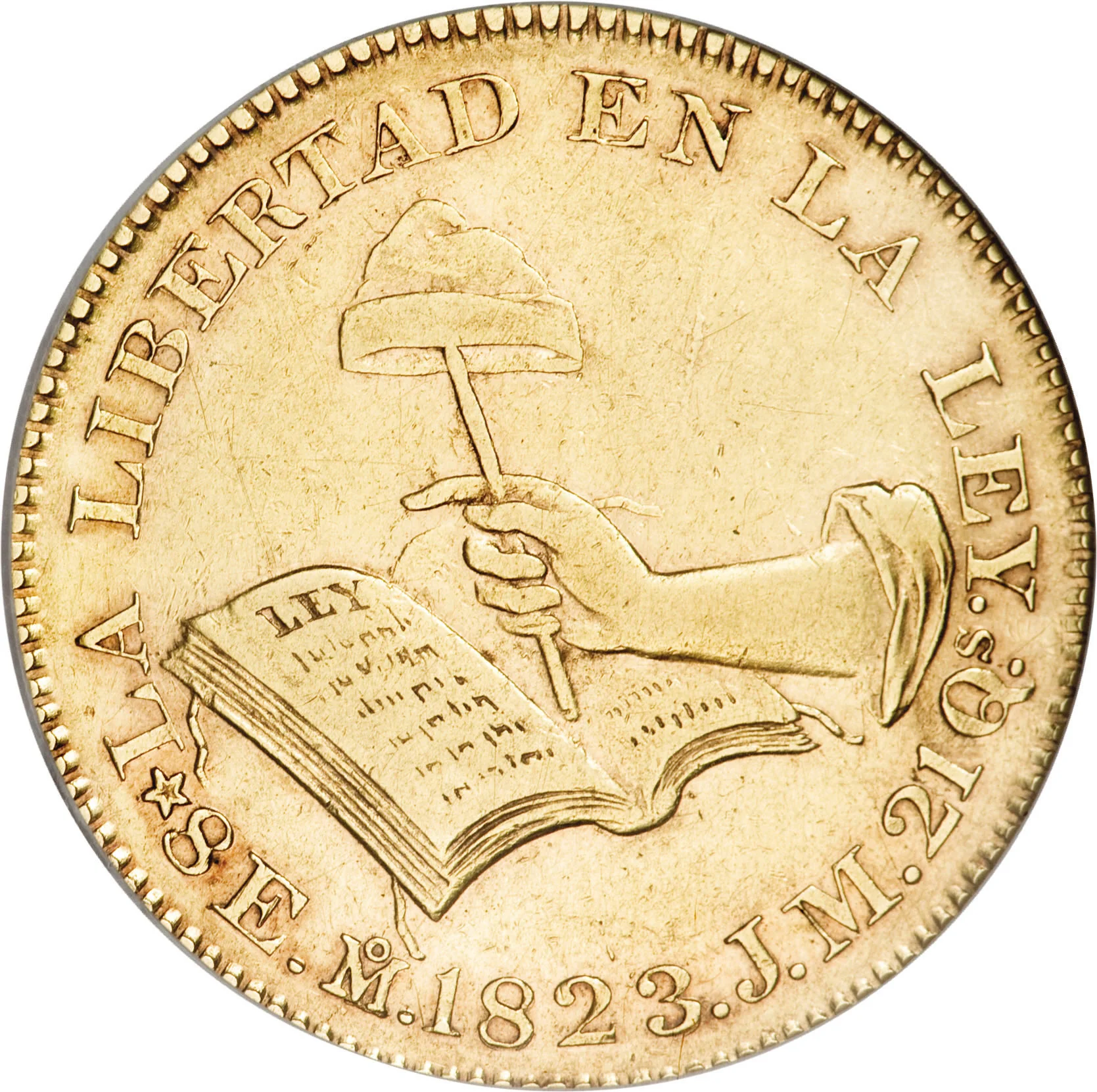
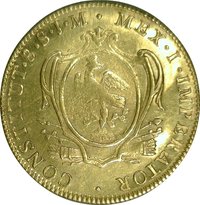
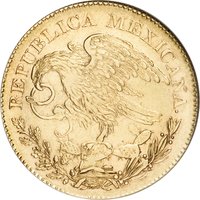
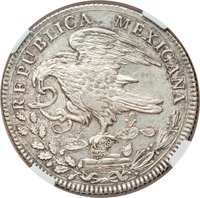
Reverse
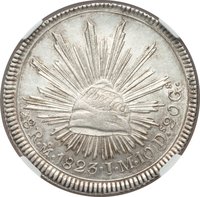
Edge
Mints
| Name | Mark |
|---|---|
| Mexican Mint | (Mo) |
Mintings
| Year | Mint Mark | Mintage | Quality | Collection |
|---|---|---|---|---|
| 1823 | Mo | — |
Historical background
Following Mexico’s hard-fought independence from Spain in 1821, the currency situation in 1823 was one of profound disorder and transition. The new nation inherited a chaotic mix of coins from the colonial era, primarily Spanish silver reales and gold escudos, alongside a vast array of foreign coins that circulated from trade, especially Spanish-American pieces from Peru and Guatemala. The collapse of the royal mint's authority and the financial exhaustion from the war of independence meant there was no standardized, trusted national currency. This monetary fragmentation severely hampered commerce and state-building efforts, as the value and purity of coins varied widely, leading to confusion and fraud.
Recognizing this crisis, the provisional government in 1823 took a crucial first step toward monetary sovereignty. On June 14, it decreed the creation of a distinct Mexican coinage to replace the old Spanish colonial system. The new currency was to be decimal-based, with the peso or real de a ocho (eight reales) as the principal silver unit, divided into 8 reales or 100 centavos. The iconic emblem of the new coins—an eagle perched on a cactus with a serpent in its beak—replaced the profile of the Spanish king, symbolizing the birth of a national financial identity. However, these reforms were largely declarative in 1823; actual production of the new coins at the Mexico City Mint began slowly and would take years to fully supplant the old mixed currency in circulation.
The underlying economic reality severely undermined these efforts. The government, led first by the imperial regime of Agustín de Iturbide and then by the republican triumvirate after his abdication in March 1823, was bankrupt. It lacked the bullion reserves to back a stable currency and resorted to issuing paper money and copper tokens, which the public deeply distrusted. Furthermore, massive borrowing from foreign creditors, particularly British mining ventures, began to mortgage the nation's future silver production. Thus, while 1823 marks the official birth of the Mexican peso as a concept, the practical currency situation remained one of scarcity, inconsistency, and financial instability, setting the stage for the economic struggles that would plague the early republic.
Recognizing this crisis, the provisional government in 1823 took a crucial first step toward monetary sovereignty. On June 14, it decreed the creation of a distinct Mexican coinage to replace the old Spanish colonial system. The new currency was to be decimal-based, with the peso or real de a ocho (eight reales) as the principal silver unit, divided into 8 reales or 100 centavos. The iconic emblem of the new coins—an eagle perched on a cactus with a serpent in its beak—replaced the profile of the Spanish king, symbolizing the birth of a national financial identity. However, these reforms were largely declarative in 1823; actual production of the new coins at the Mexico City Mint began slowly and would take years to fully supplant the old mixed currency in circulation.
The underlying economic reality severely undermined these efforts. The government, led first by the imperial regime of Agustín de Iturbide and then by the republican triumvirate after his abdication in March 1823, was bankrupt. It lacked the bullion reserves to back a stable currency and resorted to issuing paper money and copper tokens, which the public deeply distrusted. Furthermore, massive borrowing from foreign creditors, particularly British mining ventures, began to mortgage the nation's future silver production. Thus, while 1823 marks the official birth of the Mexican peso as a concept, the practical currency situation remained one of scarcity, inconsistency, and financial instability, setting the stage for the economic struggles that would plague the early republic.
Series: 1823 Mexico circulation coins
✨ Legendary