

5 Francs – French West Africa
Context
Year: 1956
Issuer: French West Africa
Period:
(1946—1958)
Currency:
(1944—1958)
Demonetized: Yes
Total mintage: 85,000,000
Material
References
KM: #Click to copy to clipboard5
Numista: #2857
Value
Exchange value: 5 FCFA
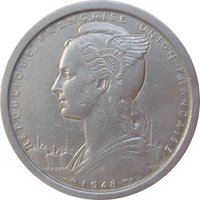
Obverse
Description:
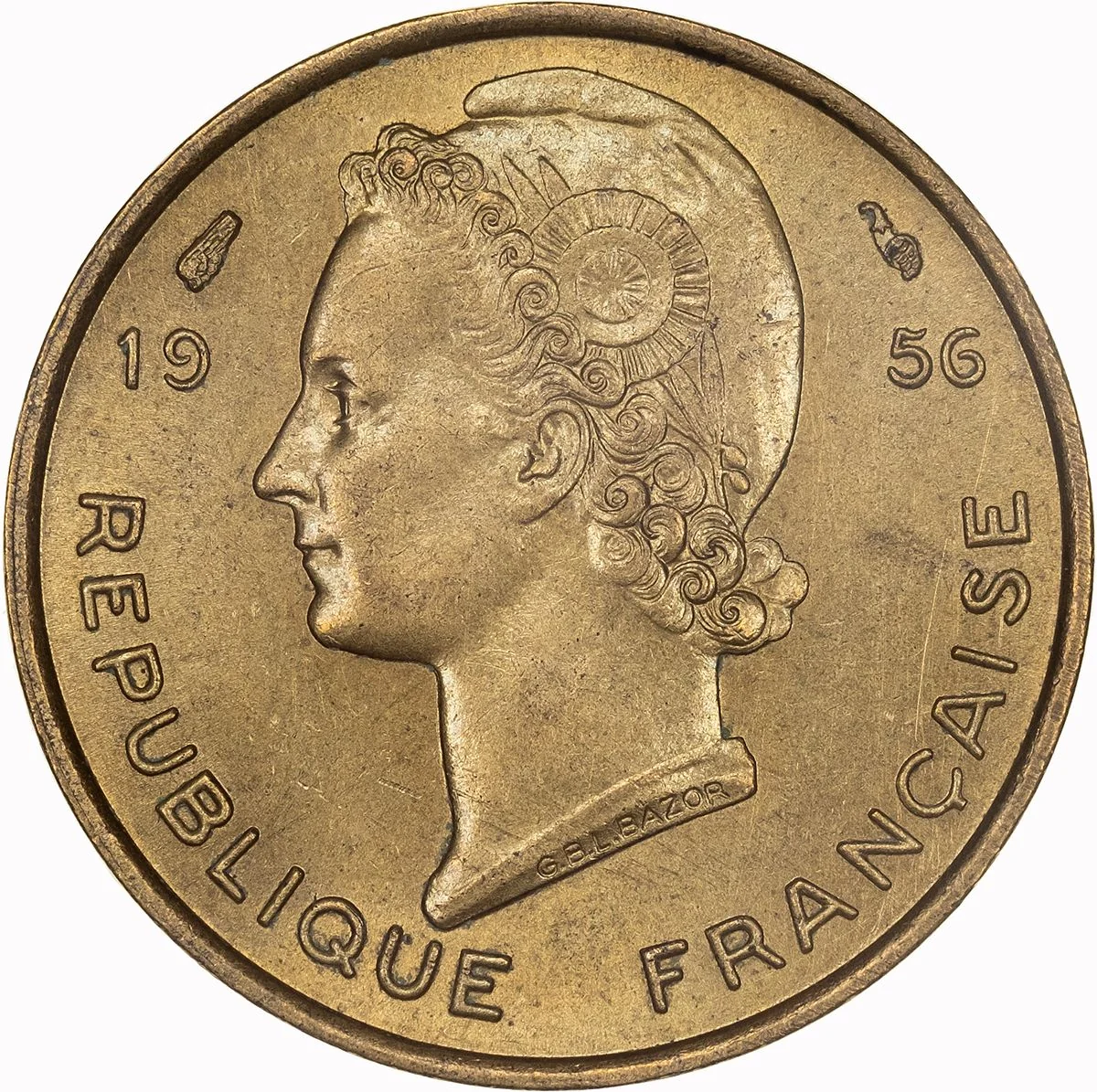
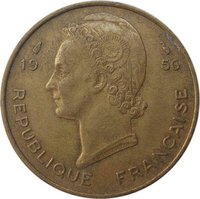
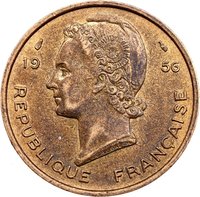
Marianne facing left in a Phrygian cap. Divided date. Privy mark above the 19. Bazor signature on collar.
Inscription:
19 56
G.B.L. BAZOR
REPUBLIQUE FRANÇAISE
G.B.L. BAZOR
REPUBLIQUE FRANÇAISE
Translation:
1956
G.B.L. BAZOR
FRENCH REPUBLIC
G.B.L. BAZOR
FRENCH REPUBLIC
Script: Latin
Language: French
Engraver: Lucien Georges Bazor
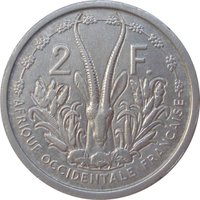
Reverse
Description:
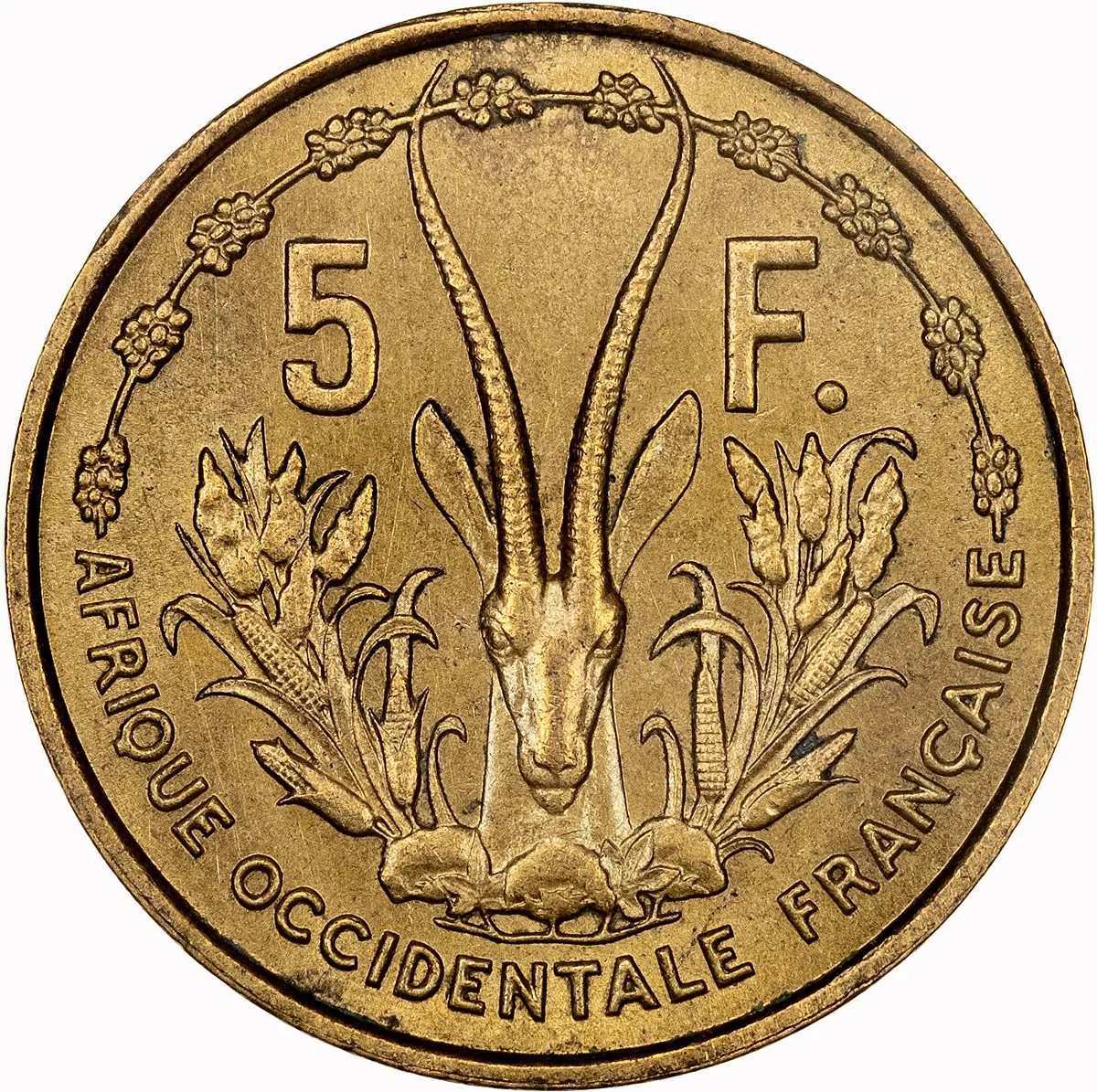
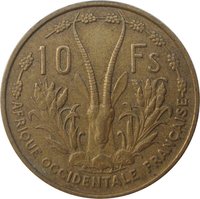
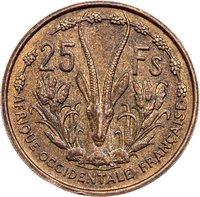
Gazelle head divides crops and denomination.
Inscription:
5 F.
AFRIQUE OCCIDENTALE FRANÇAISE
AFRIQUE OCCIDENTALE FRANÇAISE
Translation:
FRENCH WEST AFRICA
5 FRANCS
5 FRANCS
Script: Latin
Language: French
Engraver: Lucien Georges Bazor
Edge
Plain
Mints
| Name | Mark |
|---|---|
| Monnaie de Paris | — |
Mintings
| Year | Mint Mark | Mintage | Quality | Collection |
|---|---|---|---|---|
| 1956 | — | 85,000,000 |
Historical background
By 1956, the currency situation in French West Africa (Afrique-Occidentale française, AOF) was defined by its integration into the Franc Zone and the use of the CFA franc. Created in 1945, the CFA franc (Colonies Françaises d'Afrique) was pegged at a fixed rate to the French franc and was fully guaranteed by the French Treasury. This arrangement ensured monetary stability and facilitated trade with France, but it also meant that the AOF’s monetary policy was entirely directed from Paris, with foreign exchange reserves held centrally in France. The currency was issued by a common central bank, the Banque Centrale des États de l’Afrique de l’Ouest (BCEAO), which served all eight territories of the federation.
This monetary system was a cornerstone of the colonial economic pact, deeply binding the region's economy to that of France. The fixed parity and free convertibility encouraged French investment and guaranteed a market for AOF’s raw material exports, such as peanuts, cocoa, and cotton. However, it also limited the federation's economic autonomy, preventing competitive devaluations and locking it into an economic structure primarily designed to benefit the metropole. The currency was a powerful symbol of continued French influence and control, even as political winds began to shift.
The year 1956 fell within a crucial period of political transition, following the passage of France's Loi-Cadre (Framework Law). This law granted substantial internal autonomy to the territories of the AOF, beginning the process of political devolution that would eventually lead to independence in 1960. While the Loi-Cadre reformed political structures, it deliberately left the monetary and financial framework unchanged. Therefore, the currency situation in 1956 represented a key continuity amidst political change—a stable but dependent system that the emerging states would later have to confront as they navigated the path to sovereignty.
This monetary system was a cornerstone of the colonial economic pact, deeply binding the region's economy to that of France. The fixed parity and free convertibility encouraged French investment and guaranteed a market for AOF’s raw material exports, such as peanuts, cocoa, and cotton. However, it also limited the federation's economic autonomy, preventing competitive devaluations and locking it into an economic structure primarily designed to benefit the metropole. The currency was a powerful symbol of continued French influence and control, even as political winds began to shift.
The year 1956 fell within a crucial period of political transition, following the passage of France's Loi-Cadre (Framework Law). This law granted substantial internal autonomy to the territories of the AOF, beginning the process of political devolution that would eventually lead to independence in 1960. While the Loi-Cadre reformed political structures, it deliberately left the monetary and financial framework unchanged. Therefore, the currency situation in 1956 represented a key continuity amidst political change—a stable but dependent system that the emerging states would later have to confront as they navigated the path to sovereignty.
🌱 Very Common