

20 Centésimos – Uruguay
Uruguay
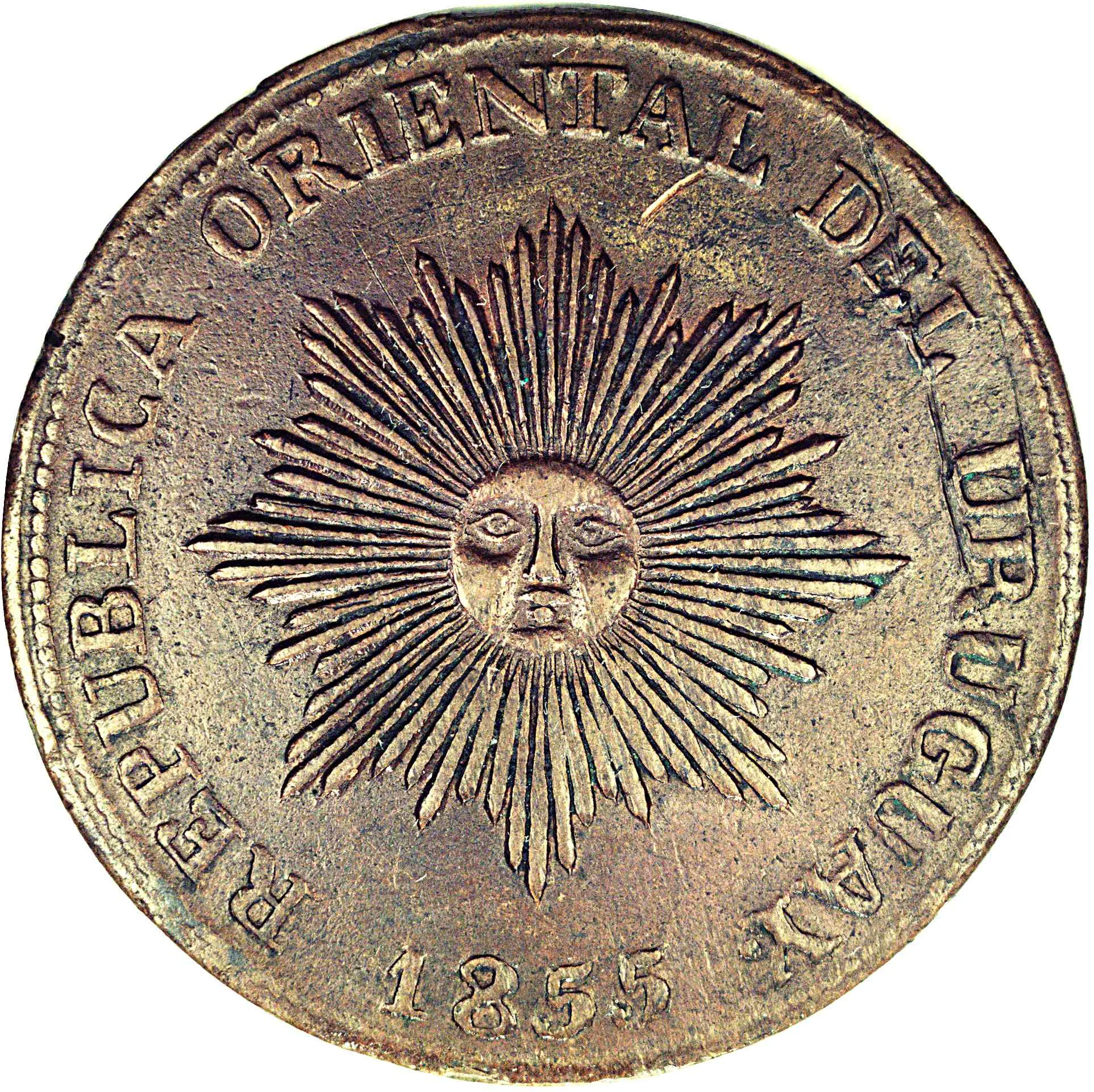
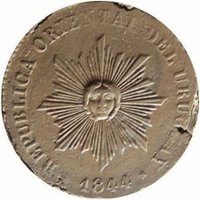
Obverse
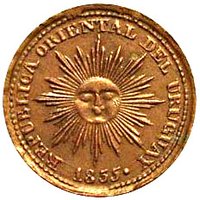
Description:
Radiant sun with face, encircled by country name, date beneath.
Inscription:
REPUBLICA ORIENTAL DEL URUGUAY •
Translation:
Eastern Republic of Uruguay
Script: Latin
Language: Spanish
Engraver: Agustín Rivero
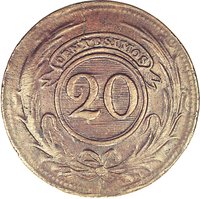
Reverse
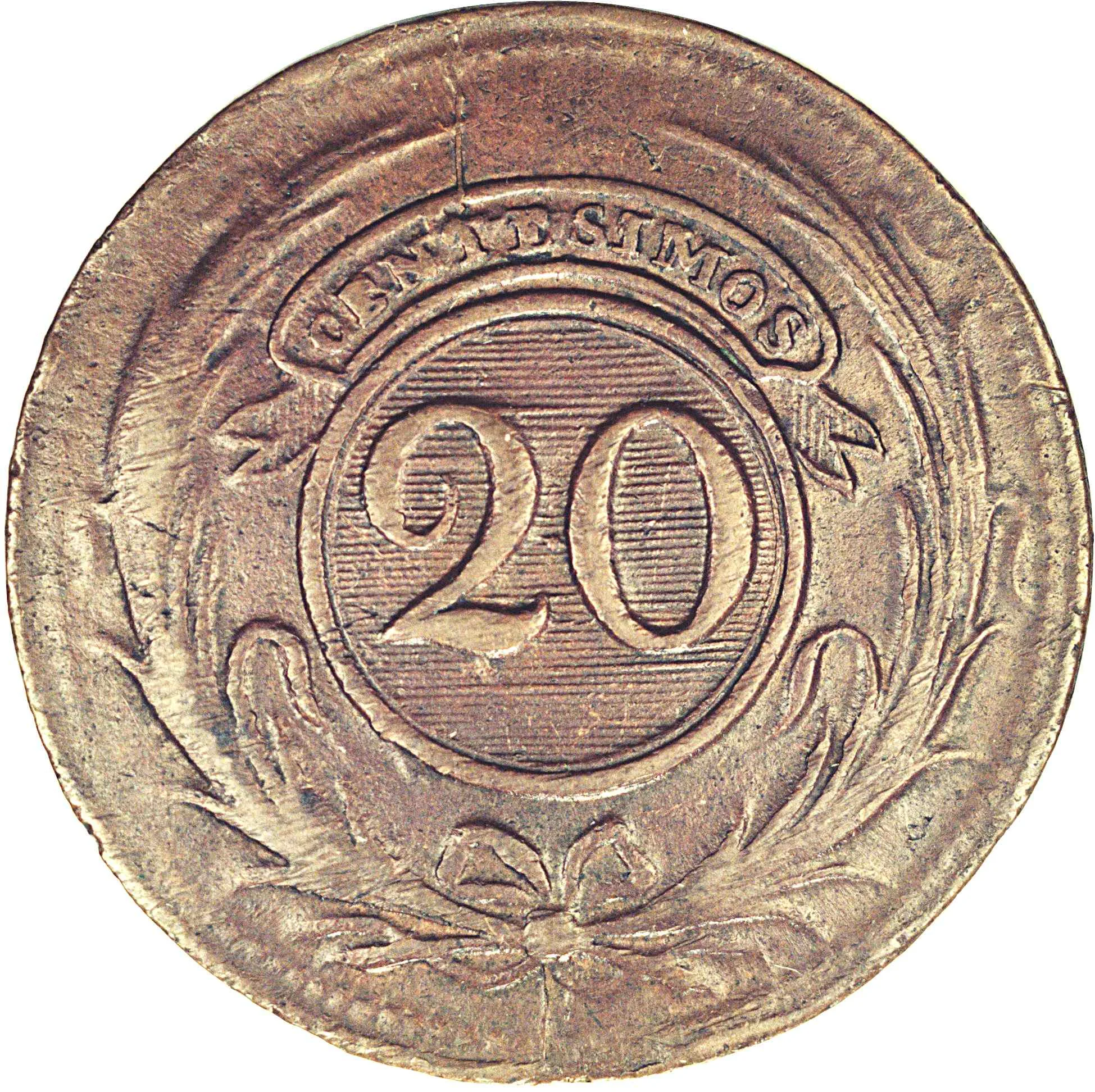
Description:
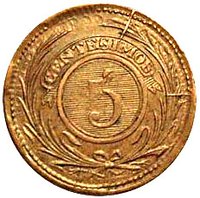
Face value circled, wreaths on sides.
Inscription:
CENTESIMOS
20
20
Translation:
Twenty Centésimos
Script: Latin
Language: Spanish
Engraver: Agustín Rivero
Edge
SmoothLiso
Mints
| Name | Mark |
|---|---|
| Casa de Moneda | — |
Mintings
| Year | Mint Mark | Mintage | Quality | Collection |
|---|---|---|---|---|
| 1854 | — | 50,000 | ||
| 1855 | — | 30,000 |
Historical background
In 1854, Uruguay was grappling with a severe and chaotic monetary crisis rooted in the political and economic turmoil of the Guerra Grande (1839-1851). The prolonged civil war between the Blancos and Colorados, often supported by foreign powers, had devastated the rural economy and drained the fledgling state's finances. To fund the conflict, successive governments, including the besieged government of Manuel Oribe and later the Colorado government in Montevideo, resorted to issuing vast quantities of paper money with no metallic backing. This led to rampant inflation, a collapse in public credit, and a profound loss of confidence in the national currency.
The currency landscape was a complex and dysfunctional patchwork. Multiple forms of money circulated simultaneously: devalued government paper notes, older coins from the colonial era, and a flood of foreign currencies, particularly Brazilian, Argentine, French, and British coins, which were preferred for their stable intrinsic value. This situation created a dual-system where daily transactions were conducted in depreciating paper, while significant commerce and international trade were anchored in specie (metallic coins). The result was extreme exchange rate volatility, with the value of paper pesos against gold fluctuating wildly, hindering investment and economic recovery.
Recognizing that monetary stability was essential for national reconstruction, the Colorado government of President Juan Francisco Giró, and later that of Venancio Flores, began serious efforts toward reform. The pivotal step came in 1854 with the proposal and planning for the creation of a new, reputable bank that could issue a trusted currency. This effort culminated in 1855 with the founding of the Banco Comercial, which was granted the exclusive right of note issue in Montevideo. Although the full benefits would take years to materialize, the 1854 period represents the critical turning point when Uruguay began its deliberate transition from the inflationary chaos of war finance toward a more unified and stable monetary system.
The currency landscape was a complex and dysfunctional patchwork. Multiple forms of money circulated simultaneously: devalued government paper notes, older coins from the colonial era, and a flood of foreign currencies, particularly Brazilian, Argentine, French, and British coins, which were preferred for their stable intrinsic value. This situation created a dual-system where daily transactions were conducted in depreciating paper, while significant commerce and international trade were anchored in specie (metallic coins). The result was extreme exchange rate volatility, with the value of paper pesos against gold fluctuating wildly, hindering investment and economic recovery.
Recognizing that monetary stability was essential for national reconstruction, the Colorado government of President Juan Francisco Giró, and later that of Venancio Flores, began serious efforts toward reform. The pivotal step came in 1854 with the proposal and planning for the creation of a new, reputable bank that could issue a trusted currency. This effort culminated in 1855 with the founding of the Banco Comercial, which was granted the exclusive right of note issue in Montevideo. Although the full benefits would take years to materialize, the 1854 period represents the critical turning point when Uruguay began its deliberate transition from the inflationary chaos of war finance toward a more unified and stable monetary system.
💎 Very Rare