

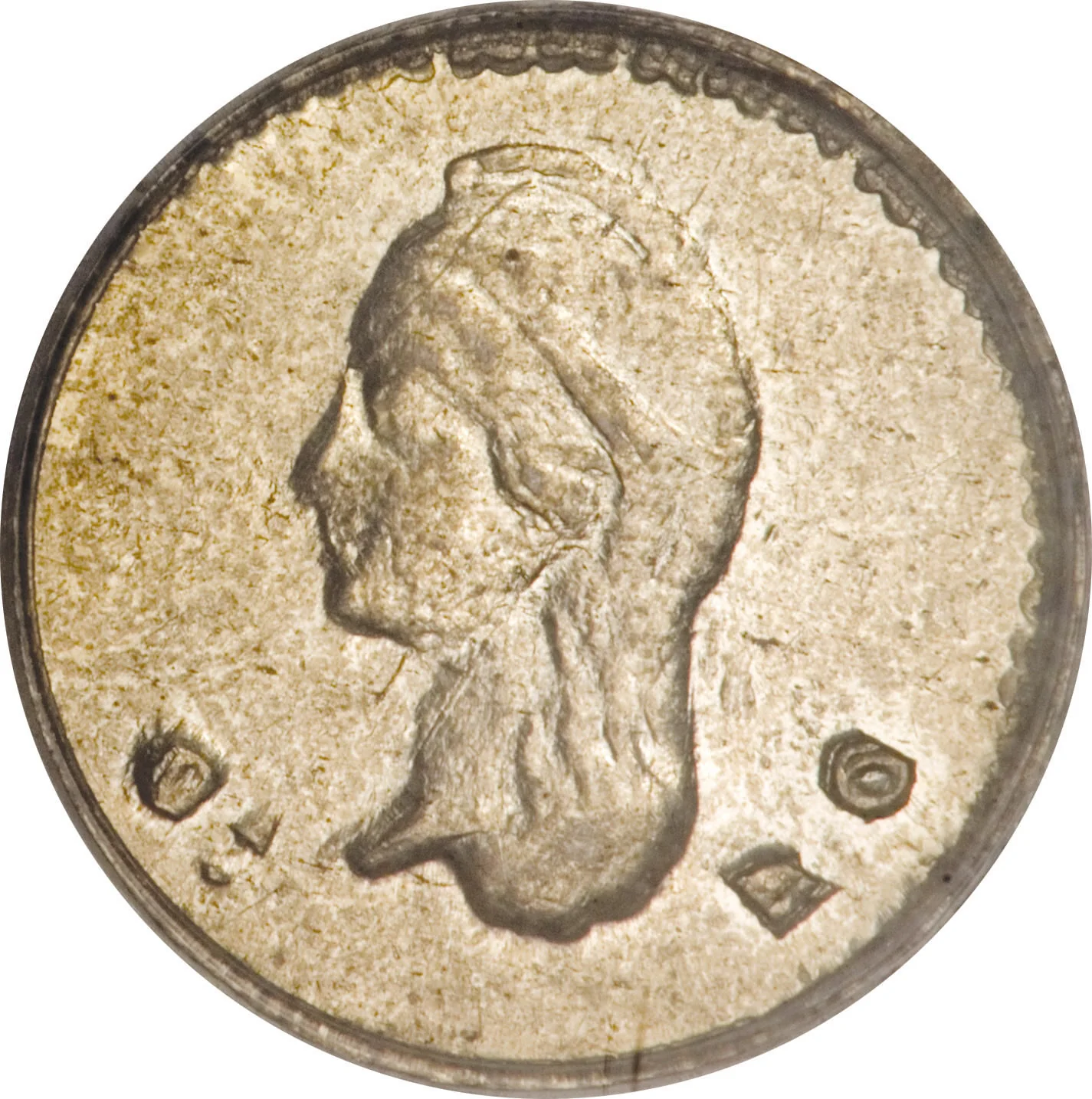
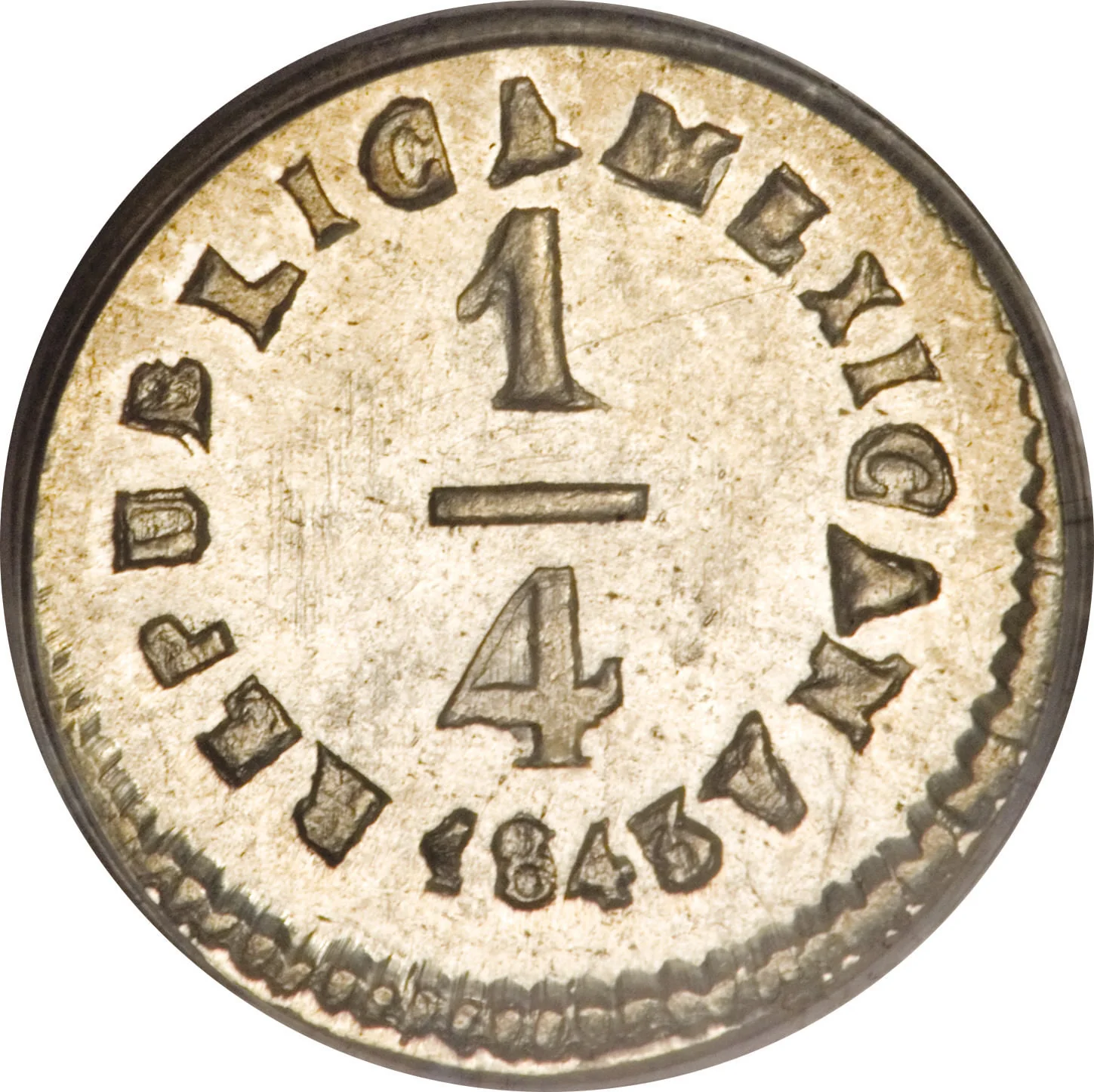
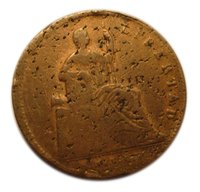
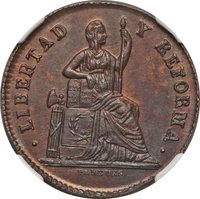
Obverse
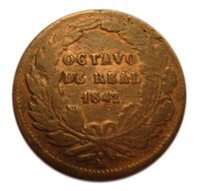
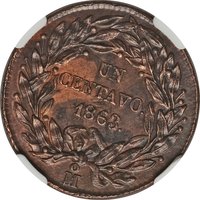
Reverse
Edge
Plain
Mints
| Name | Mark |
|---|---|
| Casa de Moneda de Culiacán | — |
| Casa de Moneda de Guanajuato | — |
| Casa de Moneda de Zacatecas | — |
| Chihuahua | — |
| Durango | — |
| Guadalajara | — |
| Guadalupe y Calvo | — |
| Mexican Mint | — |
| San Luís Potosí | — |
Mintings
| Year | Mint Mark | Mintage | Quality | Collection |
|---|---|---|---|---|
| 1842 | Do | — | ||
| 1842 | Ga | — | ||
| 1842 | Go | — | ||
| 1842 | S.L.Pi | — | ||
| 1842 | Zs | — | ||
| 1842 | Mo | — | ||
| 1843 | CA | — | ||
| 1843 | Go | — | ||
| 1843 | Mo | — | ||
| 1843 | S.L.Pi | — | ||
| 1843 | Do | — | ||
| 1843 | Ga | — | ||
| 1844 | Ga | — | ||
| 1844 | GC | — | ||
| 1844 | Go | — | ||
| 1844 | Mo | — | ||
| 1844 | S.L.Pi | — | ||
| 1845 | Ga | — | ||
| 1845 | Go | — | ||
| 1845 | Mo | — | ||
| 1845 | S.L.Pi | — | ||
| 1846 | Ga | — | ||
| 1846 | Go | — | ||
| 1846 | Mo | — | ||
| 1847 | Ga | — | ||
| 1847 | Go | — | ||
| 1847 | S.L.Pi | — | ||
| 1848 | Go | — | ||
| 1848 | Ga | — | ||
| 1849 | Go | — | ||
| 1850 | Go | — | ||
| 1850 | Mo | — | ||
| 1850 | Ga | — | ||
| 1851 | Ga | — | ||
| 1851 | Go | — | ||
| 1851 | S.L.Pi | — | ||
| 1852 | Ga | — | ||
| 1852 | Go | — | ||
| 1853 | Go | — | ||
| 1854 | Ga | — | ||
| 1854 | S.L.Pi | — | ||
| 1855 | Go | — | ||
| 1855 | C | — | ||
| 1855 | Ga | — | ||
| 1856 | Go | — | ||
| 1856 | S.L.Pi | — | ||
| 1857 | Ga | — | ||
| 1857 | S.L.Pi | — | ||
| 1858 | Mo | — | ||
| 1859 | Mo | — | ||
| 1860 | Mo | — | ||
| 1861 | Mo | — | ||
| 1862 | Ga | — | ||
| 1862 | Go | — | ||
| 1862 | Mo | — | ||
| 1862 | S.L.Pi | — | ||
| 1863 | Go | — | ||
| 1863 | Mo | — |
Historical background
In 1842, Mexico's currency situation was one of profound instability and complexity, a direct legacy of the political and economic turmoil following independence from Spain in 1821. The new nation inherited a fractured system with a severe shortage of precious metals, the traditional basis of currency. This vacuum was filled by a chaotic mix of monetary instruments: Spanish colonial coins, foreign coins (especially British and French), and a flood of paper money issued not only by the federal government but also by individual states and even private businesses. This proliferation created a confusing and unreliable monetary environment where the value of money was highly localized and constantly in flux.
The central government, grappling with massive debts from past conflicts and chronically low tax revenues, increasingly relied on printing paper money to finance its operations, especially the ongoing military efforts to assert control over rebellious regions like Texas and Yucatán. This led to severe inflation and a dramatic loss of public confidence. By 1842, paper currency, particularly the billetes issued by the government, traded at a steep discount to silver coins, which were hoarded and withdrawn from circulation. The result was a classic "bad money drives out good" scenario, where transactions became difficult, and the economy suffered from a lack of a trustworthy medium of exchange.
Attempting to impose order, President Antonio López de Santa Anna's government passed a monetary law on May 9, 1842. This decree aimed to centralize control by prohibiting the issuance of paper money by the states, reaffirming the silver peso fuerte (strong peso) as the primary monetary standard, and setting official exchange rates for the various coins in circulation. However, the government's lack of fiscal discipline and continued issuance of its own depreciated paper notes undermined the law from the start. Therefore, the currency situation in 1842 remained one of confusion and devaluation, a fragile prelude to the even greater economic catastrophe that would follow the war with the United States later in the decade.
The central government, grappling with massive debts from past conflicts and chronically low tax revenues, increasingly relied on printing paper money to finance its operations, especially the ongoing military efforts to assert control over rebellious regions like Texas and Yucatán. This led to severe inflation and a dramatic loss of public confidence. By 1842, paper currency, particularly the billetes issued by the government, traded at a steep discount to silver coins, which were hoarded and withdrawn from circulation. The result was a classic "bad money drives out good" scenario, where transactions became difficult, and the economy suffered from a lack of a trustworthy medium of exchange.
Attempting to impose order, President Antonio López de Santa Anna's government passed a monetary law on May 9, 1842. This decree aimed to centralize control by prohibiting the issuance of paper money by the states, reaffirming the silver peso fuerte (strong peso) as the primary monetary standard, and setting official exchange rates for the various coins in circulation. However, the government's lack of fiscal discipline and continued issuance of its own depreciated paper notes undermined the law from the start. Therefore, the currency situation in 1842 remained one of confusion and devaluation, a fragile prelude to the even greater economic catastrophe that would follow the war with the United States later in the decade.
🌟 Limited