

5 Piastres – Egypt
Egypt
Context
Year: 1920
Islamic (Hijri) Year: 1338
Issuer: Egypt 
Ruler: Ahmed Fuad I
Currency:
(since 1916)
Demonetized: Yes
Total mintage: 1,000,000
Material
References
KM: #Click to copy to clipboard326
Numista: #28419
Value
Exchange value: 0.05 EGP
Bullion value: $16.91
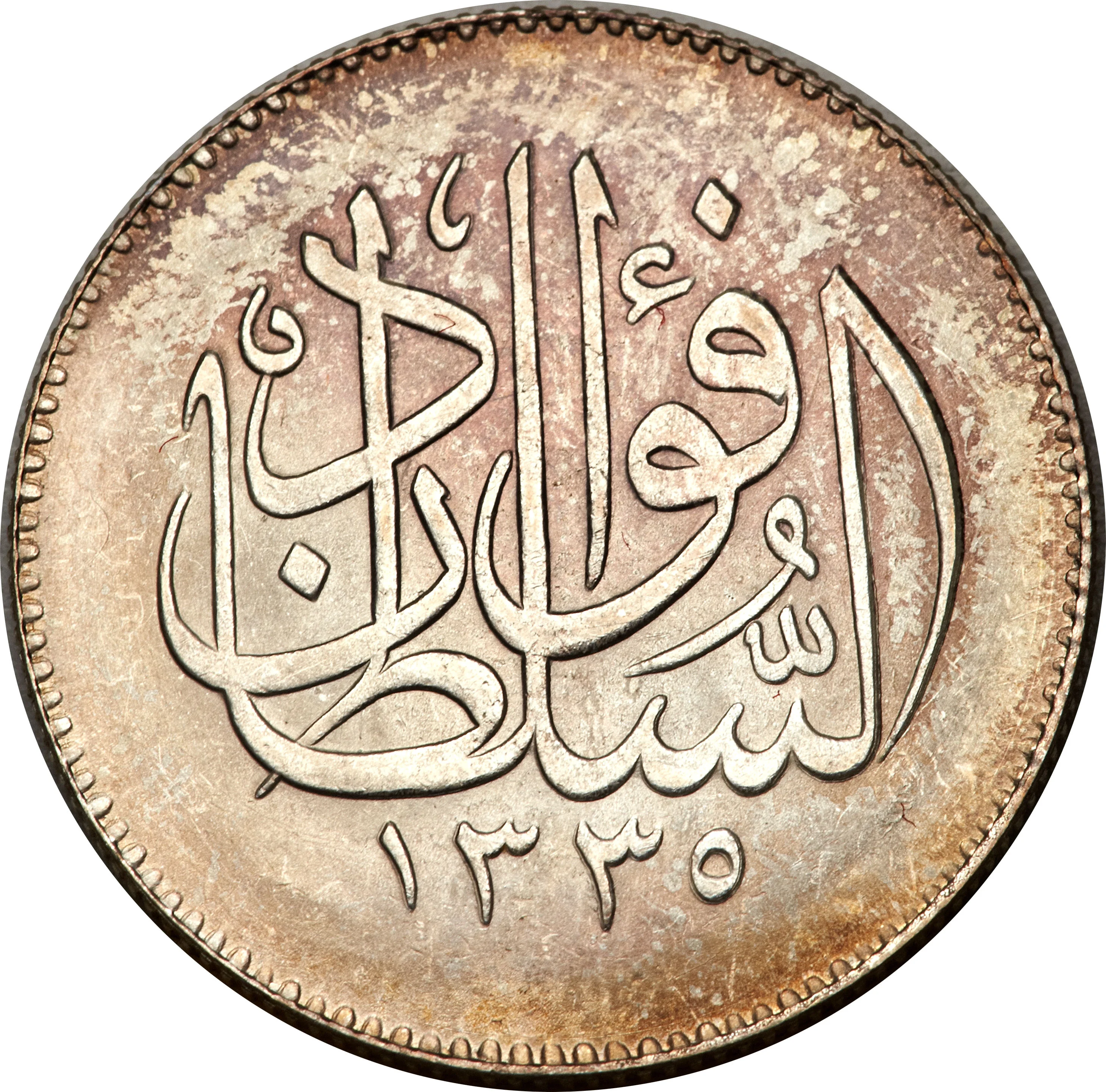
Obverse
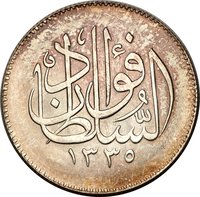
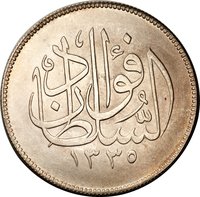
Inscription:
فؤاد السلطان
١٣٣٥
١٣٣٥
Translation:
Sultan Fuad
1335
1335
Script: Arabic
Language: Arabic
Designer: Hamed Effendi Serri
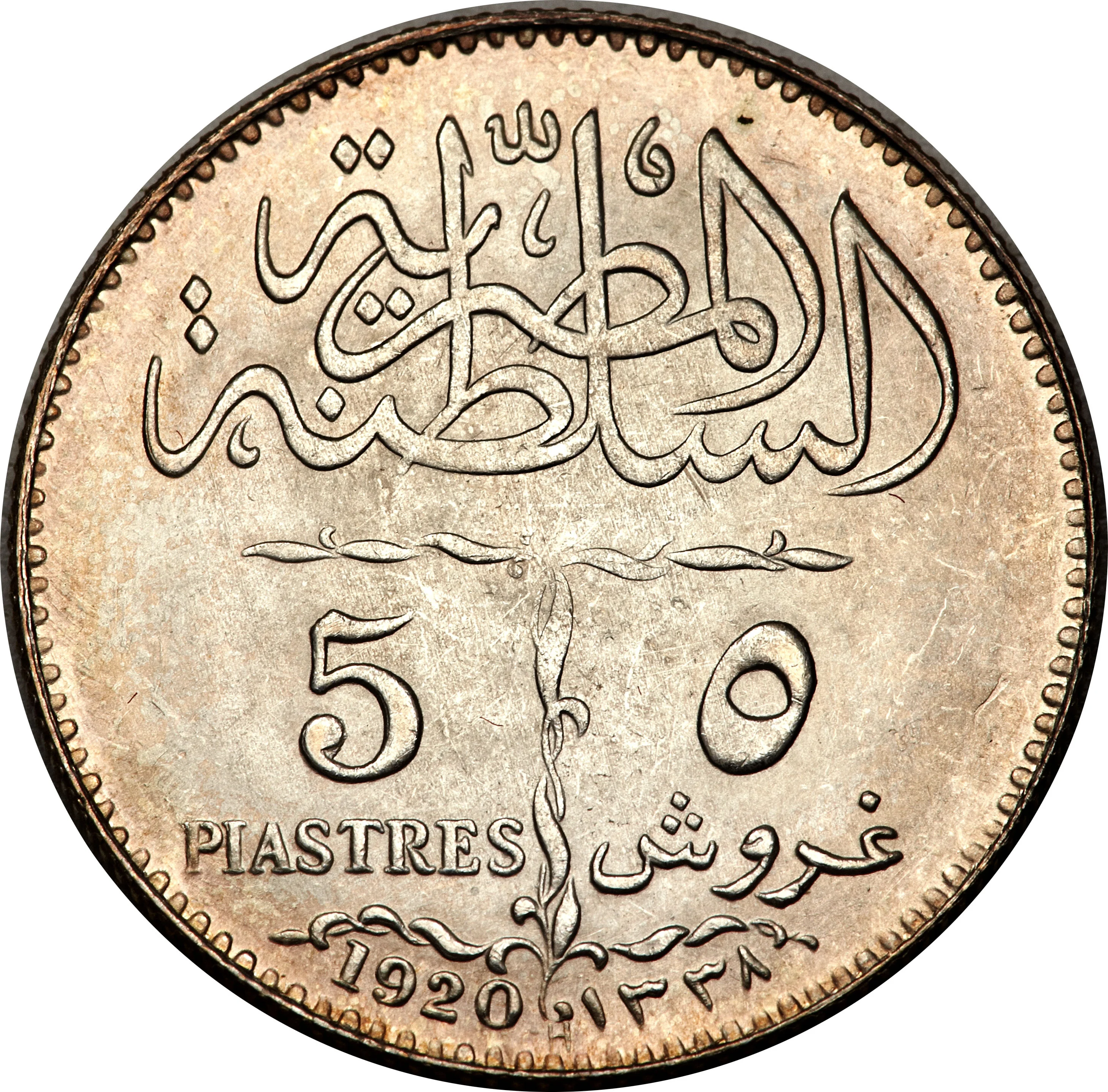
Reverse
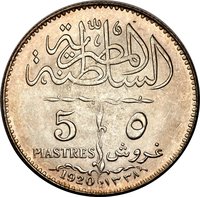
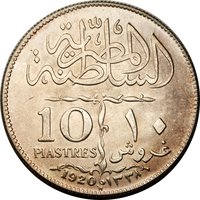
Inscription:
السلطنة المصرية
5 PIASTRES 1920
٥ غروش ١٣٣٨
5 PIASTRES 1920
٥ غروش ١٣٣٨
Translation:
The Egyptian Sultanate
5 PIASTRES 1920
5 Qirsh 1338
5 PIASTRES 1920
5 Qirsh 1338
Script: Arabic
Language: Arabic
Designer: Hamed Effendi Serri
Edge
Mints
| Name | Mark |
|---|---|
| Heaton and Sons / The Mint Birmingham | H |
Mintings
| Year | Mint Mark | Mintage | Quality | Collection |
|---|---|---|---|---|
| 1920 | — | 1,000,000 |
Historical background
In 1920, Egypt's currency situation was a complex legacy of its colonial status under British influence. Officially, the country remained part of the Ottoman Empire's monetary sphere until 1914, using the Egyptian pound (guinay), which was pegged to and equivalent in value to the British pound sterling. This peg created a stable and strong currency, but one intrinsically tied to British economic policy. The outbreak of World War I, however, triggered a significant shift. In 1914, Britain declared Egypt a protectorate, severed its nominal ties to the Ottoman Empire, and made the Egyptian pound a separate legal tender, though still firmly sterling-backed.
The war years placed immense strain on this system. To finance military operations in the region, Britain compelled the Egyptian government to issue substantial amounts of banknotes, effectively demanding large, interest-free loans. This led to a dramatic expansion of the money supply and, combined with wartime disruptions to trade and agriculture, sparked severe inflation. The cost of living for ordinary Egyptians soared, causing widespread hardship and social discontent. By 1920, the currency was stable in its exchange rate with sterling, but its domestic purchasing power had sharply eroded, creating a disconnect between official parity and local economic reality.
This monetary environment became a focal point of growing nationalist sentiment. Egyptian economists and political leaders began to criticize the sterling peg and the British control it symbolized, arguing that it served imperial interests rather than Egypt's developmental needs. The inflation crisis of the war years underscored the vulnerability of having monetary policy dictated from abroad. Consequently, by 1920, calls for the establishment of an independent national bank to manage currency and credit were gaining momentum, setting the stage for monetary reforms that would become a key issue in the negotiations for Egypt's eventual nominal independence in 1922.
The war years placed immense strain on this system. To finance military operations in the region, Britain compelled the Egyptian government to issue substantial amounts of banknotes, effectively demanding large, interest-free loans. This led to a dramatic expansion of the money supply and, combined with wartime disruptions to trade and agriculture, sparked severe inflation. The cost of living for ordinary Egyptians soared, causing widespread hardship and social discontent. By 1920, the currency was stable in its exchange rate with sterling, but its domestic purchasing power had sharply eroded, creating a disconnect between official parity and local economic reality.
This monetary environment became a focal point of growing nationalist sentiment. Egyptian economists and political leaders began to criticize the sterling peg and the British control it symbolized, arguing that it served imperial interests rather than Egypt's developmental needs. The inflation crisis of the war years underscored the vulnerability of having monetary policy dictated from abroad. Consequently, by 1920, calls for the establishment of an independent national bank to manage currency and credit were gaining momentum, setting the stage for monetary reforms that would become a key issue in the negotiations for Egypt's eventual nominal independence in 1922.
⭐ Somewhat Rare