

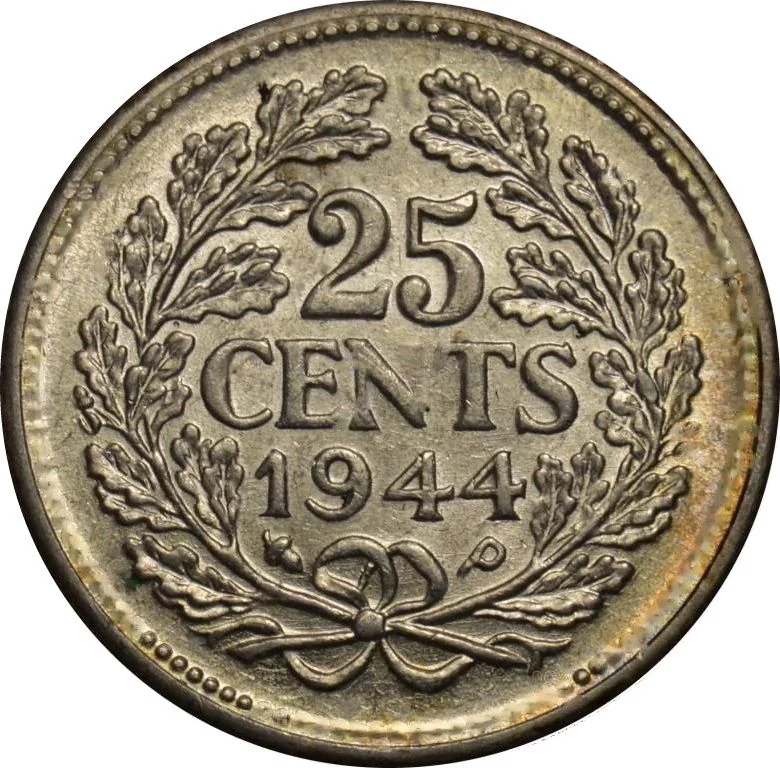
25 cents – Netherlands
Add to wishlist
Netherlands
Context
Years: 1926–1945
Issuer: Netherlands
Ruler: Wilhelmina
Currency:
(1817—2001)
Demonetization: 15 August 1950
Total mintage: 195,000,000
Material
References
KM: #
Numista: #2837
Value
Exchange value: 0.25 NLG
Bullion value: $5.81
Obverse
Description:
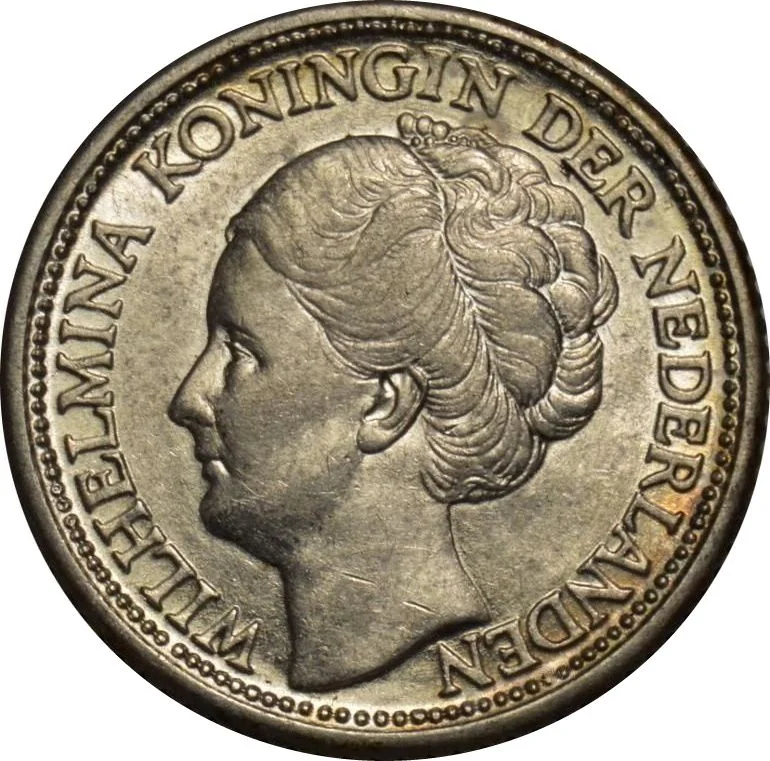
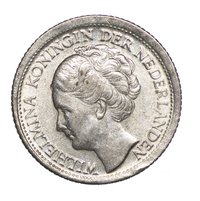
Queen Wilhelmina facing left, with raised hair. Lettering encircles.
Inscription:
WILHELMINA KONINIGIN DER NEDERLANDEN
Translation:
Wilhelmina Queen of the Netherlands
Script: Latin
Language: Dutch
Designer: Johannes Cornelis Wienecke
Reverse
Edge
Reeded
Mints
| Name | Mark |
|---|---|
| Royal Dutch Mint | — |
| United States Mint of Philadelphia | P |
Mintings
Historical background
In 1926, the Netherlands was in the final stages of a prolonged and challenging process of monetary stabilization following the economic disruptions of World War I. Unlike many European nations that experienced hyperinflation, the Netherlands had maintained the gold convertibility of its currency, the guilder, until 1914. However, the war forced the country to abandon the gold standard, leading to a period of controlled "paper guilder" inflation and significant capital outflows. By the early 1920s, the priority for the Dutch government and the central bank (De Nederlandsche Bank) was a return to the pre-war gold parity, seen as a cornerstone of financial credibility and stability.
This commitment to restoring the guilder's pre-war value came at a considerable social cost. To achieve deflation and raise the international value of the currency, the government maintained a tight monetary policy and strict austerity. This resulted in sustained wage suppression, high unemployment, and social unrest throughout the first half of the 1920s, as the economy was squeezed to make the guilder more expensive. By 1925-26, this painful policy was nearing its goal, with the guilder's value approaching its pre-war gold parity.
Consequently, the key event of 1926 was the official return to the gold standard at the pre-war parity in April of that year. This move, championed by central bank president Dr. Gerard Vissering, was hailed as a triumph of financial orthodoxy and restored the Netherlands' reputation as a fiscally conservative trading nation. However, the restoration locked in an overvalued currency, which adversely affected the competitiveness of Dutch exports, particularly in agriculture and textiles, for years to come. Thus, 1926 represents both the successful conclusion of a rigorous stabilization effort and the beginning of a new chapter of economic challenges tied to a strong, but potentially burdensome, guilder.
This commitment to restoring the guilder's pre-war value came at a considerable social cost. To achieve deflation and raise the international value of the currency, the government maintained a tight monetary policy and strict austerity. This resulted in sustained wage suppression, high unemployment, and social unrest throughout the first half of the 1920s, as the economy was squeezed to make the guilder more expensive. By 1925-26, this painful policy was nearing its goal, with the guilder's value approaching its pre-war gold parity.
Consequently, the key event of 1926 was the official return to the gold standard at the pre-war parity in April of that year. This move, championed by central bank president Dr. Gerard Vissering, was hailed as a triumph of financial orthodoxy and restored the Netherlands' reputation as a fiscally conservative trading nation. However, the restoration locked in an overvalued currency, which adversely affected the competitiveness of Dutch exports, particularly in agriculture and textiles, for years to come. Thus, 1926 represents both the successful conclusion of a rigorous stabilization effort and the beginning of a new chapter of economic challenges tied to a strong, but potentially burdensome, guilder.
🌱 Very Common