Logo Title
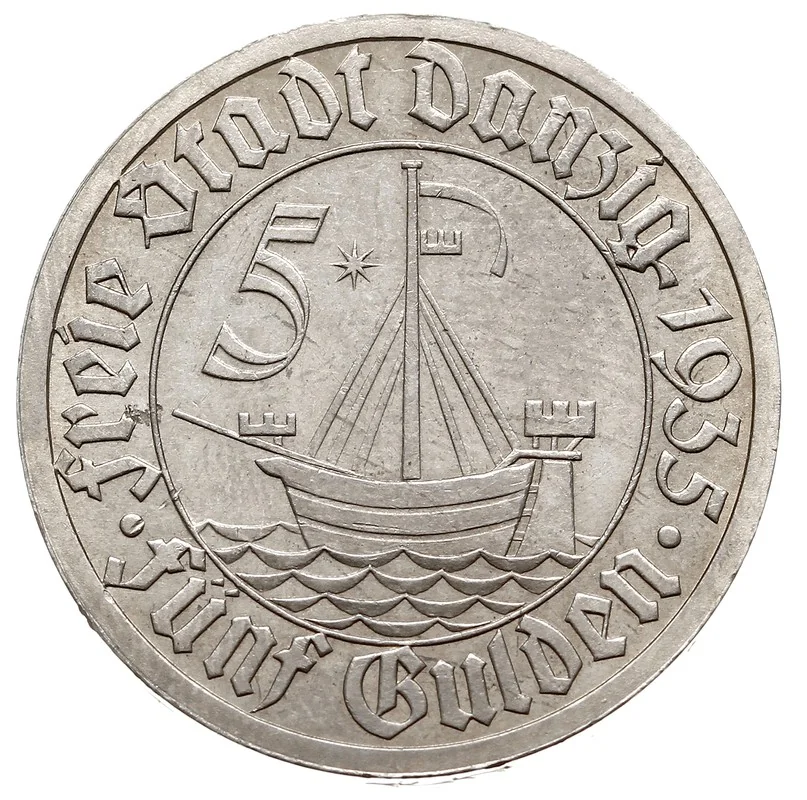
obverse
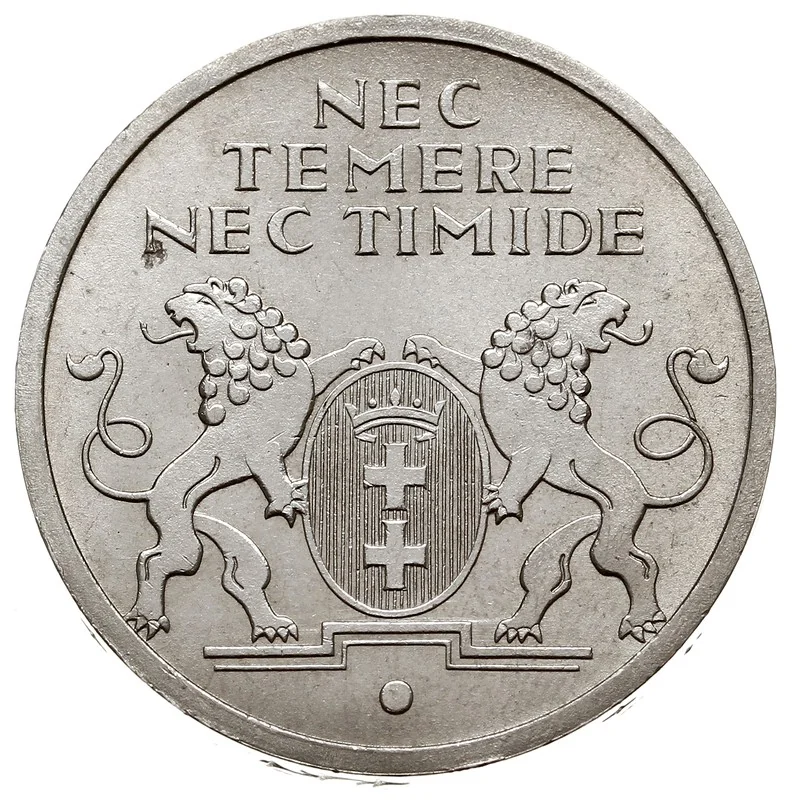
reverse
Warszawskie Centrum Numizmatyczne s.j.

5 Gulden – Free city of Danzig

Poland
Context
Year: 1935
Country: Poland Country flag
Period:
(1920—1939)
Currency:
(1923—1939)
Demonetized: Yes
Total mintage: 800,000
Material
Diameter: 29 mm
Weight: 11 g
Thickness: 3 mm
Shape: Round
Composition: Nickel
Magnetic: Yes
Technique: Milled
Alignment: Medal alignment
Obverse
OBVERSE ↑
flip
Reverse
REVERSE ↑
References
KM: #Click to copy to clipboard158
Numista: #28356

Obverse

Description:
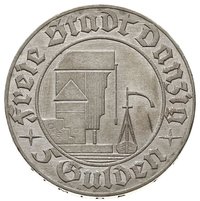
Ship at sea, number left in circle, star and date right.
Inscription:
Freie Stadt Danzig · 1935

·Fünf Gulden·

5
Translation:
Free City of Danzig · 1935

·Five Gulden·

5
Language: German
Engraver: Erich Volmar

Reverse

Description:
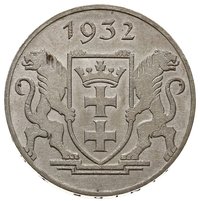
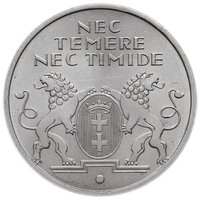
Arms on an oval shield with supporters.
Inscription:
NEC

TEMERE

NEC TIMIDE
Translation:
Neither rashly nor timidly
Script: Latin
Language: Latin
Engraver: Erich Volmar

Edge

Plain with repeated patterns

Mintings

YearMint MarkMintageQualityCollection
1935800,000

Historical background

In 1935, the Free City of Danzig operated under a unique and complex monetary system, a direct consequence of its special political status. Established by the Treaty of Versailles in 1920, Danzig was a semi-autonomous city-state under the protection of the League of Nations, though it existed within a customs union with Poland. This hybrid sovereignty was reflected in its currency: while the Danzig gulden was the official legal tender, issued by the Bank of Danzig, it was pegged at par to the Polish złoty. This peg ensured economic stability with Poland, its primary trading partner, and both currencies circulated freely and interchangeably within the city's borders.

Economically, this arrangement was generally successful in the mid-1930s, providing a buffer against the hyperinflation that had ravaged Germany in the early 1920s. However, the currency system was inherently political, mirroring the ongoing tensions between the city's predominantly German population and the Polish state. The Polish government held significant influence over the Bank of Danzig, and the monetary link was a constant reminder of Polish economic rights in the Free City, which included control over its railway system and port facilities.

By 1935, this financial interdependence was becoming increasingly strained by the rising tide of Nazism. The local Nazi Party, which had taken full control of the Danzig Senate in 1933, sought to undermine all symbols of Polish authority and move the city toward integration with the Third Reich. While they could not immediately dismantle the gulden-złoty peg without causing economic chaos, they began a campaign of political pressure and propaganda against it. Thus, the stable but dual currency system stood as a fragile economic pillar in a political landscape that was rapidly deteriorating, foreshadowing the annexation that would come in 1939.
💎 Very Rare