

Iran
Context
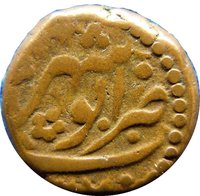
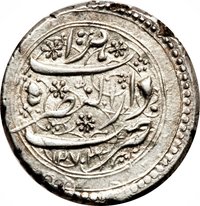
Year: 1853
Islamic (Hijri) Year: 1270
Issuer: Iran 
Ruler: Naser al-Din Shah
Currency:
(1825—1932)
Demonetized: Yes
Material
Diameter: 16 mm
Weight: 3.9 g
Thickness: 2.7 mm
Shape: Irregular round
Composition: Copper
Magnetic: No
Alignment: Coin alignment
flip
References
KM: #Click to copy to clipboard2
Numista: #283264
Obverse
Description:
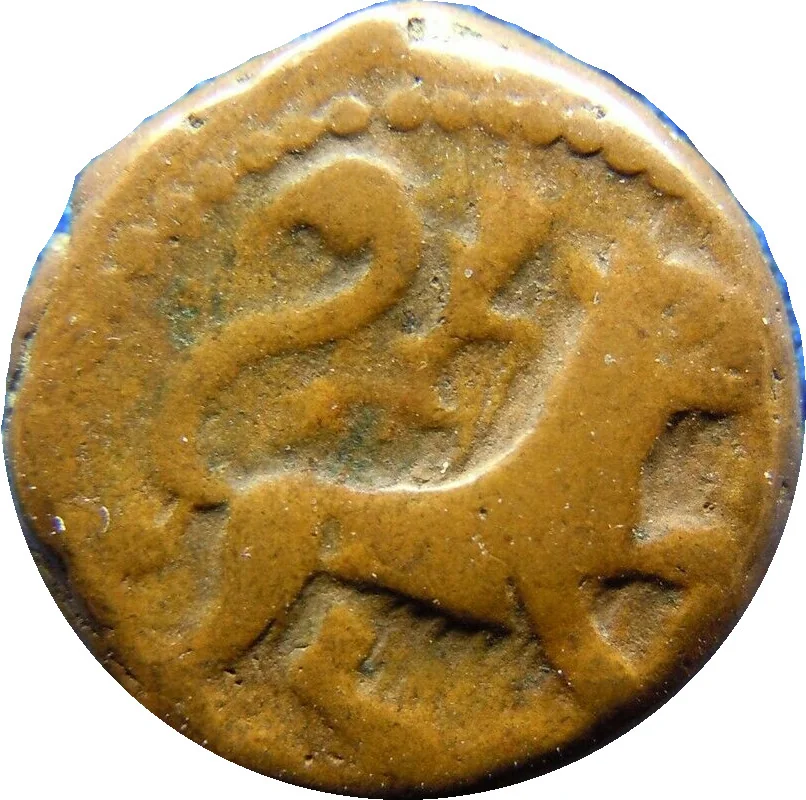
Lion walking to the right.
Reverse
Edge
Mintings
| Year | Mint Mark | Mintage | Quality | Collection |
|---|---|---|---|---|
| 1853 | — | — |
Historical background
In 1853, Iran's monetary system was a complex and fragmented reflection of its weak central authority and integration into global trade networks. The country lacked a unified national currency. Instead, a bewildering array of silver and gold coins circulated, primarily the silver qiran (also called kran) and the gold toman (valued at 10 qirans). These coins were minted in various cities like Tehran, Tabriz, and Isfahan, with inconsistent weight and purity, leading to widespread confusion and discounting in commerce. Alongside these, a vast quantity of foreign coins, particularly Russian rubles, British Indian rupees, and Ottoman coins, circulated freely, especially in border regions and major trading centers, further undermining the domestic currency's sovereignty.
The root of this instability lay in severe fiscal deficits. The Qajar state's revenue, derived largely from land taxes and customs, was insufficient to cover the extravagant court expenditures, provincial administration costs, and military outlays. This chronic shortage led to repeated debasement of the coinage—reducing the silver content of the qiran to generate seigniorage revenue for the royal treasury. Each debasement eroded public trust, drove older, purer coins out of circulation (Gresham's Law), and caused price inflation, harming the populace and creating a chaotic environment for both domestic trade and foreign merchants.
This monetary disorder had direct diplomatic consequences in 1853, as Iran found itself strategically positioned between the Russian and British Empires during the Crimean War. Both powers exerted immense economic and political influence in Tehran. The weakness of Iran's currency was a symptom of its broader financial vulnerability, making the state susceptible to foreign loans and political pressure. The inability to control its own monetary space was a clear indicator of the Qajar dynasty's diminishing economic sovereignty, setting the stage for later, more drastic attempts at financial reform in the late 19th century.
The root of this instability lay in severe fiscal deficits. The Qajar state's revenue, derived largely from land taxes and customs, was insufficient to cover the extravagant court expenditures, provincial administration costs, and military outlays. This chronic shortage led to repeated debasement of the coinage—reducing the silver content of the qiran to generate seigniorage revenue for the royal treasury. Each debasement eroded public trust, drove older, purer coins out of circulation (Gresham's Law), and caused price inflation, harming the populace and creating a chaotic environment for both domestic trade and foreign merchants.
This monetary disorder had direct diplomatic consequences in 1853, as Iran found itself strategically positioned between the Russian and British Empires during the Crimean War. Both powers exerted immense economic and political influence in Tehran. The weakness of Iran's currency was a symptom of its broader financial vulnerability, making the state susceptible to foreign loans and political pressure. The inability to control its own monetary space was a clear indicator of the Qajar dynasty's diminishing economic sovereignty, setting the stage for later, more drastic attempts at financial reform in the late 19th century.
✨ Legendary