

2 rupees (Employees Provident Fund) – Sri Lanka
Add to wishlist
Circulating commemorative coins
Commemoration: 50th Anniversary of Employees Provident Fund
Sri Lanka
Obverse
Description:
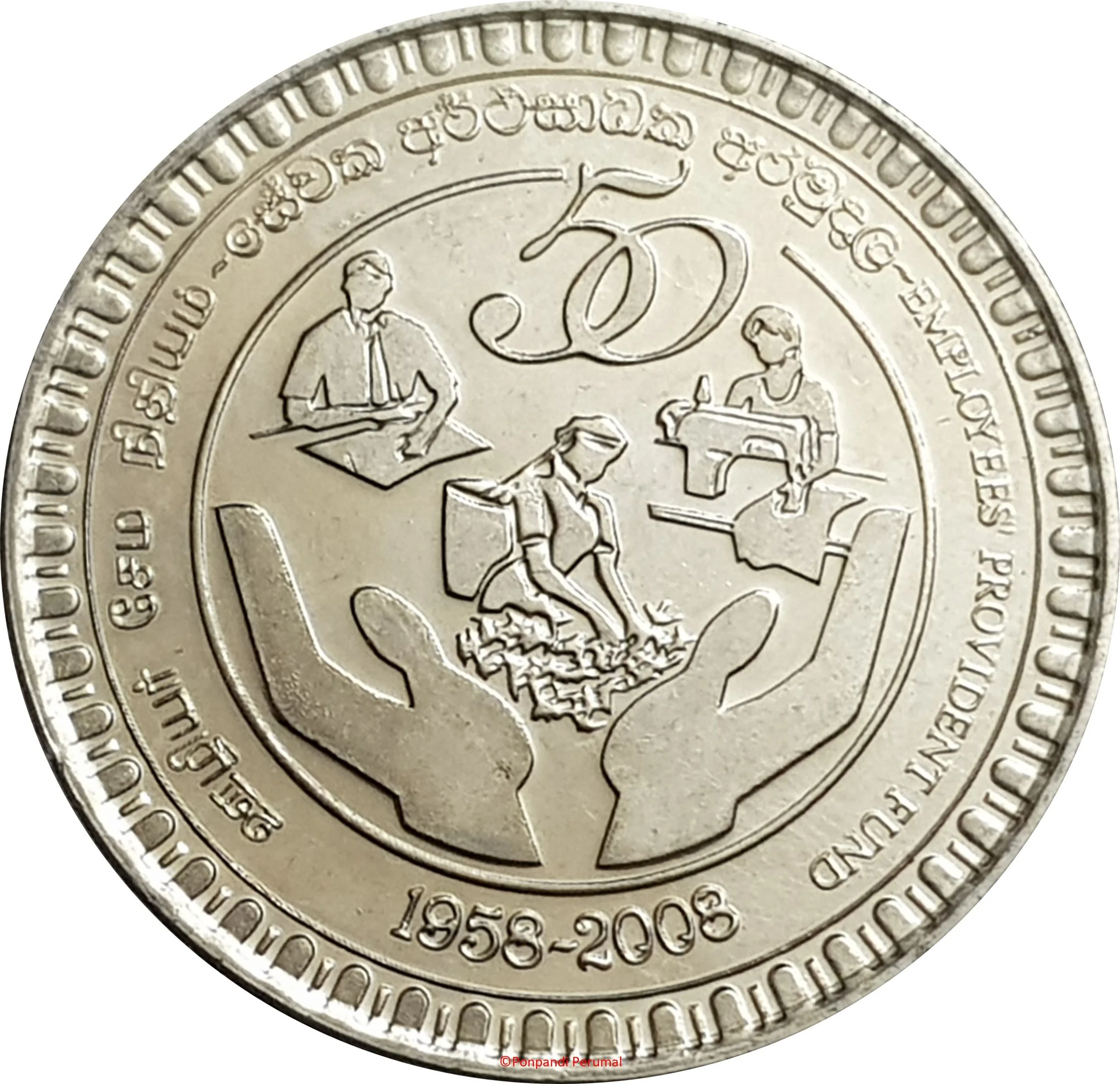
The EPF's security for members is shown by two upholding palms beneath workers representing agriculture, industry, and services. The numeral 50 marks the EPF's Golden Jubilee. "EMPLOYEES PROVIDENT FUND" appears in Sinhala, Tamil, and English, with 1958-2008 below, surrounded by a petal design.
Inscription:
50
EMPLOYEES PROVIDENT FUND
1958-2008
EMPLOYEES PROVIDENT FUND
1958-2008
Translation:
50
EMPLOYEES PROVIDENT FUND
1958-2008
EMPLOYEES PROVIDENT FUND
1958-2008
Language: English
Reverse
Description:
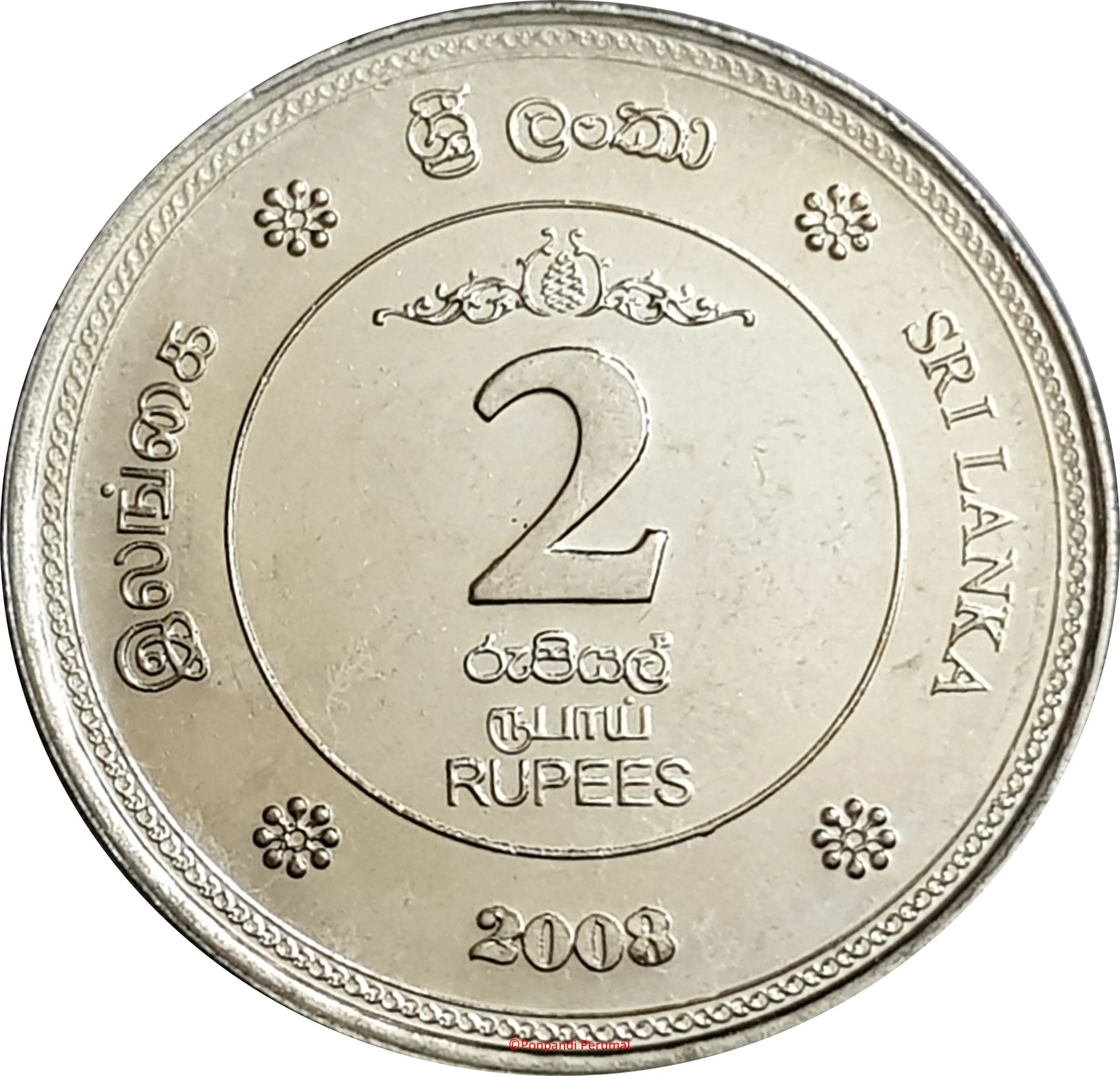
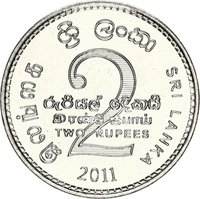
Central '2' with 'RUPEES' in Sinhala, Tamil, and English below. Floral design above; '2008' below. 'SRI LANKA' in Sinhala top, Tamil left, English right on periphery, separated by four 8-petal symbols. Plain inner circle, decorative outer border.
Inscription:
ශ්රී ලංකා
இலங்கை
SRI LANKA
2
රුපියල
ரூபாய்
RUPEES
2008
இலங்கை
SRI LANKA
2
රුපියල
ரூபாய்
RUPEES
2008
Translation:
SRI LANKA
TWO
RUPEES
2008
TWO
RUPEES
2008
Edge
Reeded
Mintings
| Year | Mint Mark | Mintage | Quality | Collection |
|---|---|---|---|---|
| 2008 | — | 2,000,000 |
Historical background
In 2008, Sri Lanka's currency situation was defined by intense pressure on the Sri Lankan Rupee (LKR) amidst a combination of domestic conflict and global economic turmoil. The government was engaged in a final, costly military offensive against the Liberation Tigers of Tamil Eelam (LTTE), which led to high defence expenditure and strained public finances. Simultaneously, the global financial crisis and soaring commodity prices, particularly for oil and food, worsened the country's trade deficit and triggered a balance of payments crisis. The Central Bank of Sri Lanka (CBSL) struggled to maintain the rupee's peg within a managed float, depleting foreign reserves in a costly defence of the currency.
Authorities responded with a series of strict import controls and sought financial assistance from the International Monetary Fund (IMF), though an agreement was not finalized until 2009. Despite these measures, the rupee faced significant depreciation pressure. High inflation, which peaked at over 20% during the year, eroded purchasing power and further undermined confidence in the currency. The CBSL was forced to maintain high-interest rates to curb inflation and attract foreign capital, a move that also risked slowing economic growth.
Ultimately, 2008 represented a critical juncture where wartime fiscal policies collided with external shocks, exposing underlying macroeconomic vulnerabilities. The depletion of foreign reserves, a widening current account deficit, and persistent inflation created a perfect storm that the managed exchange rate regime could not withstand. This precarious situation set the stage for the more severe economic challenges and eventual IMF intervention in the following year, as the currency's stability became increasingly dependent on external financing and a resolution to the protracted civil conflict.
Authorities responded with a series of strict import controls and sought financial assistance from the International Monetary Fund (IMF), though an agreement was not finalized until 2009. Despite these measures, the rupee faced significant depreciation pressure. High inflation, which peaked at over 20% during the year, eroded purchasing power and further undermined confidence in the currency. The CBSL was forced to maintain high-interest rates to curb inflation and attract foreign capital, a move that also risked slowing economic growth.
Ultimately, 2008 represented a critical juncture where wartime fiscal policies collided with external shocks, exposing underlying macroeconomic vulnerabilities. The depletion of foreign reserves, a widening current account deficit, and persistent inflation created a perfect storm that the managed exchange rate regime could not withstand. This precarious situation set the stage for the more severe economic challenges and eventual IMF intervention in the following year, as the currency's stability became increasingly dependent on external financing and a resolution to the protracted civil conflict.
🌱 Fairly Common