

5 Rupees – Sri Lanka
Circulating commemorative coins
Commemoration: Cricket World Cup 2007
Sri Lanka
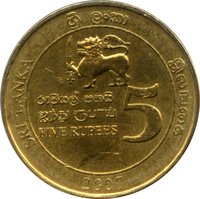
Obverse
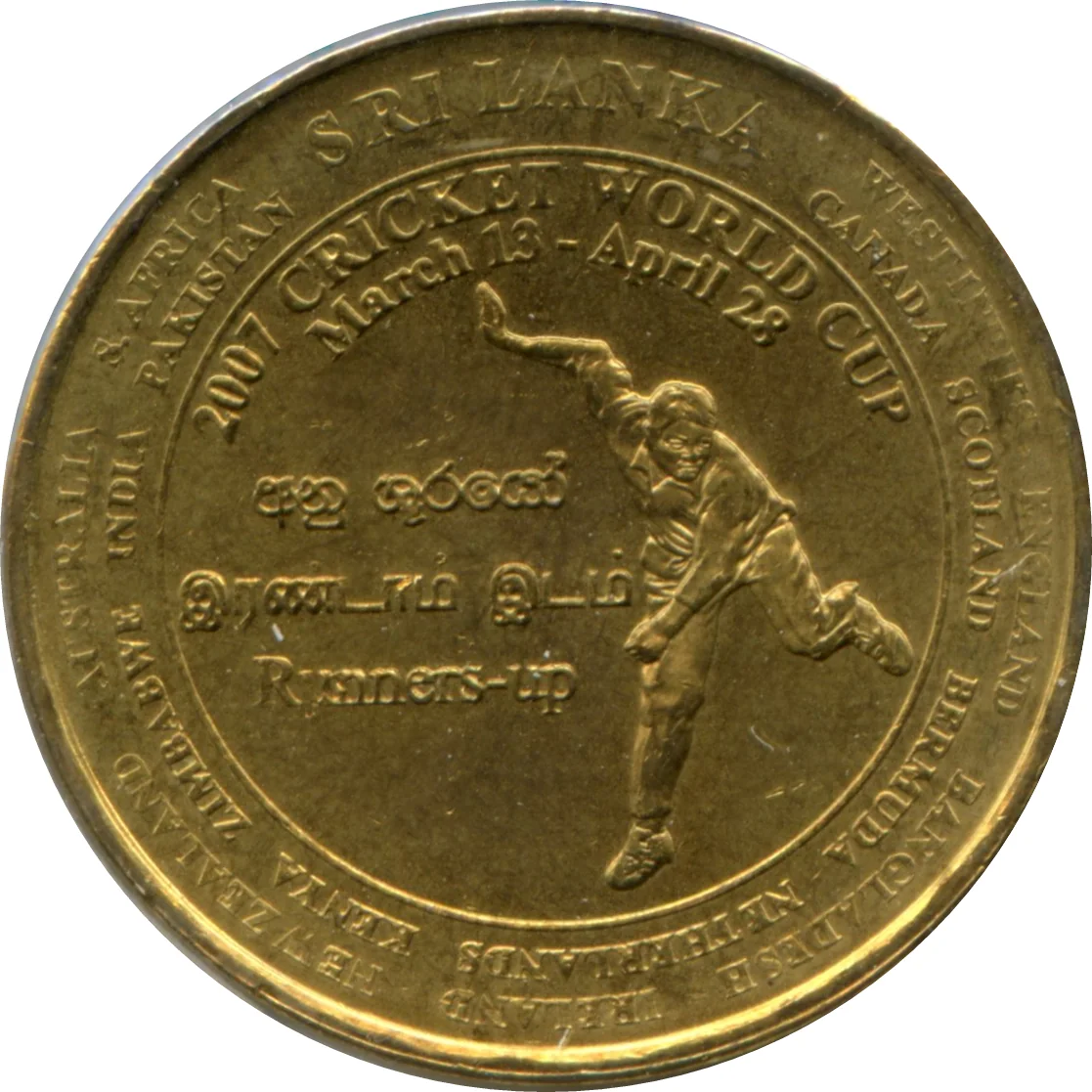
Description:
Cricketer
Inscription:
SRI LANKA
2007 CRICKET WORLD CUP
March 13 - April 28
Runners-up
2007 CRICKET WORLD CUP
March 13 - April 28
Runners-up
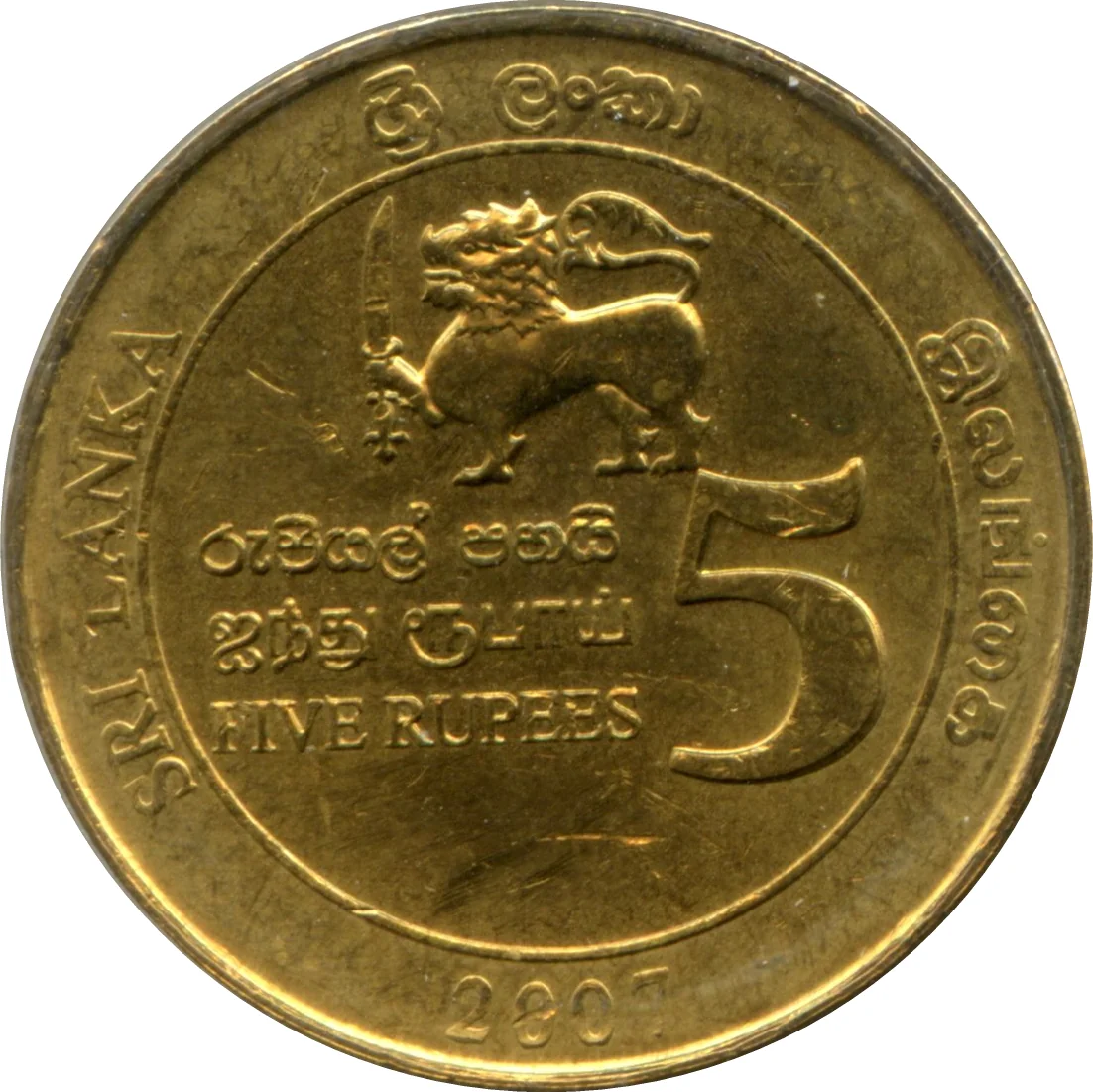
Reverse
Description:
Emblem within a circle.
Inscription:
SRI LANKA
2007
FIVE RUPEES 5
2007
FIVE RUPEES 5
Mintings
| Year | Mint Mark | Mintage | Quality | Collection |
|---|---|---|---|---|
| 2007 | — | 7,860,000 |
Historical background
In 2007, Sri Lanka's currency situation was characterized by significant pressure on the Sri Lankan Rupee (LKR) amidst a costly civil war and rising global commodity prices. The Central Bank of Sri Lanka (CBSL) was engaged in a difficult balancing act, attempting to maintain a stable exchange rate against the US dollar to control inflation, which had surged to nearly 20% by mid-year. This stability was artificially maintained through heavy intervention in the foreign exchange market, depleting official reserves which fell to precarious levels, covering only about two months of imports by year's end.
The underlying economic vulnerabilities were stark. The conflict in the North and East led to soaring defense expenditures, diverting funds from development and contributing to a large fiscal deficit. Simultaneously, the trade deficit widened dramatically as the import bill for oil and food skyrocketed, while export growth, primarily from garments and tea, could not keep pace. Worker remittances and some foreign borrowing provided crucial inflows, but the overall Balance of Payments was under severe strain, creating persistent downward pressure on the rupee that the CBSL struggled to contain.
Consequently, by the close of 2007, the currency regime was increasingly unsustainable. The CBSL's defensive measures, including selling dollars and tightening monetary policy, came at a high cost, stifling private sector credit and economic growth. While the rupee was officially managed within a relatively narrow band, a significant black market for foreign exchange emerged, highlighting the gap between the official rate and market expectations. This period laid bare the structural weaknesses that, if unaddressed, threatened a deeper crisis, setting the stage for the severe economic challenges that would intensify in the following years.
The underlying economic vulnerabilities were stark. The conflict in the North and East led to soaring defense expenditures, diverting funds from development and contributing to a large fiscal deficit. Simultaneously, the trade deficit widened dramatically as the import bill for oil and food skyrocketed, while export growth, primarily from garments and tea, could not keep pace. Worker remittances and some foreign borrowing provided crucial inflows, but the overall Balance of Payments was under severe strain, creating persistent downward pressure on the rupee that the CBSL struggled to contain.
Consequently, by the close of 2007, the currency regime was increasingly unsustainable. The CBSL's defensive measures, including selling dollars and tightening monetary policy, came at a high cost, stifling private sector credit and economic growth. While the rupee was officially managed within a relatively narrow band, a significant black market for foreign exchange emerged, highlighting the gap between the official rate and market expectations. This period laid bare the structural weaknesses that, if unaddressed, threatened a deeper crisis, setting the stage for the severe economic challenges that would intensify in the following years.
🌱 Common