

2 Pounds – United Kingdom
United Kingdom
Context
Years: 1999–2009
Issuer: United Kingdom 
Ruler: Elizabeth II
Currency:
(since 1971)
Total mintage: 176,178
Material
References
KM: #Click to copy to clipboard1000
Numista: #13417
Value
Exchange value: 2 GBP = $2.71
Bullion value: $88.35
Inflation-adjusted value: 4.50 GBP
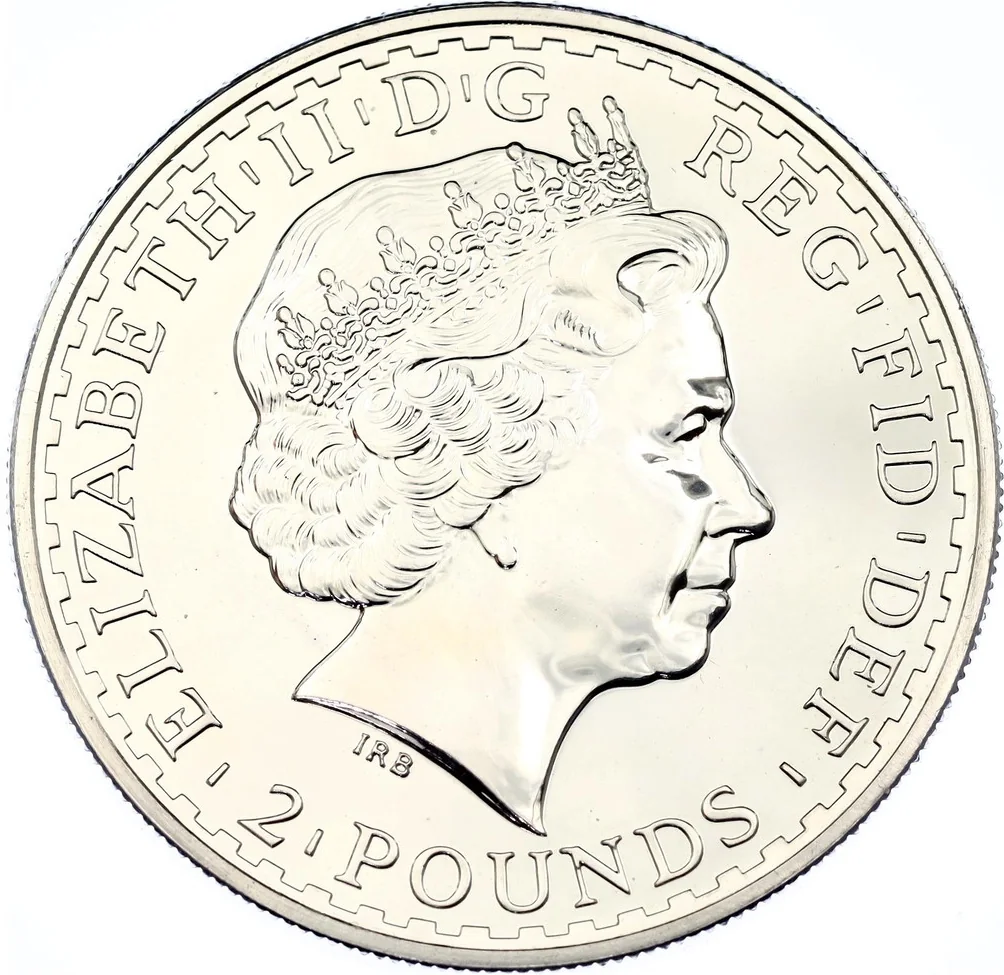
Obverse
Description:
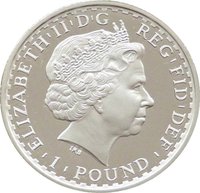
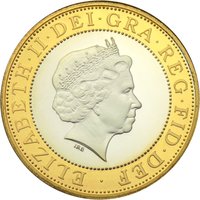
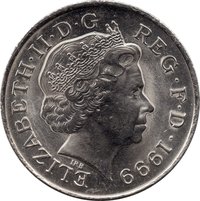
Queen Elizabeth IV facing right, wearing the Girls of Great Britain tiara.
Inscription:
ELIZABETH'II'D'G REG'FID'DEF
IRB
'2'POUNDS'
IRB
'2'POUNDS'
Translation:
Elizabeth II by the Grace of God, Queen, Defender of the Faith
Two Pounds
Two Pounds
Script: Latin
Engraver: Ian Rank-Broadley
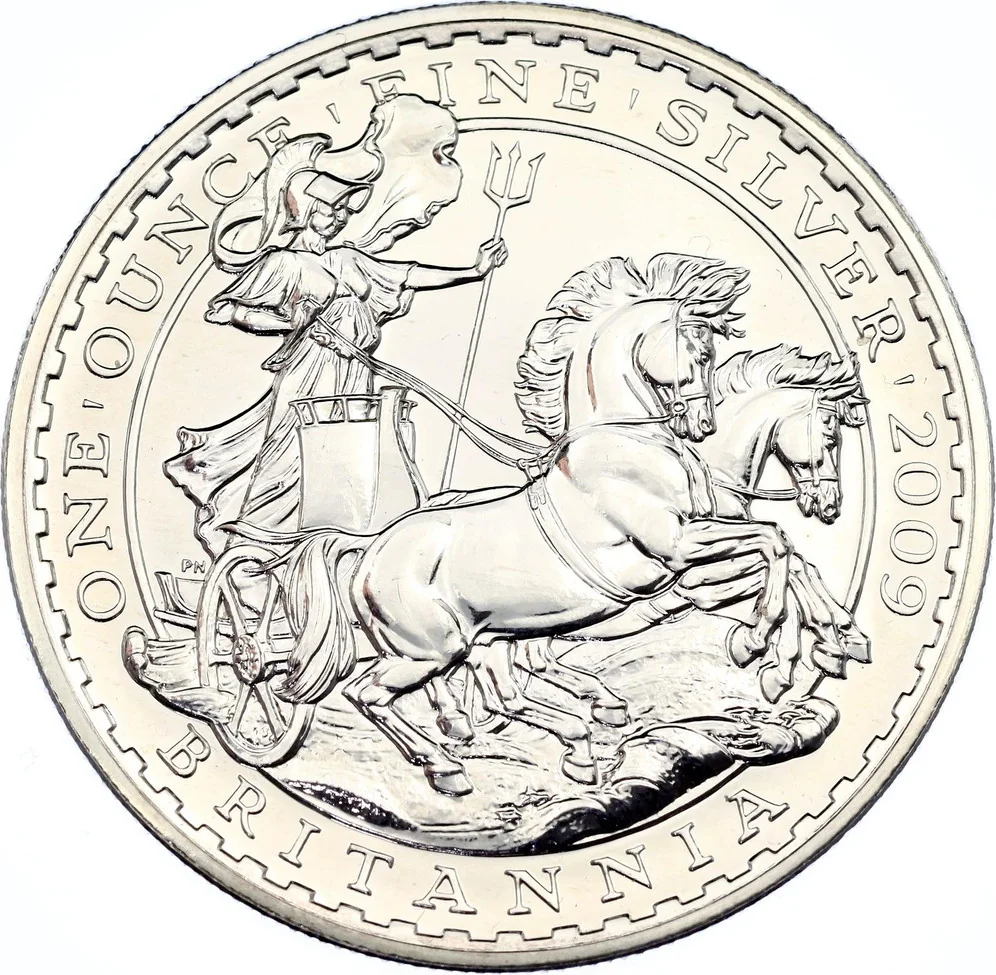
Reverse
Description:
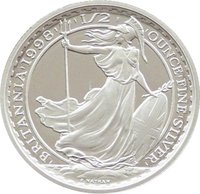
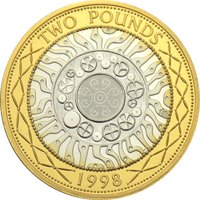
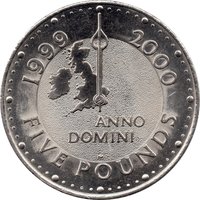
Britannia in chariot with trident, legend and date around.
Inscription:
ONE'OUNCE'FINE'SILVER'1999
PN
BRITANNIA
PN
BRITANNIA
Script: Latin
Engraver: Philip Nathan
Edge
Reeded
Mints
| Name | Mark |
|---|---|
| Royal Mint | — |
Mintings
| Year | Mint Mark | Mintage | Quality | Collection |
|---|---|---|---|---|
| 1999 | — | 69,394 | BU | |
| 2009 | — | 6,784 | Proof | |
| 2009 | — | 100,000 | BU |
Historical background
In 1999, the United Kingdom found itself in a unique and deliberate position regarding European currency integration. While eleven other European Union members launched the euro as a virtual currency on 1 January 1999 (with notes and coins to follow in 2002), the UK, under Chancellor Gordon Brown, had decided to opt out. This decision was formalised by securing an "opt-out" from the third stage of Economic and Monetary Union (EMU) under the Maastricht Treaty. The government's official policy, announced in October 1997, was based on five economic tests which it concluded had not yet been met, effectively postponing any decision on joining until after the next general election.
Domestically, the situation was politically charged and defined by caution. The Labour government, led by Tony Blair, was theoretically more pro-European than its predecessors but remained deeply wary of public and media scepticism, particularly from powerful newspapers. The shadow of the 1992 Exchange Rate Mechanism (ERM) crisis, which had damaged the Conservative government's reputation for economic competence, loomed large, making any move toward monetary union a sensitive subject. Consequently, the government pursued a policy of "prepare and decide," aiming to converge the UK economy with the eurozone while insisting the final choice would be put to a public referendum.
Economically, the period was one of watchful stability for sterling. The Bank of England, granted operational independence in 1997, focused on domestic inflation targeting without the constraint of aligning with European Central Bank rates. The pound remained strong, trading significantly above the Deutsche Mark and later the euro, which some British commentators initially viewed as a weak currency. This strength, however, began to hurt manufacturing exporters, leading to calls from some business leaders for entry to gain exchange rate stability. Thus, 1999 was not a year of crisis but one of strategic holding, with the UK observing the euro's birth from the sidelines while debating its own long-term economic and political identity.
Domestically, the situation was politically charged and defined by caution. The Labour government, led by Tony Blair, was theoretically more pro-European than its predecessors but remained deeply wary of public and media scepticism, particularly from powerful newspapers. The shadow of the 1992 Exchange Rate Mechanism (ERM) crisis, which had damaged the Conservative government's reputation for economic competence, loomed large, making any move toward monetary union a sensitive subject. Consequently, the government pursued a policy of "prepare and decide," aiming to converge the UK economy with the eurozone while insisting the final choice would be put to a public referendum.
Economically, the period was one of watchful stability for sterling. The Bank of England, granted operational independence in 1997, focused on domestic inflation targeting without the constraint of aligning with European Central Bank rates. The pound remained strong, trading significantly above the Deutsche Mark and later the euro, which some British commentators initially viewed as a weak currency. This strength, however, began to hurt manufacturing exporters, leading to calls from some business leaders for entry to gain exchange rate stability. Thus, 1999 was not a year of crisis but one of strategic holding, with the UK observing the euro's birth from the sidelines while debating its own long-term economic and political identity.
Series: Silver Britannia
🌟 Uncommon