

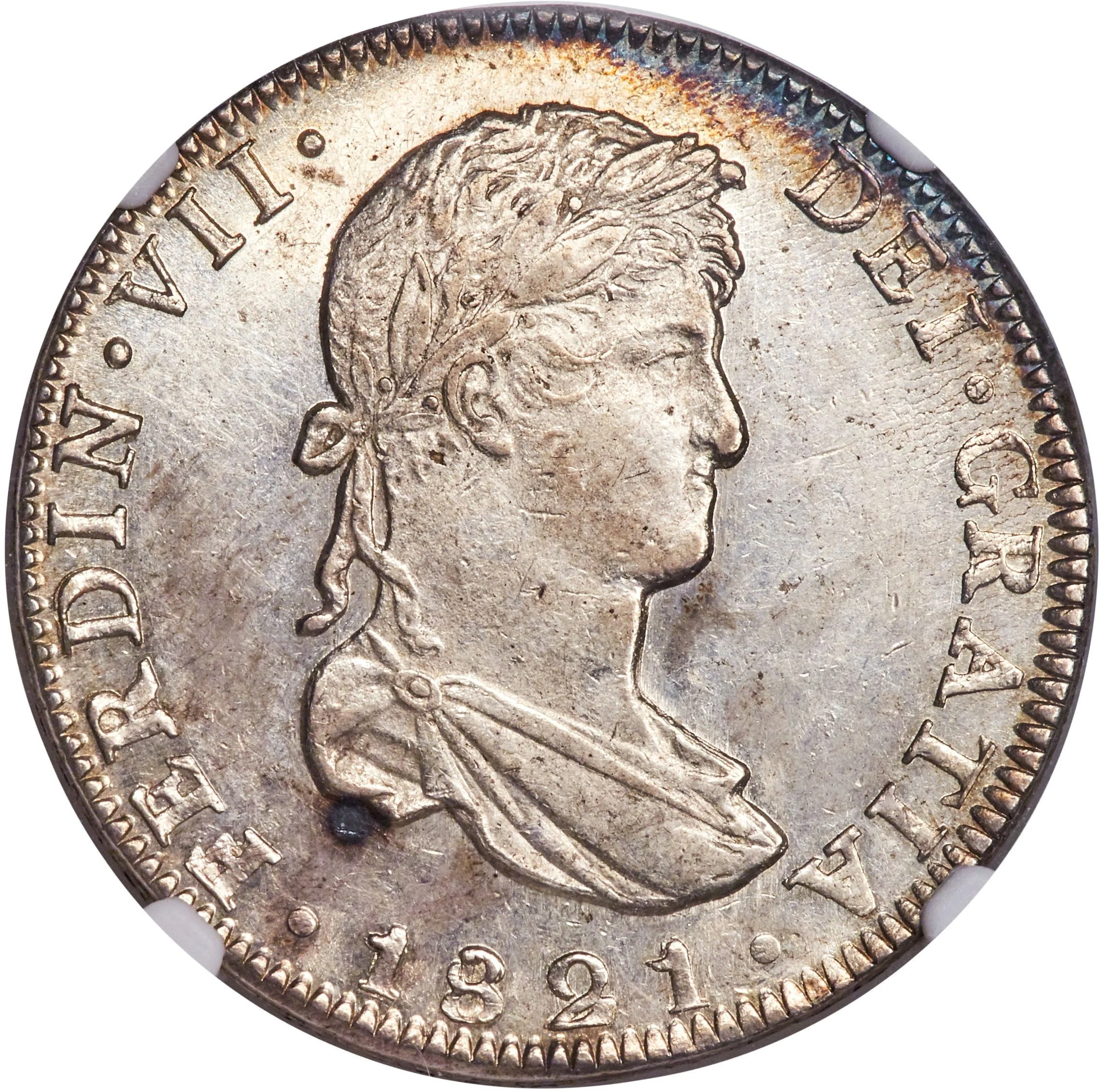
4 reales – New Spain
Add to wishlist
Mexico
Context
Years: 1816–1821
Country: Mexico
Issuer: New Spain
Ruler: Ferdinand VII
Currency:
(1535—1897)
Demonetized: Yes
Material
References
KM: #
Numista: #28242
Value
Bullion value: $29.99
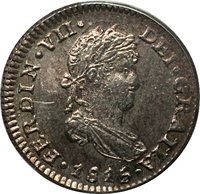
Obverse
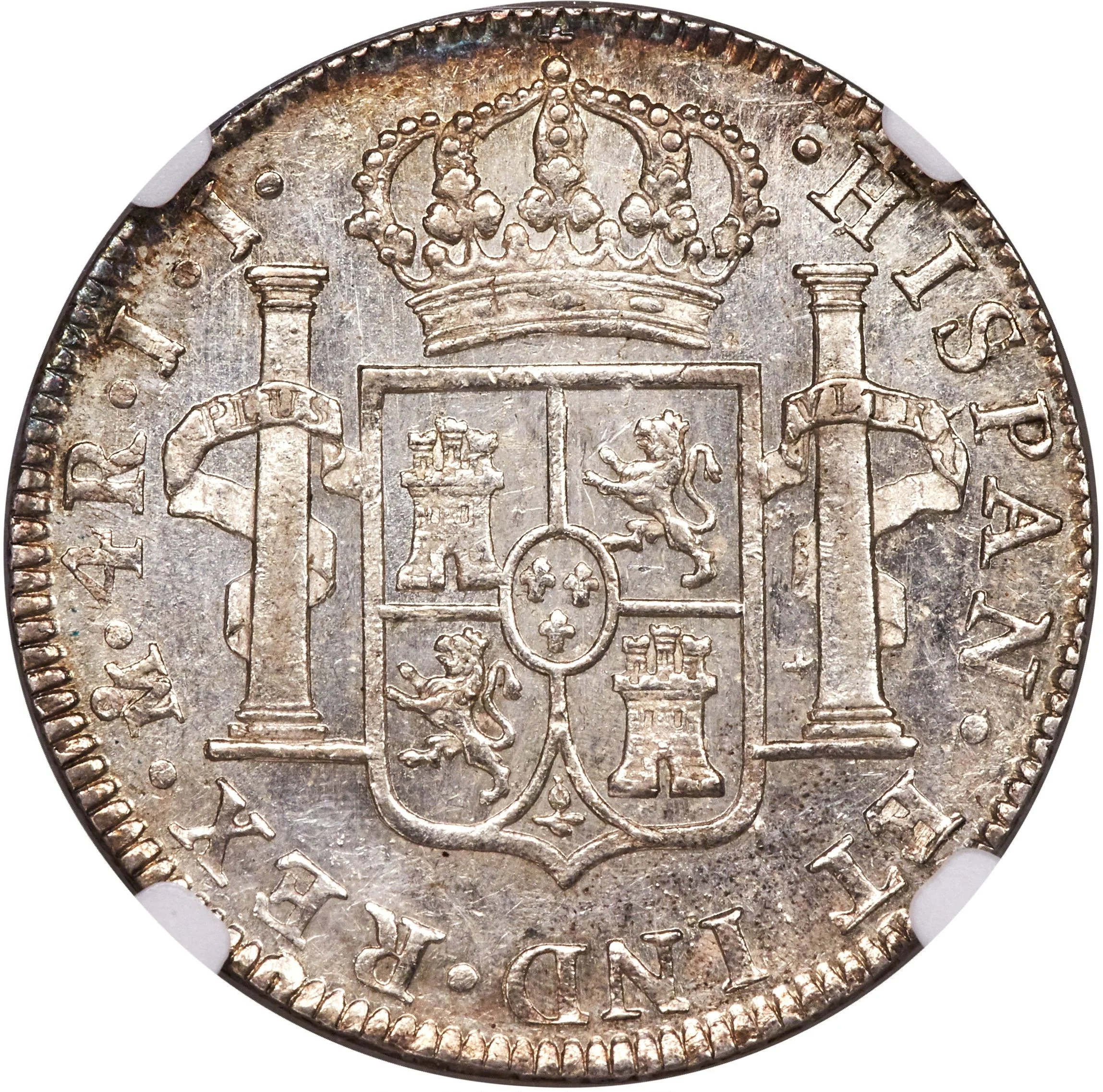
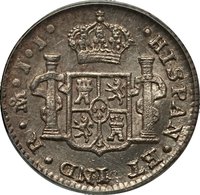
Reverse
Description:
A crowned shield between pillars draped with a banner. The shield displays lions top right and bottom left, castles top left and bottom right, a central trio of fleurs-de-lis, and a pomegranate below.
Inscription:
·HISPAN · ET · IND·REX·Mo·4R·I·I·
Translation:
King of Spain and the Indies, Mo[netary] 4R[egia], I[oannes] I[oannes]
Script: Latin
Language: Latin
Edge
Reeded
Mints
| Name | Mark |
|---|---|
| Mexican Mint | (Mo) |
Mintings
| Year | Mint Mark | Mintage | Quality | Collection |
|---|---|---|---|---|
| 1816 | Mo | — | ||
| 1817 | Mo | — | ||
| 1818 | Mo | — | ||
| 1819 | Mo | — | ||
| 1820 | Mo | — | ||
| 1821 | Mo | — |
Historical background
By 1816, the currency situation in New Spain was chaotic and critically undermined the colonial economy, reflecting the broader disintegration of royal authority during the Mexican War of Independence. The core of the problem was a severe shortage of official silver and gold coinage (pesos fuertes). This was caused by the disruption of mining, a key economic pillar, as insurgent forces targeted production centers and supply lines. Furthermore, vast amounts of silver were being siphoned off to Spain to fund the Peninsular War against Napoleon, leaving the viceroyalty starved of precious metal.
This scarcity led to a proliferation of low-quality and illegitimate currency. The royalist government, desperate to finance its military campaigns against the insurgency, dramatically increased the minting of debased copper coins (tlacos or señalados), which were officially token currency but were mandated for public use. Simultaneously, both insurgent factions and even some desperate provincial royalist authorities issued their own crude copper and paper monies. The result was a confusing patchwork of currencies of wildly different values, with widespread counterfeiting further eroding public trust.
Consequently, the economy suffered from severe inflation, hoarding of precious metals, and a collapse in commercial confidence. Transactions became fraught, as merchants and the public struggled to assess the real value of mixed handfuls of coin. This monetary anarchy crippled trade, strained the royalist war effort, and inflicted daily hardship on the population. The currency crisis of 1816 was thus both a symptom and an accelerator of the colony's fragmentation, demonstrating that Spanish fiscal control had broken down long before final military defeat.
This scarcity led to a proliferation of low-quality and illegitimate currency. The royalist government, desperate to finance its military campaigns against the insurgency, dramatically increased the minting of debased copper coins (tlacos or señalados), which were officially token currency but were mandated for public use. Simultaneously, both insurgent factions and even some desperate provincial royalist authorities issued their own crude copper and paper monies. The result was a confusing patchwork of currencies of wildly different values, with widespread counterfeiting further eroding public trust.
Consequently, the economy suffered from severe inflation, hoarding of precious metals, and a collapse in commercial confidence. Transactions became fraught, as merchants and the public struggled to assess the real value of mixed handfuls of coin. This monetary anarchy crippled trade, strained the royalist war effort, and inflicted daily hardship on the population. The currency crisis of 1816 was thus both a symptom and an accelerator of the colony's fragmentation, demonstrating that Spanish fiscal control had broken down long before final military defeat.
✨ Legendary