

20 Cents – Danish West Indies
Context
Years: 1878–1879
Issuer: Danish West Indies
Ruler: Christian IX
Currency:
(1849—1905)
Demonetized: Yes
Total mintage: 500,000
Material
References
KM: #Click to copy to clipboard71
Numista: #28156
Value
Bullion value: $12.24
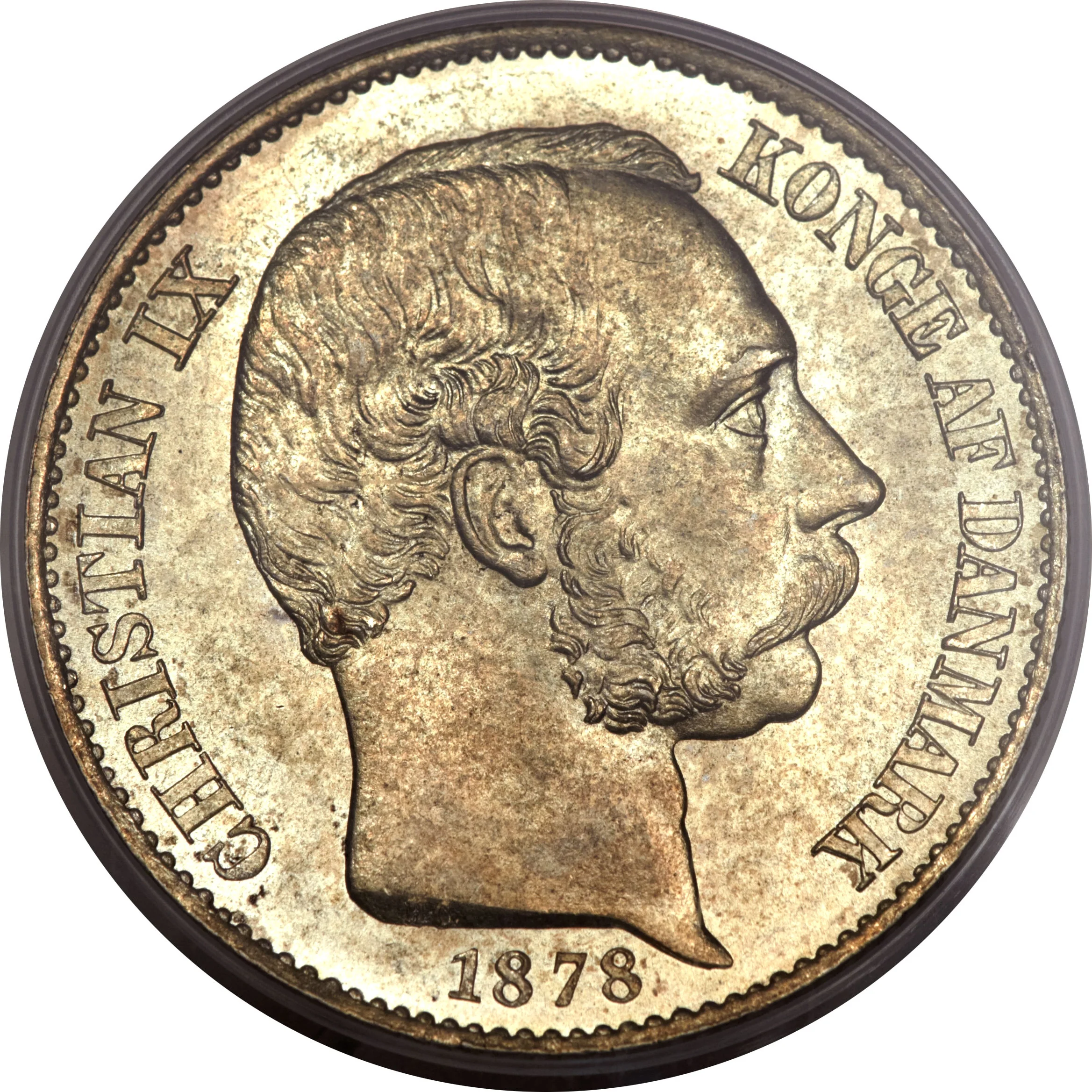
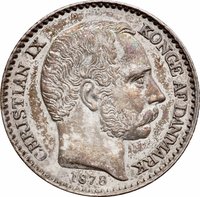
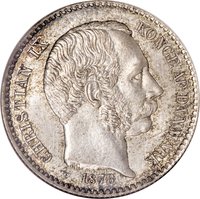
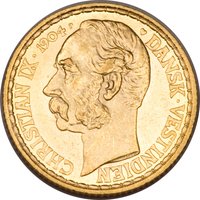
Obverse
Description:
Right-facing bust
Inscription:
CHRISTIAN IX KONGE AF DANMARK
1878
1878
Translation:
Christian IX King of Denmark
Script: Latin
Language: Danish
Engraver: Harald Conradsen
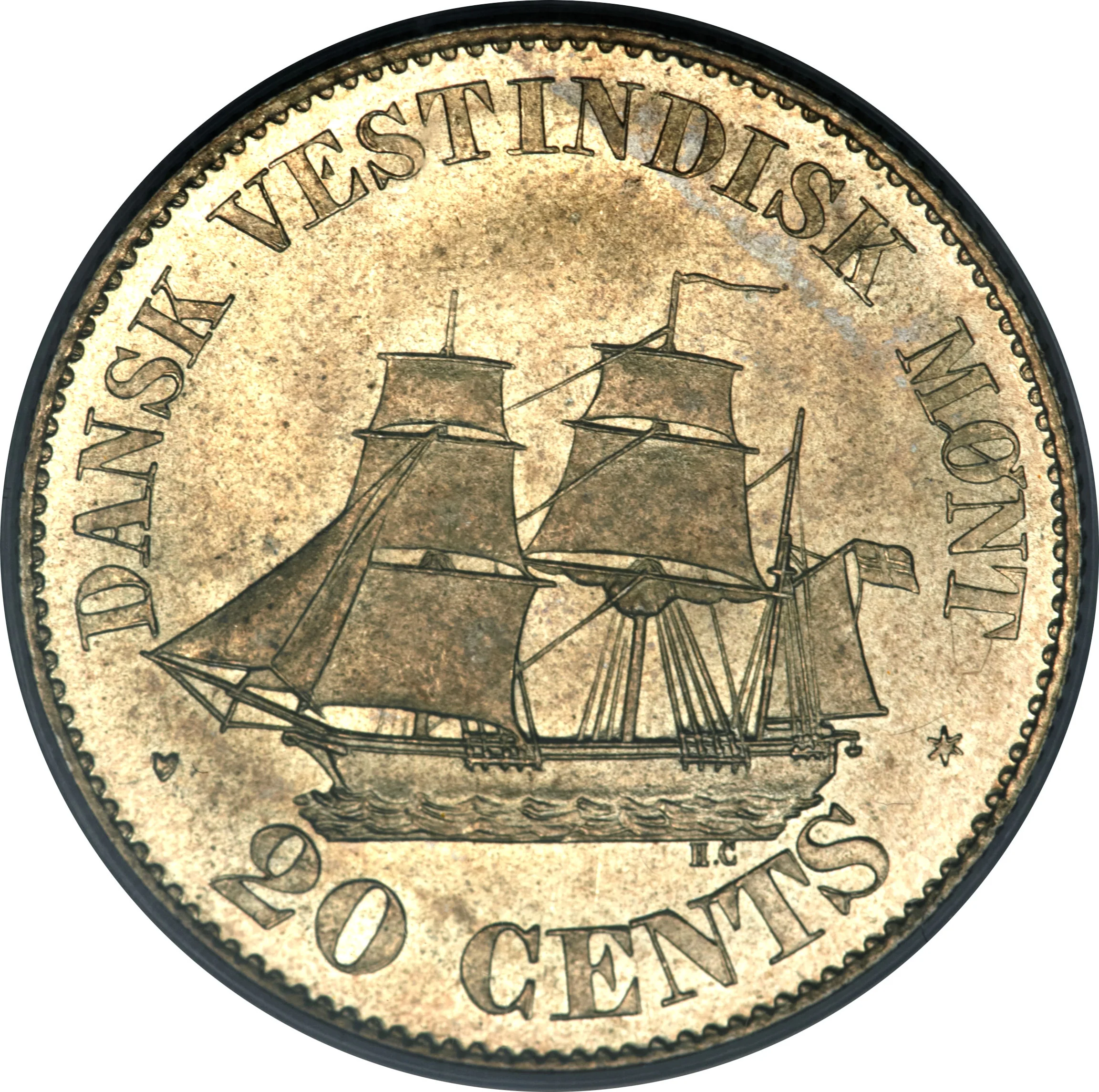
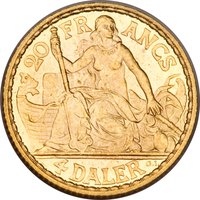
Reverse
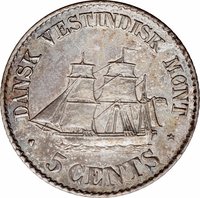
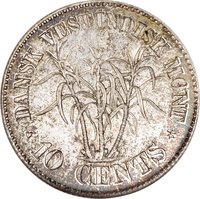
Description:
Vessel and value
Inscription:
DANSK VESTINDISK MØNT
20 CENTS
20 CENTS
Translation:
Danish West Indian Coin
20 Cents
20 Cents
Script: Latin
Language: Danish
Engraver: Harald Conradsen
Edge
Reeded
Categories
| Person> Monarch |
| Symbol> Flag |
| Transportation> Watercraft |
| Mustache/Beard |
Mints
| Name | Mark |
|---|---|
| Royal Danish Mint | — |
Mintings
| Year | Mint Mark | Mintage | Quality | Collection |
|---|---|---|---|---|
| 1878 | — | — | Prooflike | |
| 1878 | — | — | Proof | |
| 1878 | — | 200,000 | ||
| 1879 | — | 300,000 |
Historical background
In 1878, the Danish West Indies (present-day U.S. Virgin Islands) operated under a complex and often problematic currency system, a reflection of its position as a small colonial possession within a vast Atlantic trade network. The official currency was the Danish rigsdaler, divided into 96 skilling. However, Danish coinage was chronically scarce on the islands. The real lifeblood of the local economy was the Spanish silver dollar and its fractional parts, which circulated widely due to the territory's deep integration with regional trade, particularly with nearby Spanish, British, and Dutch colonies. This created a dual-system where official accounts were kept in Danish currency, but daily transactions were conducted in a mix of foreign silver coins.
This situation led to significant commercial confusion and inconvenience. Merchants and planters had to constantly calculate exchange rates between the official rigsdaler and the various foreign coins in circulation, which fluctuated based on supply and wear. The problem was exacerbated by the widespread use of cut or "chopped" Spanish dollars, where pieces were physically cut to make change, further complicating their value. While the Danish government periodically attempted to regulate the currency, these efforts were largely ineffective on the ground, as the economic reality was dictated by the needs of cross-border commerce and the persistent shortage of official Danish specie.
Consequently, the year 1878 fell within a prolonged period of monetary disorder that would ultimately push the colonial administration toward a major reform. The persistent problems—scarcity of official coin, reliance on mutilated foreign currency, and cumbersome calculations—built a strong case for decimalization and modernization. This momentum would culminate just a few years later, in 1879, with the introduction of the decimal franc-based system, pegging the new Danish West Indian daler to the U.S. dollar at a fixed rate. This shift was a pragmatic acknowledgment of the islands' economic dependencies and a move to stabilize commerce.
This situation led to significant commercial confusion and inconvenience. Merchants and planters had to constantly calculate exchange rates between the official rigsdaler and the various foreign coins in circulation, which fluctuated based on supply and wear. The problem was exacerbated by the widespread use of cut or "chopped" Spanish dollars, where pieces were physically cut to make change, further complicating their value. While the Danish government periodically attempted to regulate the currency, these efforts were largely ineffective on the ground, as the economic reality was dictated by the needs of cross-border commerce and the persistent shortage of official Danish specie.
Consequently, the year 1878 fell within a prolonged period of monetary disorder that would ultimately push the colonial administration toward a major reform. The persistent problems—scarcity of official coin, reliance on mutilated foreign currency, and cumbersome calculations—built a strong case for decimalization and modernization. This momentum would culminate just a few years later, in 1879, with the introduction of the decimal franc-based system, pegging the new Danish West Indian daler to the U.S. dollar at a fixed rate. This shift was a pragmatic acknowledgment of the islands' economic dependencies and a move to stabilize commerce.
💎 Very Rare