

2 francs – Monaco
Add to wishlist
Monaco
Context
Years: 1979–1982
Issuer: Monaco
Ruler: Rainier III
Currency:
(1960—2001)
Demonetized: Yes
Total mintage: 883,000
Material
References
KM: #
Numista: #2812
Value
Exchange value: 2 MCF
Obverse
Description:
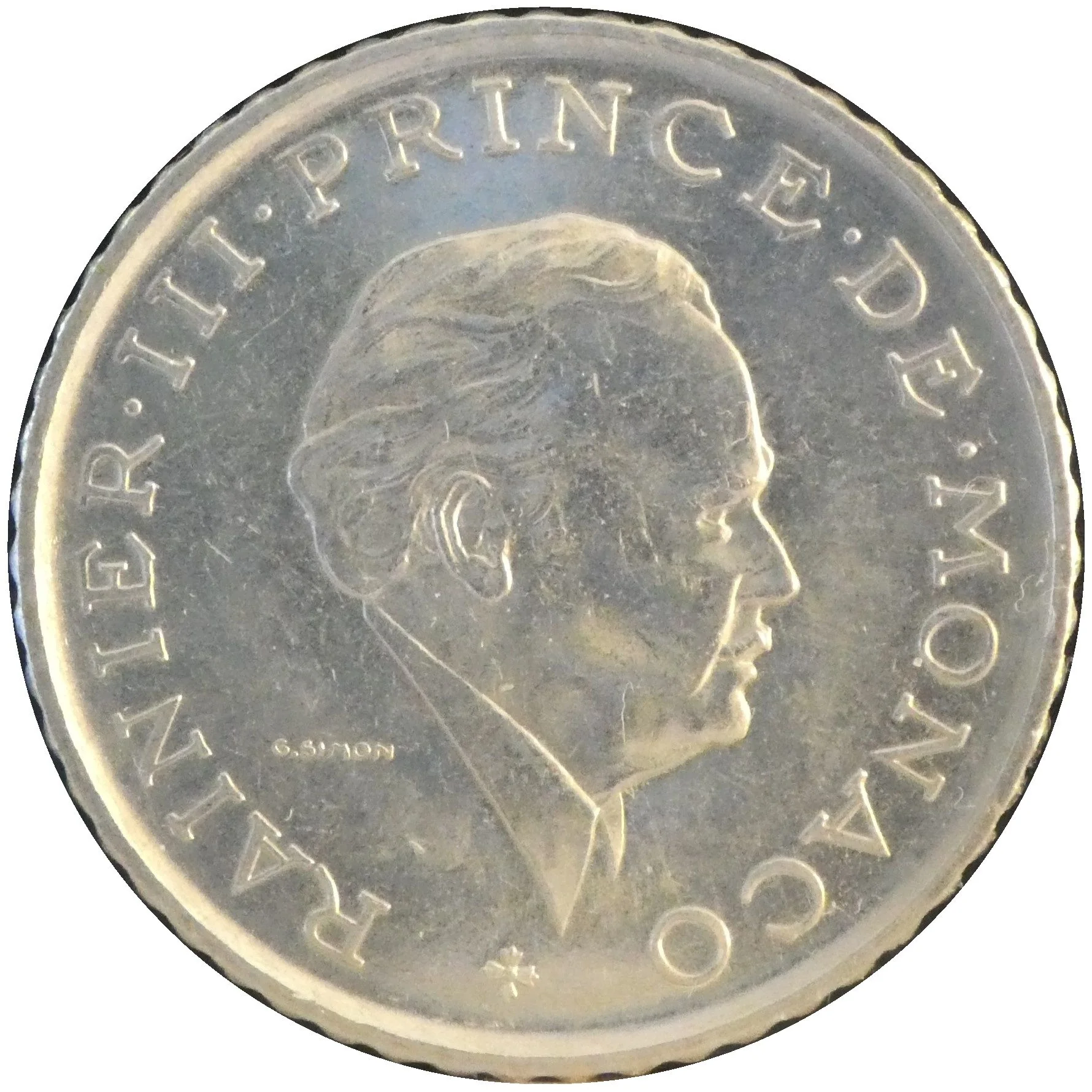
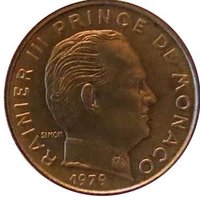
Portrait of Rainier III, facing right.
Inscription:
RAINIER·III·PRINCE·DE·MONACO
G. SIMON
G. SIMON
Translation:
Rainier III, Prince of Monaco
G. Simon
G. Simon
Script: Latin
Language: French
Engraver: Georges Simon
Reverse
Description:
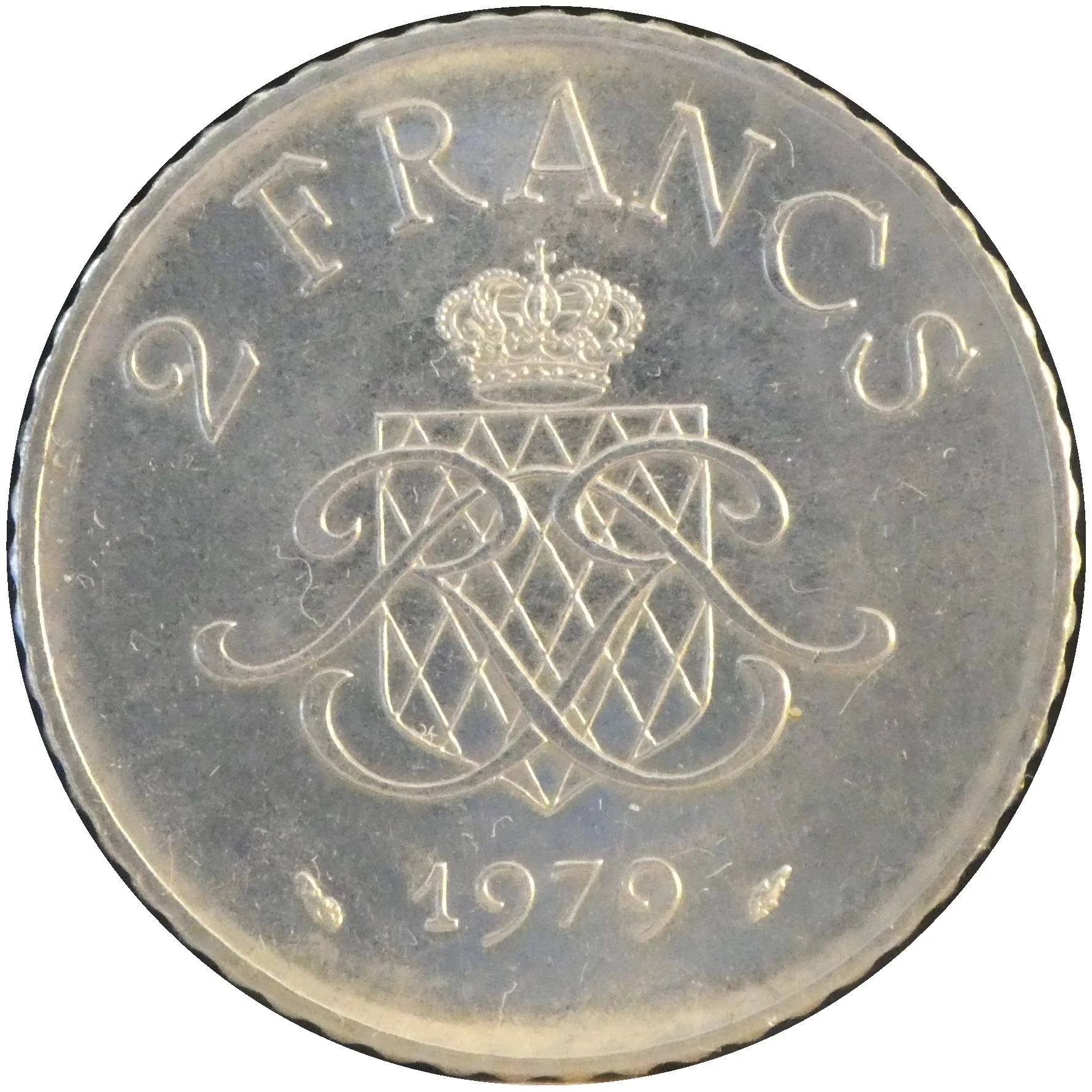
Prince Rainier III's emblem
Inscription:
2 FRANCS
1979
1979
Script: Latin
Engraver: Georges Simon
Edge
Scalloped, with 55 notches
Mints
| Name | Mark |
|---|---|
| Monnaie de Paris | — |
Mintings
| Year | Mint Mark | Mintage | Quality | Collection |
|---|---|---|---|---|
| 1979 | — | 162,000 | ||
| 1981 | — | 275,000 | ||
| 1982 | — | 446,000 |
Historical background
In 1979, Monaco's currency situation was firmly anchored within the French monetary system, a relationship formalized by a 1963 treaty. The Principality did not issue its own independent, circulating currency for everyday transactions. Instead, the legal tender was the French franc, and Monaco's limited coinage was minted with identical specifications, value, and legal status as French coins. These Monegasque coins, featuring the effigy of Prince Rainier III, circulated interchangeably with French currency both within Monaco and, effectively, throughout France itself.
This arrangement was a reflection of Monaco's unique political and economic relationship with its much larger neighbor. While sovereign, Monaco's close ties with France, including a customs union, made the adoption of the French franc both practical and economically essential. The 1979 period saw no monetary turmoil in the Principality; it experienced the same conditions as France, including the inflationary pressures of the post-oil shock era. Stability was paramount, and the fixed parity with the French franc provided that.
Looking beyond national coins, the broader international currency landscape of 1979 was one of significant fluctuation, with the European Monetary System (EMS) launching in March of that year to create a zone of monetary stability in Europe. While Monaco was not a formal member, its fate was tied to the French franc's performance within this new system. Furthermore, the Principality's banking and finance sector, already a growing pillar of its economy, operated in this environment of European currency adjustment, dealing in francs and other major currencies for its international clientele.
This arrangement was a reflection of Monaco's unique political and economic relationship with its much larger neighbor. While sovereign, Monaco's close ties with France, including a customs union, made the adoption of the French franc both practical and economically essential. The 1979 period saw no monetary turmoil in the Principality; it experienced the same conditions as France, including the inflationary pressures of the post-oil shock era. Stability was paramount, and the fixed parity with the French franc provided that.
Looking beyond national coins, the broader international currency landscape of 1979 was one of significant fluctuation, with the European Monetary System (EMS) launching in March of that year to create a zone of monetary stability in Europe. While Monaco was not a formal member, its fate was tied to the French franc's performance within this new system. Furthermore, the Principality's banking and finance sector, already a growing pillar of its economy, operated in this environment of European currency adjustment, dealing in francs and other major currencies for its international clientele.
🌱 Very Common