

20 francs – Monaco
Add to wishlist
Monaco
Context
Years: 1992–1997
Issuer: Monaco
Ruler: Rainier III
Currency:
(1960—2001)
Demonetization: 17 February 2002
Total mintage: 250,000
Material
Diameter: 27 mm
Weight: 9 g
Thickness: 2.17 mm
Shape: Round
Composition: Trimetallic (Copper-aluminium center, Copper-nickel inner ring, Copper-aluminium outer ring)
Technique: Milled
Alignment: Coin alignment
flip
References
KM: #
Numista: #2810
Value
Exchange value: 20 MCF
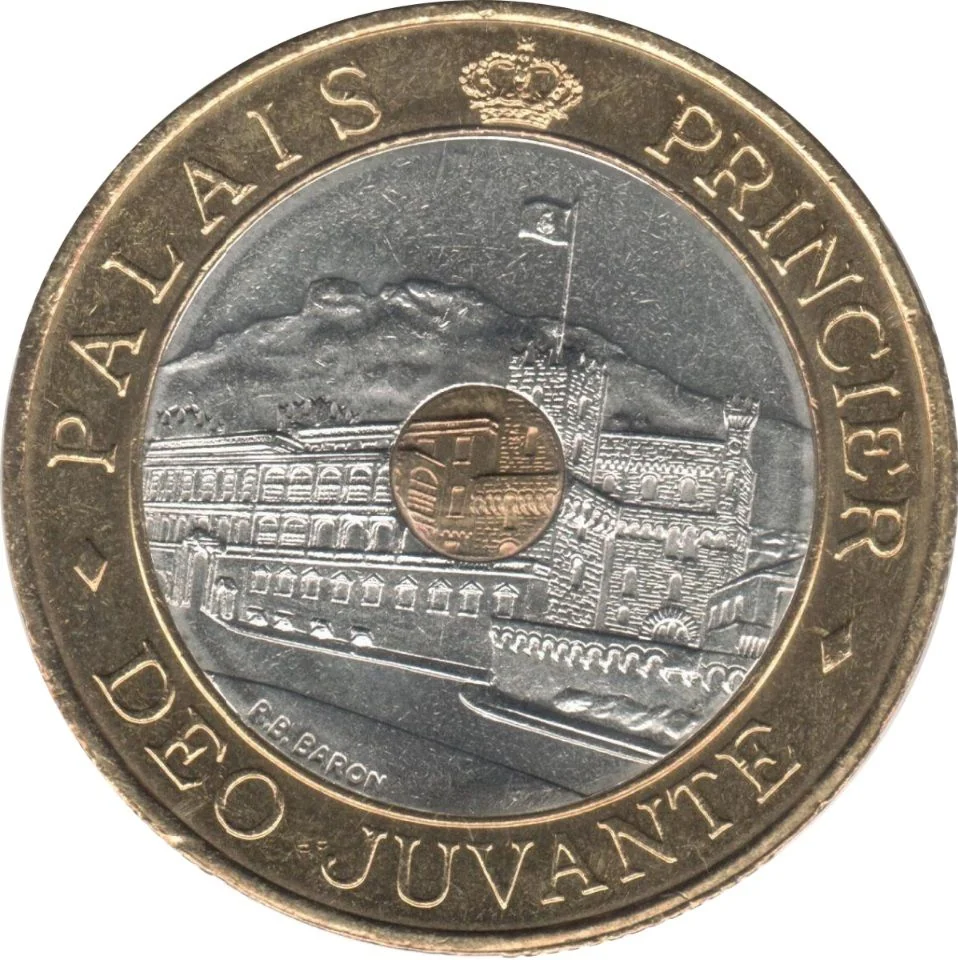
Obverse
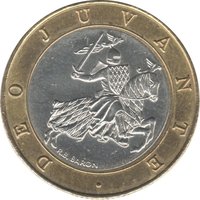
Description:
Official residence of the Monegasque sovereign.
Inscription:
PALAIS PRINCIER
DEO JUVANTE
R.B.BARON
DEO JUVANTE
R.B.BARON
Translation:
Princely Palace
With God's Help
R.B. Baron
With God's Help
R.B. Baron
Script: Latin
Engraver: Roger Bertrand Baron
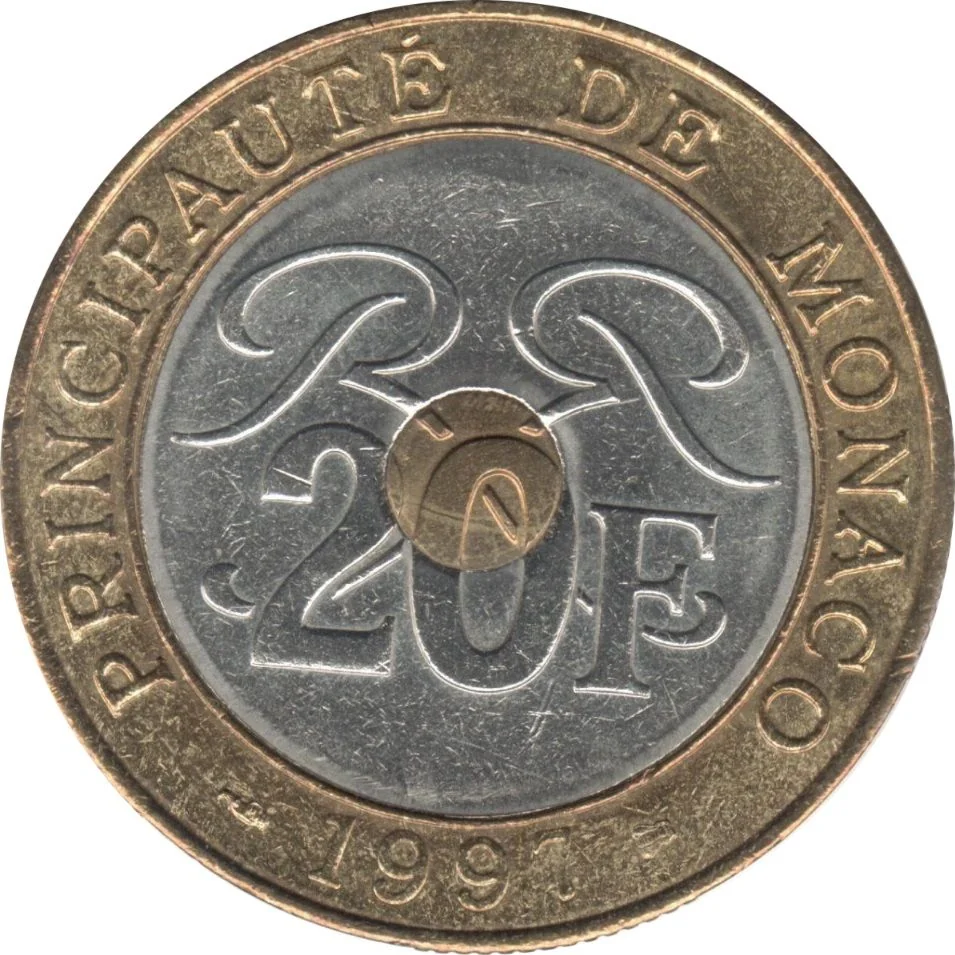
Reverse
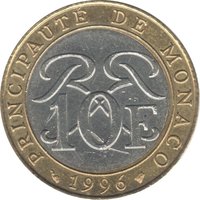
Description:
Rainier III's monogram.
Inscription:
PRINCIPAUTÉ DE MONACO
RR
20F
1997
RR
20F
1997
Translation:
Principality of Monaco
RR
20 Francs
1997
RR
20 Francs
1997
Script: Latin
Language: French
Engraver: Roger Bertrand Baron
Edge
Alternating smooth and fluted
Mints
| Name | Mark |
|---|---|
| Monnaie de Paris | — |
Mintings
| Year | Mint Mark | Mintage | Quality | Collection |
|---|---|---|---|---|
| 1992 | — | 100,000 | ||
| 1995 | — | 30,000 | In sets | |
| 1997 | — | 120,000 |
Historical background
In 1992, Monaco’s currency situation was intrinsically linked to that of France, operating under a long-established monetary agreement. The Principality, lacking an independent central bank or its own currency, used the French franc as its official legal tender. This relationship was formalized in a 1963 treaty, which granted Monaco the right to mint its own franc coins (which were legal tender and interchangeable with French coins) but placed its broader monetary policy entirely under the authority of the Banque de France. Consequently, any decisions on interest rates, money supply, or franc valuation were made in Paris, not Monte Carlo.
The year 1992 was a particularly turbulent one within this framework, as it fell during the crisis of the European Exchange Rate Mechanism (ERM). France was a key participant in the ERM, a system designed to reduce exchange rate variability and achieve monetary stability in Europe ahead of the planned single currency. The French franc came under severe speculative pressure in September 1992, following the crises that forced the British pound and Italian lira to exit the mechanism. While the franc ultimately remained within the ERM, it required aggressive intervention by the Banque de France and the Bundesbank, as well as politically painful high interest rates, to defend its parity. Monaco, by extension, was passively subjected to this monetary turbulence and the tight monetary policy used to combat it.
Therefore, Monaco’s currency background in 1992 is one of complete dependency during a period of European monetary instability. The Principality experienced the strong franc and high interest rates dictated by the ERM crisis without any direct means to influence them. This underscored both the benefits of monetary stability provided by the French link and the cost of having no autonomous policy tools during a financial storm. This arrangement also positioned Monaco on a direct path toward eventually adopting the euro, which would later replace the franc for both nations in 2002.
The year 1992 was a particularly turbulent one within this framework, as it fell during the crisis of the European Exchange Rate Mechanism (ERM). France was a key participant in the ERM, a system designed to reduce exchange rate variability and achieve monetary stability in Europe ahead of the planned single currency. The French franc came under severe speculative pressure in September 1992, following the crises that forced the British pound and Italian lira to exit the mechanism. While the franc ultimately remained within the ERM, it required aggressive intervention by the Banque de France and the Bundesbank, as well as politically painful high interest rates, to defend its parity. Monaco, by extension, was passively subjected to this monetary turbulence and the tight monetary policy used to combat it.
Therefore, Monaco’s currency background in 1992 is one of complete dependency during a period of European monetary instability. The Principality experienced the strong franc and high interest rates dictated by the ERM crisis without any direct means to influence them. This underscored both the benefits of monetary stability provided by the French link and the cost of having no autonomous policy tools during a financial storm. This arrangement also positioned Monaco on a direct path toward eventually adopting the euro, which would later replace the franc for both nations in 2002.
🌱 Common