

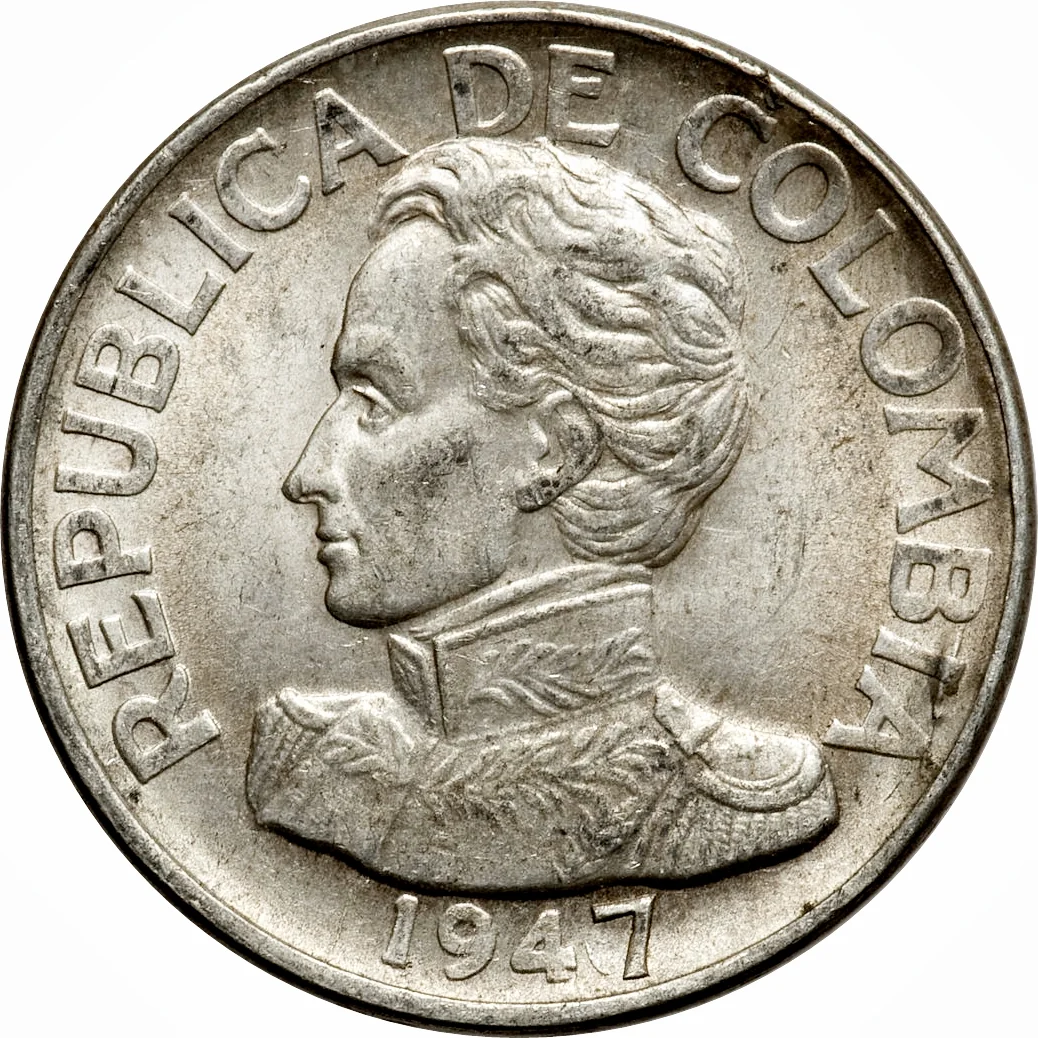
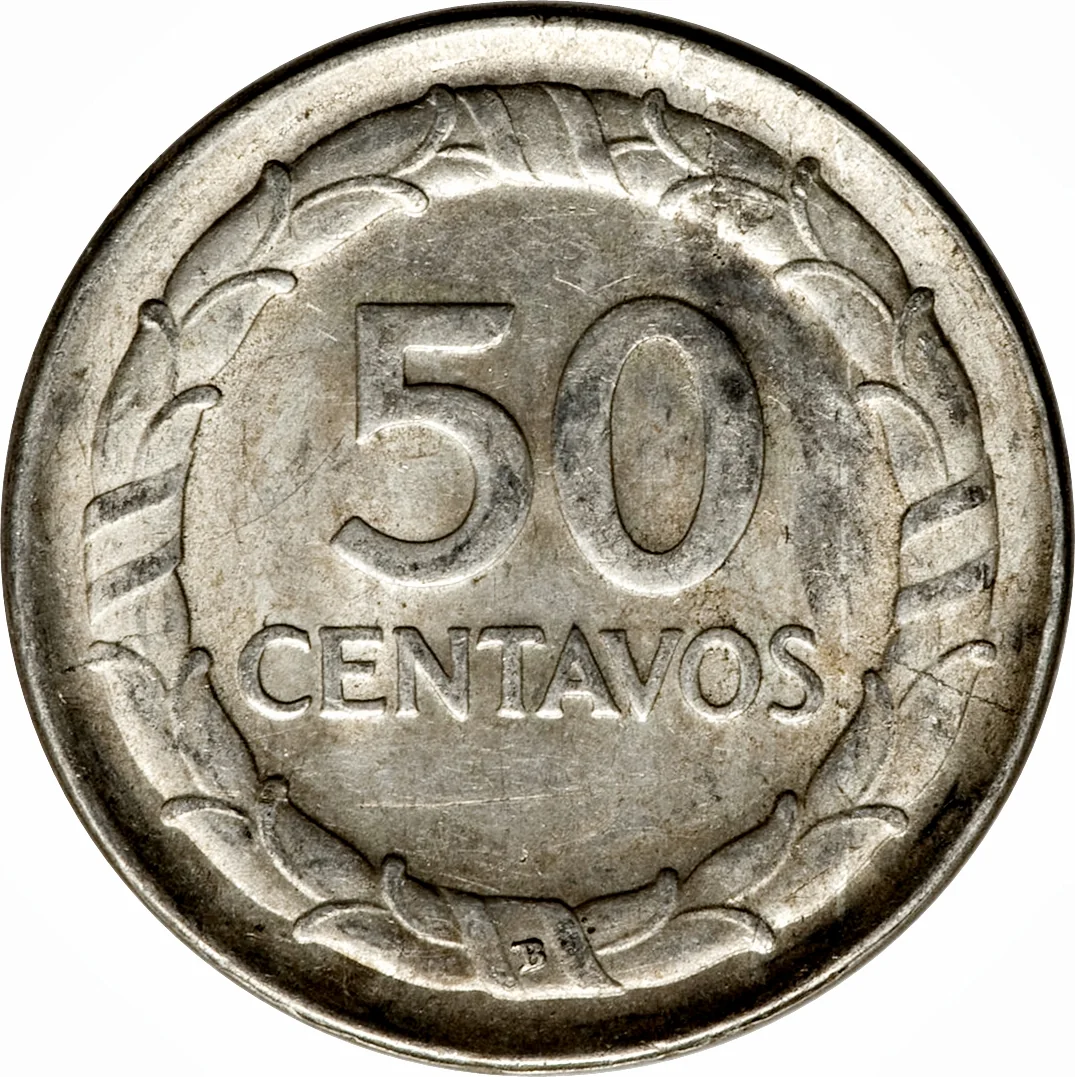
50 centavos – Colombia
Add to wishlist
Colombia
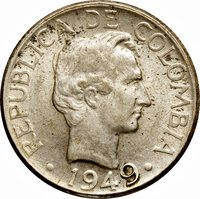
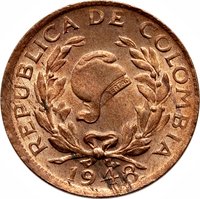
Obverse
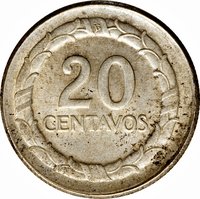
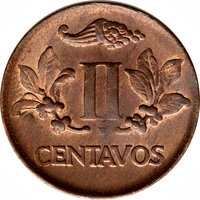
Reverse
Edge
Lettering
Legend:
* LIBERTAD * Y * ORDEN
Categories
| Person> Politician |
| Symbol> Wreath |
Mints
| Name | Mark |
|---|---|
| Bogota Mint | B |
Historical background
In 1947, Colombia's currency situation was characterized by a managed exchange rate system under the framework of the Bretton Woods agreements, to which the country had adhered in 1946. The Colombian peso was pegged to the U.S. dollar at a fixed but adjustable rate, which provided a degree of stability for international trade. This period followed the economic boom of World War II, which had allowed Colombia to accumulate substantial foreign exchange reserves due to strong exports of coffee and other commodities to Allied nations. However, the immediate post-war years saw these reserves begin to decline as pent-up demand led to a surge in imports of manufactured goods and machinery, creating pressure on the balance of payments.
Beneath this surface stability, significant inflationary pressures were building. The government, led by President Mariano Ospina Pérez, was financing growing fiscal deficits through expansionary monetary policy from the Banco de la República. This increase in the money supply, coupled with supply constraints in a still largely agrarian economy, drove domestic prices upward. The inflation eroded the peso's real value and created a widening gap between the official fixed exchange rate and its black-market value, encouraging capital flight and speculation. The situation was further strained by the beginning of La Violencia in 1948, a period of intense political and social conflict that would soon severely disrupt agricultural production and domestic commerce.
Consequently, while not yet in a full-blown crisis in 1947, the currency and monetary system was under clear duress. The foundational problems of fiscal imbalance, inflationary financing, and an overvalued official exchange rate were setting the stage for the more severe economic difficulties of the subsequent decade. The authorities faced the difficult trilemma of maintaining the dollar peg, allowing free capital movement, and pursuing an independent monetary policy—a challenge that would eventually lead to a series of devaluations and exchange controls in the 1950s as the post-war economic order began to shift.
Beneath this surface stability, significant inflationary pressures were building. The government, led by President Mariano Ospina Pérez, was financing growing fiscal deficits through expansionary monetary policy from the Banco de la República. This increase in the money supply, coupled with supply constraints in a still largely agrarian economy, drove domestic prices upward. The inflation eroded the peso's real value and created a widening gap between the official fixed exchange rate and its black-market value, encouraging capital flight and speculation. The situation was further strained by the beginning of La Violencia in 1948, a period of intense political and social conflict that would soon severely disrupt agricultural production and domestic commerce.
Consequently, while not yet in a full-blown crisis in 1947, the currency and monetary system was under clear duress. The foundational problems of fiscal imbalance, inflationary financing, and an overvalued official exchange rate were setting the stage for the more severe economic difficulties of the subsequent decade. The authorities faced the difficult trilemma of maintaining the dollar peg, allowing free capital movement, and pursuing an independent monetary policy—a challenge that would eventually lead to a series of devaluations and exchange controls in the 1950s as the post-war economic order began to shift.
🌟 Uncommon