

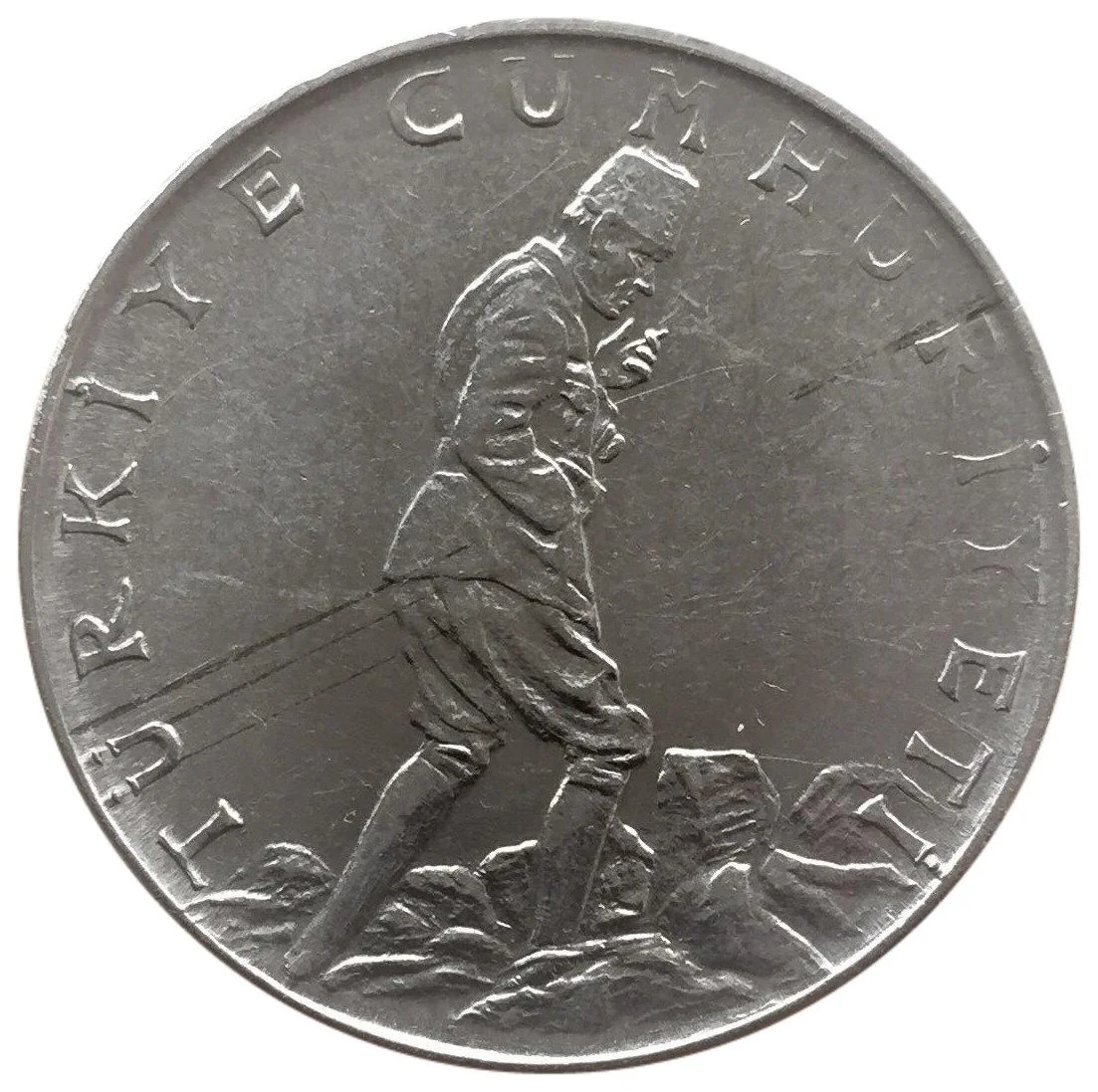
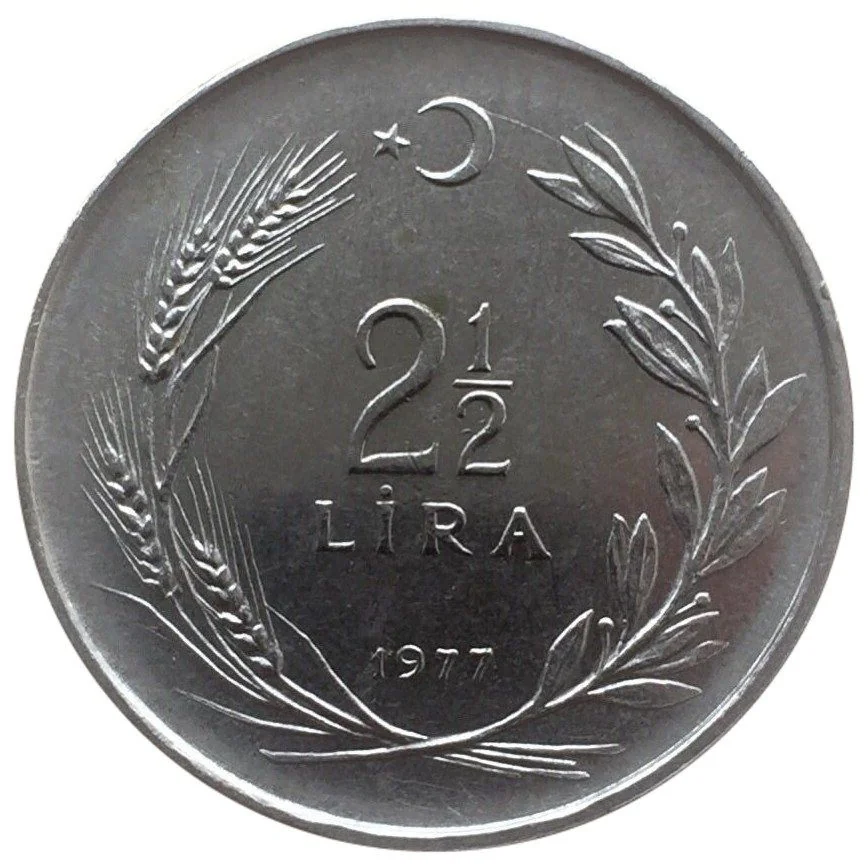

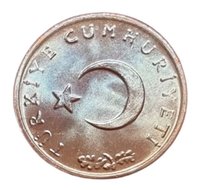
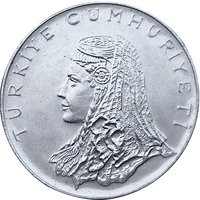
Obverse
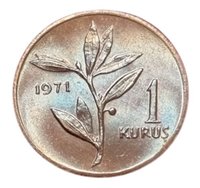
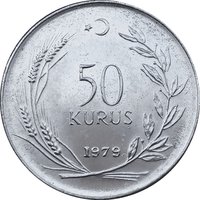
Reverse
Edge
T.C. appears twice, with various patterns inbetween
Legend:
T.C. T.C.
Mints
| Name | Mark |
|---|---|
| Turkish State Mint | — |
Mintings
| Year | Mint Mark | Mintage | Quality | Collection |
|---|---|---|---|---|
| 1969 | — | 1,378,000 | ||
| 1970 | — | 3,777,000 | ||
| 1971 | — | 2,172,000 | ||
| 1972 | — | 9,147,000 | ||
| 1973 | — | 4,349,000 | ||
| 1974 | — | 3,816,000 | ||
| 1975 | — | 9,811,000 | ||
| 1976 | — | 6,922,000 | ||
| 1977 | — | 19,452,000 | ||
| 1978 | — | 15,738,000 | ||
| 1979 | — | 4,972,000 | ||
| 1980 | — | 2,880,000 |
Historical background
In 1969, Turkey's currency situation was characterized by relative stability under a fixed exchange rate regime, but this stability masked underlying structural economic weaknesses. The Turkish lira was pegged to the U.S. dollar at a rate of 9 lira to 1 dollar, a parity established in 1960 and maintained through the decade with the support of the Bretton Woods system. This fixed rate provided predictability for foreign trade and investment, which was crucial for the country's import-substitution industrialization model. However, the peg was increasingly sustained by capital controls and strict regulation of foreign exchange transactions rather than by robust economic fundamentals.
Beneath the surface, persistent trade deficits, rising external debt, and inflationary pressures were eroding the lira's real value. The economy, heavily reliant on imported intermediate goods and machinery for its industrial sector, consistently spent more foreign currency on imports than it earned from exports, primarily agricultural products. This led to recurring balance of payments crises, which were managed through short-term foreign borrowing and drawing on limited foreign exchange reserves. While inflation was moderate by later Turkish standards, it was steadily creeping upward, creating a widening gap between the official fixed rate and the lira's eroding purchasing power.
Consequently, 1969 represented the calm before a significant storm. The fixed parity was becoming increasingly untenable, and the mechanisms used to defend it were only temporary solutions. The strains would culminate just two years later, in 1970, with a major devaluation—the lira was devalued by 66% to 15 lira per dollar—marking the end of this period of artificial stability and the beginning of a long era of chronic devaluation and high inflation for Turkey. Thus, the currency situation in 1969 was one of managed equilibrium, but one that was fragile and poised for a major correction.
Beneath the surface, persistent trade deficits, rising external debt, and inflationary pressures were eroding the lira's real value. The economy, heavily reliant on imported intermediate goods and machinery for its industrial sector, consistently spent more foreign currency on imports than it earned from exports, primarily agricultural products. This led to recurring balance of payments crises, which were managed through short-term foreign borrowing and drawing on limited foreign exchange reserves. While inflation was moderate by later Turkish standards, it was steadily creeping upward, creating a widening gap between the official fixed rate and the lira's eroding purchasing power.
Consequently, 1969 represented the calm before a significant storm. The fixed parity was becoming increasingly untenable, and the mechanisms used to defend it were only temporary solutions. The strains would culminate just two years later, in 1970, with a major devaluation—the lira was devalued by 66% to 15 lira per dollar—marking the end of this period of artificial stability and the beginning of a long era of chronic devaluation and high inflation for Turkey. Thus, the currency situation in 1969 was one of managed equilibrium, but one that was fragile and poised for a major correction.
🌱 Very Common