

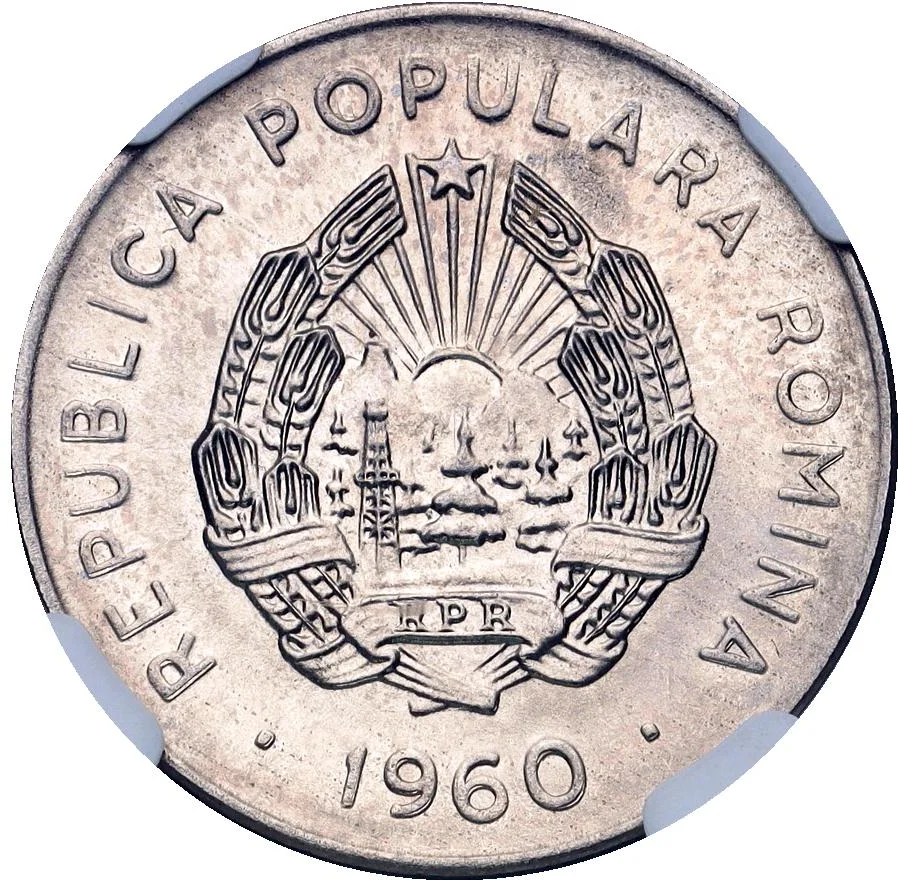
Obverse
Description:
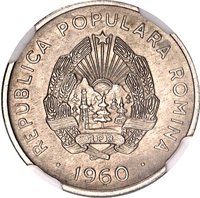
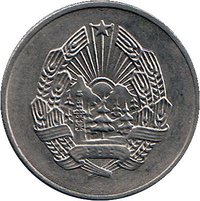
National emblem with date beneath.
Inscription:
REPUBLICA POPULARA ROMINA
RPR
· 1960 ·
RPR
· 1960 ·
Translation:
ROMANIAN PEOPLE'S REPUBLIC
RPR
· 1960 ·
RPR
· 1960 ·
Script: Latin
Language: Romanian
Engraver: Haralambie Ionescu
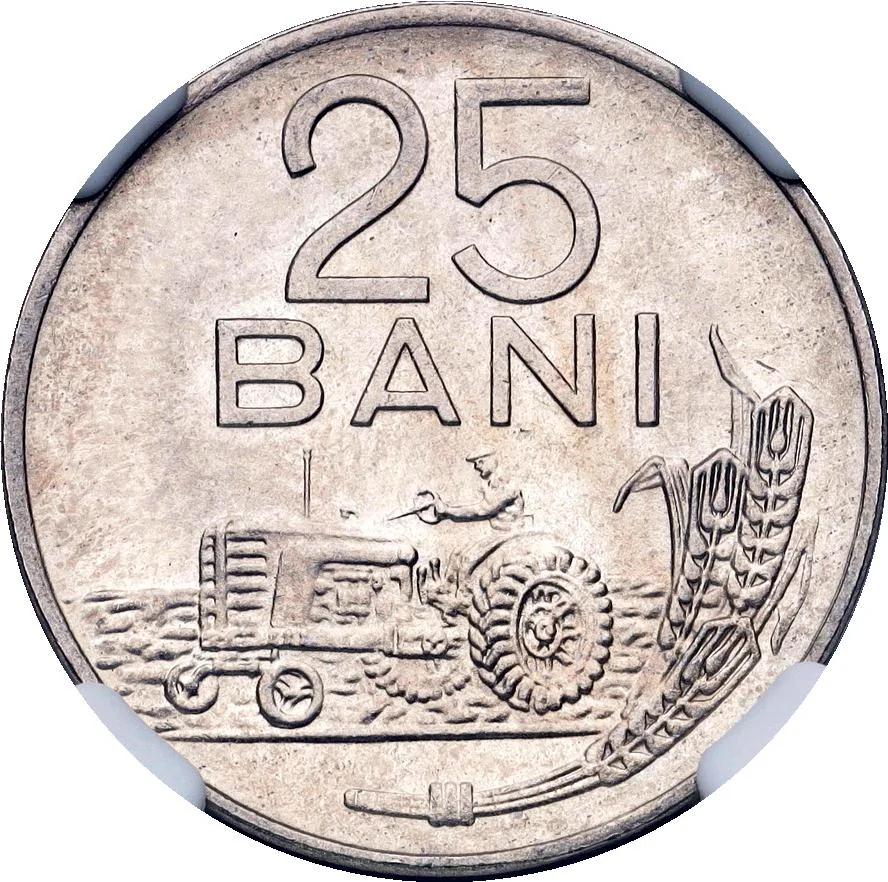
Reverse
Description:
Tractor driving left, wheat to right.
Inscription:
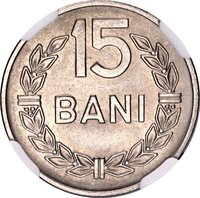
25
BANI
BANI
Script: Latin
Engraver: Haralambie Ionescu
Edge
Plain
Categories
| Agriculture |
| Symbols> Coat of Arms |
| Transportation> Truck or tractor |
Mints
| Name | Mark |
|---|---|
| State Mint | — |
Mintings
| Year | Mint Mark | Mintage | Quality | Collection |
|---|---|---|---|---|
| 1960 | — | 87,600,000 |
Historical background
In 1960, Romania's currency situation was defined by its position within the Soviet-led Council for Mutual Economic Assistance (COMECON) and its centrally planned economy. The official currency, the leu, was a non-convertible "soft currency," meaning it could not be freely exchanged for Western hard currencies like the US dollar or British pound. Its value was set administratively by the state, divorced from market forces, and primarily served as an internal accounting unit for the state-controlled production and distribution of goods. Internationally, trade was conducted through bilateral clearing agreements with other communist bloc countries, often using the transferable ruble, which further insulated the Romanian economy from the global financial system.
Domestically, this system created a pronounced duality. While the official economy operated with the leu, chronic shortages of consumer goods and strict rationing meant that real purchasing power was low. This often gave rise to a active black market where goods and foreign currencies, particularly the US dollar and the French franc (historically favored in Romania), commanded a significant premium over the official exchange rate. The government maintained a complex system of multiple exchange rates for different types of transactions, but the average citizen had extremely limited legal access to foreign currency, with severe penalties for unauthorized possession or trading.
The year 1960 fell within a period of relative economic stability in Romania, following the completion of post-war reconstruction and preceding the more independent and debt-driven industrialization policies of the later 1960s under Nicolae Ceaușescu. The currency regime was a tool of state control, designed to direct all resources toward heavy industry and to prevent capital flight. It effectively isolated Romanian citizens from the international economy, making the leu a symbol of both national economic planning and the constraints of life within the Eastern Bloc, where access to quality goods often depended on connections or illegal currency exchanges rather than one's official salary.
Domestically, this system created a pronounced duality. While the official economy operated with the leu, chronic shortages of consumer goods and strict rationing meant that real purchasing power was low. This often gave rise to a active black market where goods and foreign currencies, particularly the US dollar and the French franc (historically favored in Romania), commanded a significant premium over the official exchange rate. The government maintained a complex system of multiple exchange rates for different types of transactions, but the average citizen had extremely limited legal access to foreign currency, with severe penalties for unauthorized possession or trading.
The year 1960 fell within a period of relative economic stability in Romania, following the completion of post-war reconstruction and preceding the more independent and debt-driven industrialization policies of the later 1960s under Nicolae Ceaușescu. The currency regime was a tool of state control, designed to direct all resources toward heavy industry and to prevent capital flight. It effectively isolated Romanian citizens from the international economy, making the leu a symbol of both national economic planning and the constraints of life within the Eastern Bloc, where access to quality goods often depended on connections or illegal currency exchanges rather than one's official salary.
🌱 Very Common