

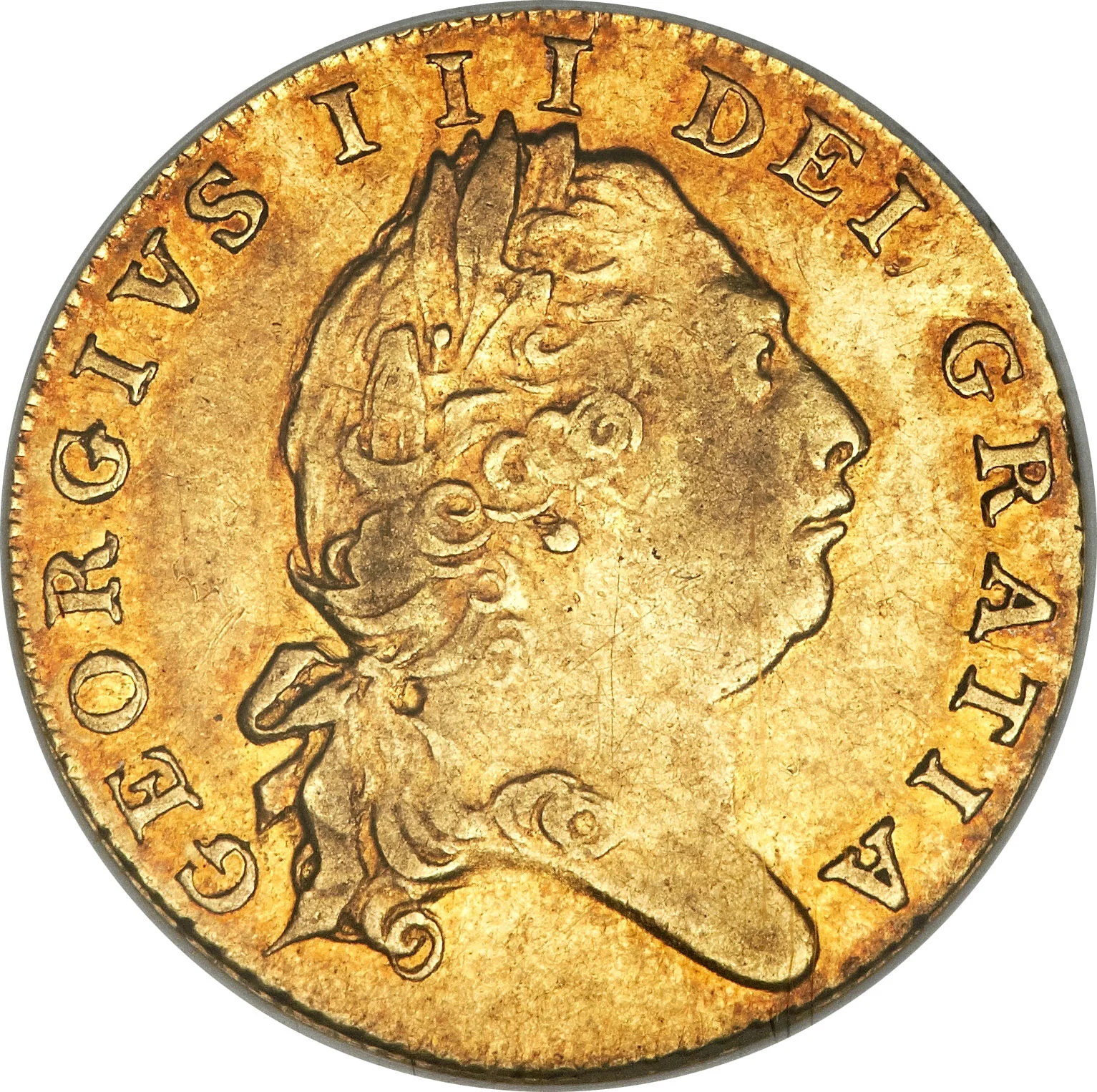
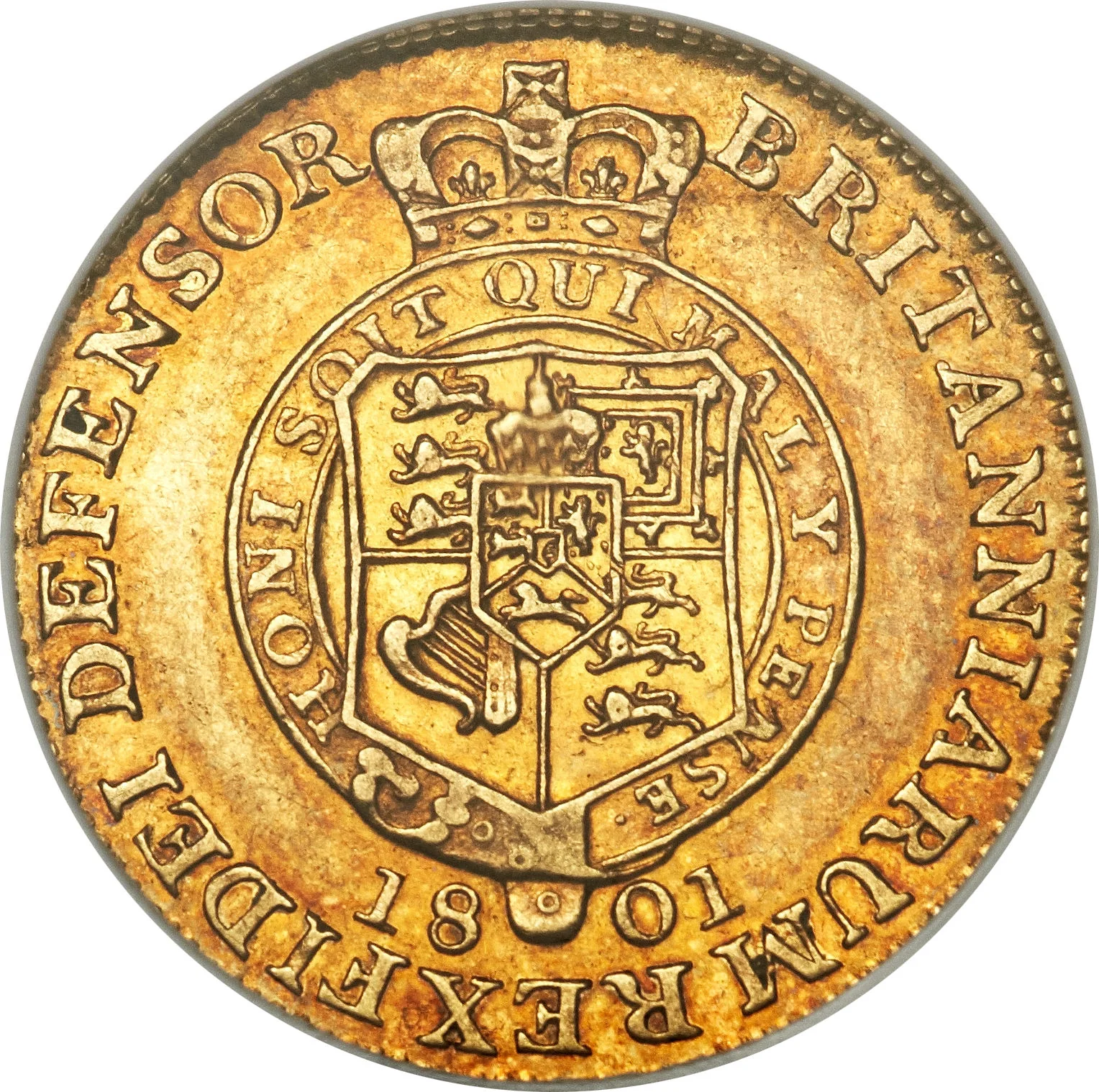
½ guinea – United Kingdom
Add to wishlist
United Kingdom
Context
Material
References
KM: #
Numista: #27969
Value
Bullion value: $593.89
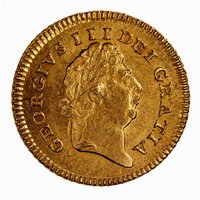
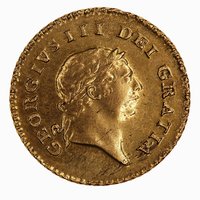
Obverse
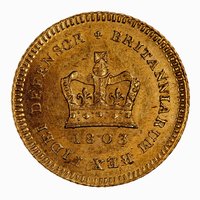
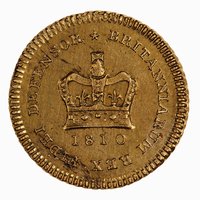
Reverse
Edge
Mintings
| Year | Mint Mark | Mintage | Quality | Collection |
|---|---|---|---|---|
| 1801 | — | — | ||
| 1802 | — | — | ||
| 1803 | — | — |
Historical background
In 1801, the United Kingdom's currency situation was defined by the enduring stability of the gold standard, formally established in 1816 but effectively in practice for decades. The pound sterling, symbolised as £, was a tangible and trusted unit, with the gold sovereign (containing 113 grains of pure gold) as its anchor. Alongside gold, silver coinage circulated for smaller transactions, though its role was subsidiary; Britain operated on a de facto monometallic gold standard, with silver coins legal tender only for limited amounts. This system provided a reliable medium of exchange and store of value, underpinning both domestic commerce and London's growing prominence in international finance.
However, this metallic stability existed alongside a growing and often problematic reliance on paper money. Bank of England notes, originally receipts for gold deposits, were increasingly used as currency themselves. Crucially, these notes were convertible on demand into gold, a promise that maintained public confidence. Yet, a proliferation of private provincial and country banknotes, of varying quality and security, also circulated widely. This created a fragile credit layer atop the gold base, vulnerable to loss of confidence, especially as the pressures of the ongoing Napoleonic Wars (1803-1815) strained public finances.
The war with France was the dominant factor shaping the monetary landscape in 1801. Heavy government borrowing to fund the military effort increased the money supply and stoked inflationary pressures. Just two years prior, in 1797, a crisis of confidence had led to a run on the Bank of England's gold reserves, forcing the government to suspend the convertibility of Bank notes into gold—the so-called "Restriction Period." Thus, in 1801, the UK was operating with an inconvertible paper currency, a significant departure from its official principles. While the pound held relatively firm due to restrictive Bank of England policies, the situation was inherently unstable, setting the stage for future debates about monetary policy and the return to gold that would dominate the post-war era.
However, this metallic stability existed alongside a growing and often problematic reliance on paper money. Bank of England notes, originally receipts for gold deposits, were increasingly used as currency themselves. Crucially, these notes were convertible on demand into gold, a promise that maintained public confidence. Yet, a proliferation of private provincial and country banknotes, of varying quality and security, also circulated widely. This created a fragile credit layer atop the gold base, vulnerable to loss of confidence, especially as the pressures of the ongoing Napoleonic Wars (1803-1815) strained public finances.
The war with France was the dominant factor shaping the monetary landscape in 1801. Heavy government borrowing to fund the military effort increased the money supply and stoked inflationary pressures. Just two years prior, in 1797, a crisis of confidence had led to a run on the Bank of England's gold reserves, forcing the government to suspend the convertibility of Bank notes into gold—the so-called "Restriction Period." Thus, in 1801, the UK was operating with an inconvertible paper currency, a significant departure from its official principles. While the pound held relatively firm due to restrictive Bank of England policies, the situation was inherently unstable, setting the stage for future debates about monetary policy and the return to gold that would dominate the post-war era.
💎 Extremely Rare