

⅓ Guinea – United Kingdom
United Kingdom
Context

Material
References
KM: #Click to copy to clipboard650
Numista: #13164
Value
Bullion value: $428.13
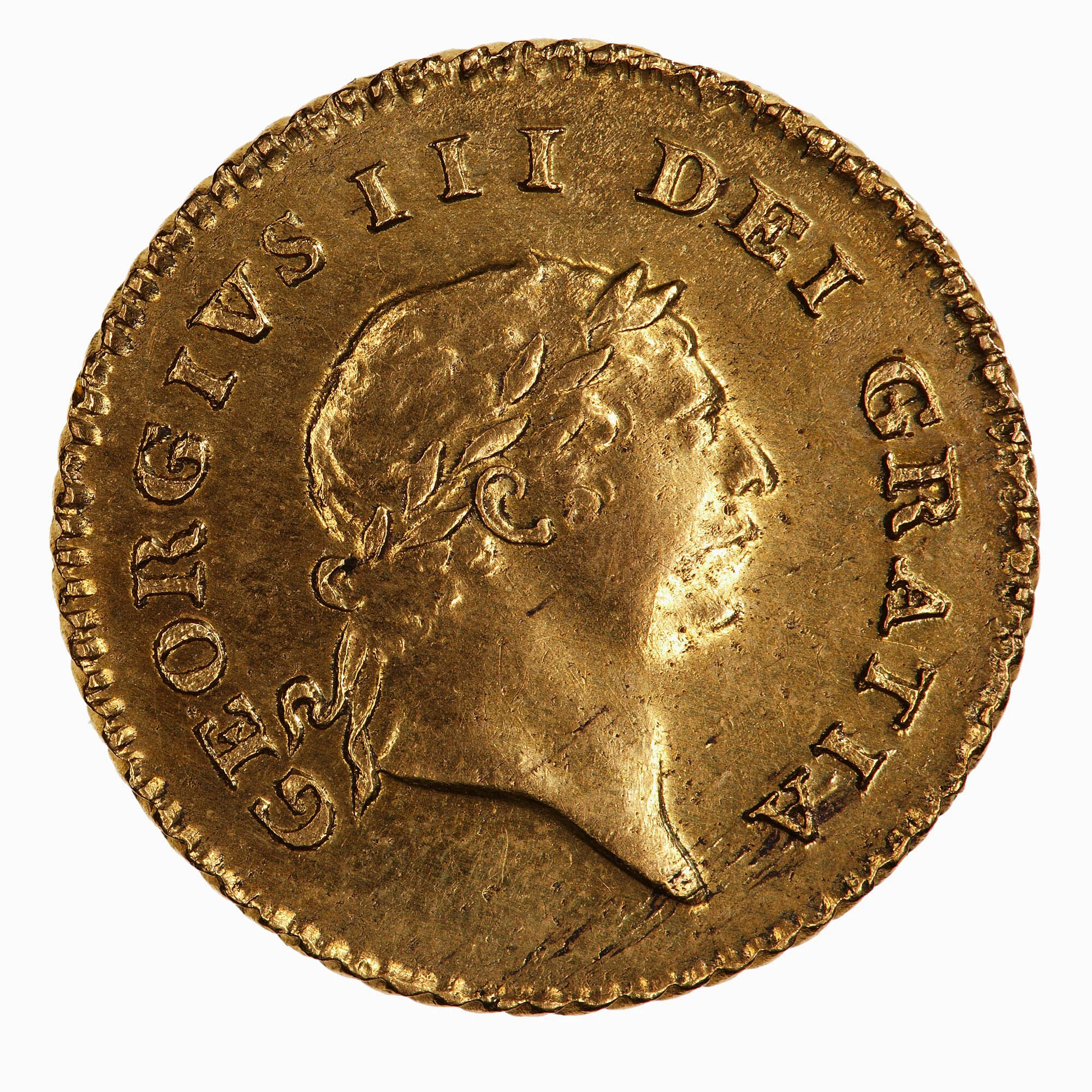
Obverse
Description:
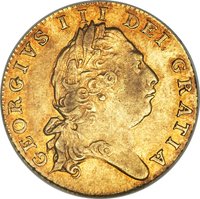
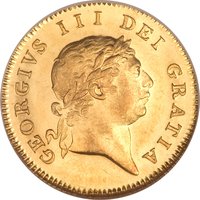
King George III facing right, surrounded by legend.
Inscription:
GEORGIVS III DEI GRATIA
Translation:
George the Third by the Grace of God
Script: Latin
Language: Latin
Engraver: Lewis Pingo
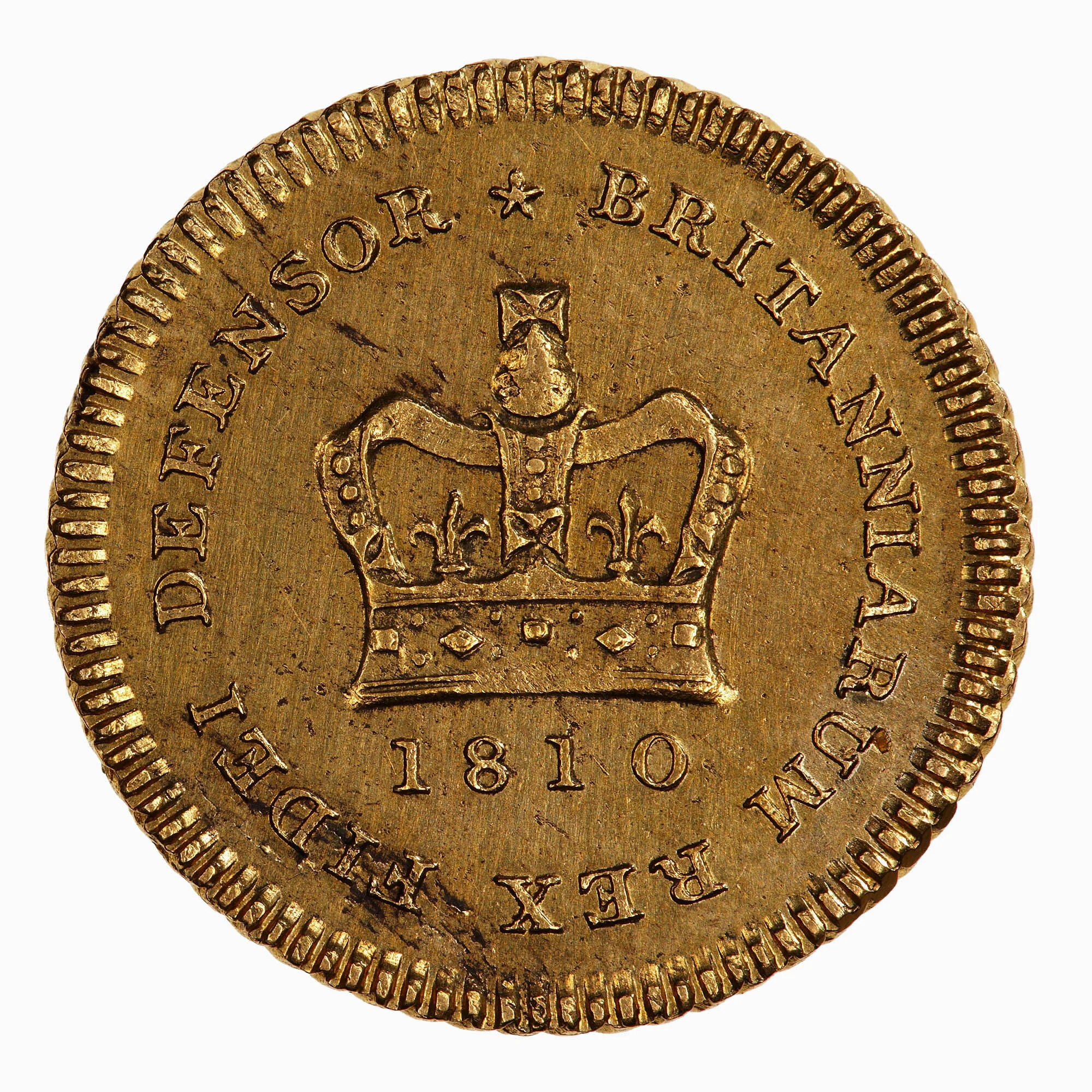
Reverse
Description:
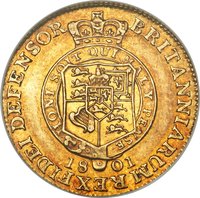
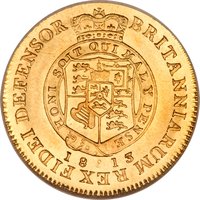
Crown central, legend around, date within legend below.
Inscription:
BRITANNIARUM REX FIDEI DEFENSOR *
1813
1813
Translation:
King of the Britains, Defender of the Faith *
Script: Latin
Language: Latin
Engraver: Lewis Pingo
Edge
Slant-reeded right
Mints
| Name | Mark |
|---|---|
| Royal Mint (Tower Hill) | — |
| Royal Mint (Tower of London) | — |
Mintings
| Year | Mint Mark | Mintage | Quality | Collection |
|---|---|---|---|---|
| 1804 | — | — | ||
| 1806 | — | — | ||
| 1808 | — | — | ||
| 1809 | — | — | ||
| 1810 | — | — | ||
| 1811 | — | — | ||
| 1813 | — | — | ||
| 1813 | — | — | Proof |
Historical background
In 1804, the United Kingdom’s currency system was under severe strain due to the pressures of the ongoing Napoleonic Wars (1803-1815). The nation was operating on a de facto paper money standard, as the Bank of England had suspended the convertibility of its banknotes into gold in 1797 following a period of financial panic. This meant that while the pound sterling was still defined by a fixed gold value, the public could not exchange Bank of England notes for gold coin. Instead, the economy relied on a mix of inconvertible Bank of England notes, private banknotes from country banks, and a severely diminished supply of physical gold and silver coin, which was often hoarded or exported.
The scarcity of specie (coin) led to significant problems, including the widespread circulation of underweight and counterfeit coins, and notes of often dubious value from hundreds of small, sometimes unstable, country banks. Furthermore, the government’s heavy borrowing to fund the war effort caused a large expansion of the paper money supply, which in turn contributed to inflation and a depreciation of the pound’s value against gold on the open market. This divergence between the legal gold standard and the market reality was a central topic of economic debate, notably in the ongoing "Bullion Controversy," where figures like David Ricardo argued that the note issue was excessive and a direct cause of the currency's depreciation.
Thus, the currency situation in 1804 was one of fragility and uncertainty. The system was being sustained by government fiat and public confidence rather than a tangible link to precious metal. While the suspension provided the Treasury and the Bank of England with crucial flexibility to finance the war, it created an unstable monetary environment marked by inflationary pressures, variable note values, and a lack of uniform, trustworthy small change for everyday transactions, setting the stage for the pivotal Bullion Report of 1810.
The scarcity of specie (coin) led to significant problems, including the widespread circulation of underweight and counterfeit coins, and notes of often dubious value from hundreds of small, sometimes unstable, country banks. Furthermore, the government’s heavy borrowing to fund the war effort caused a large expansion of the paper money supply, which in turn contributed to inflation and a depreciation of the pound’s value against gold on the open market. This divergence between the legal gold standard and the market reality was a central topic of economic debate, notably in the ongoing "Bullion Controversy," where figures like David Ricardo argued that the note issue was excessive and a direct cause of the currency's depreciation.
Thus, the currency situation in 1804 was one of fragility and uncertainty. The system was being sustained by government fiat and public confidence rather than a tangible link to precious metal. While the suspension provided the Treasury and the Bank of England with crucial flexibility to finance the war, it created an unstable monetary environment marked by inflationary pressures, variable note values, and a lack of uniform, trustworthy small change for everyday transactions, setting the stage for the pivotal Bullion Report of 1810.
💎 Very Rare