

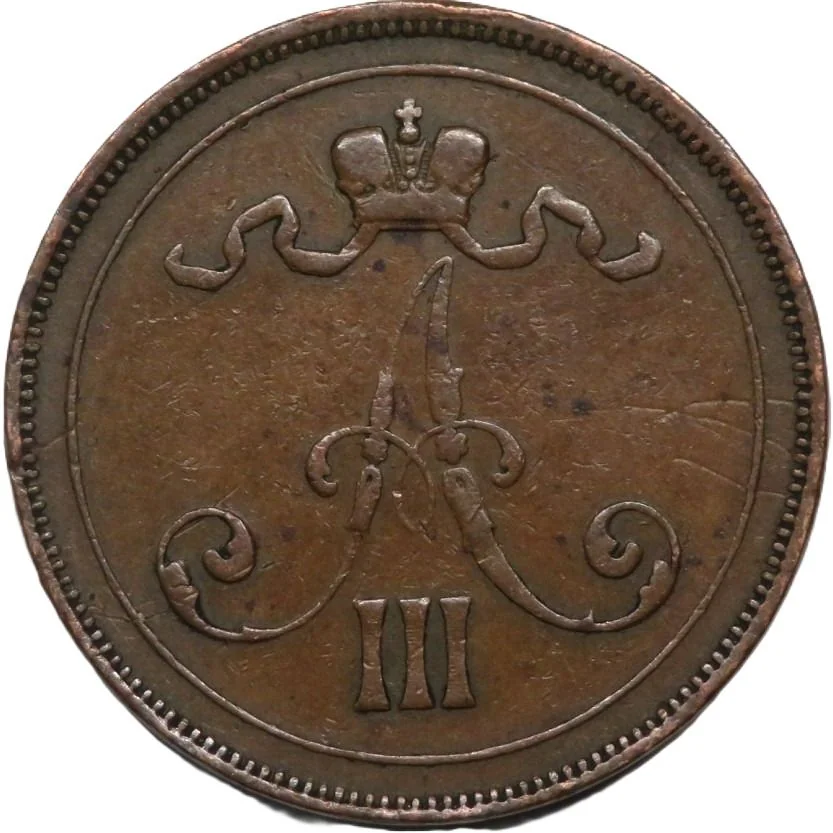
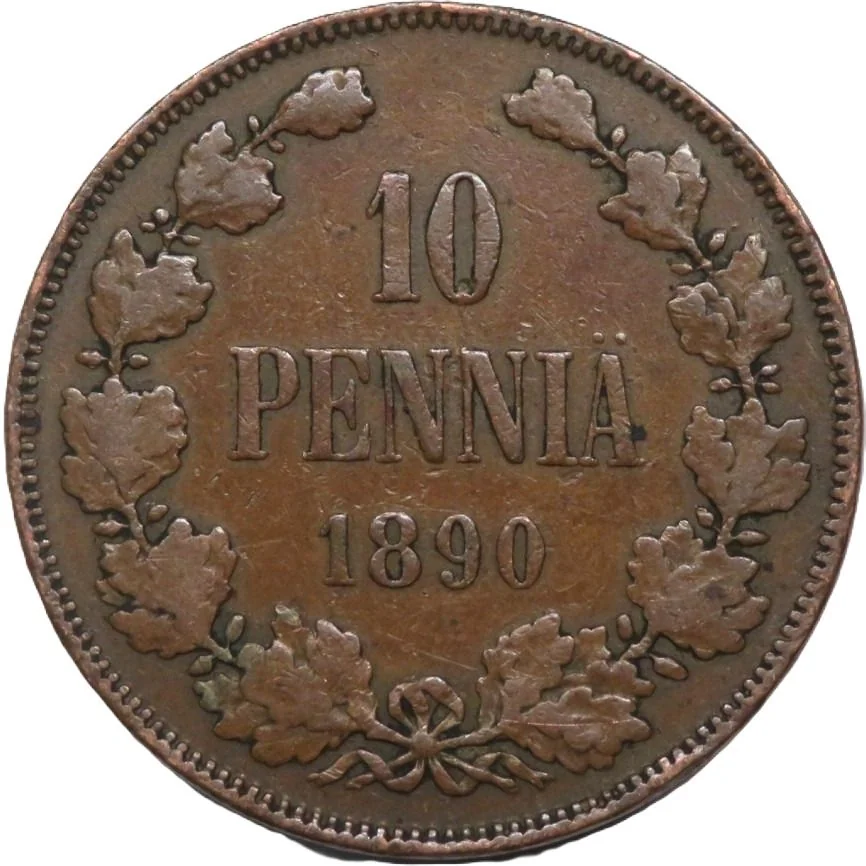
10 pennia – Finland
Add to wishlist
Finland
Context
Years: 1889–1891
Issuer: Finland
Ruler: Alexander III
Currency:
(1860—1963)
Demonetized: Yes
Total mintage: 501,000
Material
References
KM: #
Numista: #27939
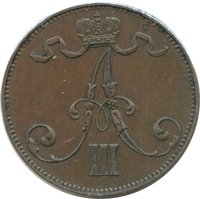
Obverse
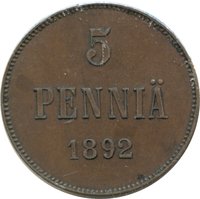
Reverse
Edge
Plain
Mintings
| Year | Mint Mark | Mintage | Quality | Collection |
|---|---|---|---|---|
| 1889 | — | 100,000 | ||
| 1890 | — | 106,000 | ||
| 1891 | — | 295,000 |
Historical background
In 1889, Finland, as an autonomous Grand Duchy within the Russian Empire, operated under a distinct monetary system that reflected its unique political status. The official currency was the Finnish markka (or mark), established in 1860 to replace the Russian ruble and assert Finland's financial autonomy. The markka was pegged to silver, adhering to the silver standard, which provided stability but was increasingly out of step with the global economic shift towards the gold standard adopted by major powers, including Russia itself in the late 1880s.
This period was one of mounting monetary tension and transition. Russia's adoption of the gold standard created practical complications and pressure for Finland to align its currency with the imperial system to facilitate trade and financial transactions. While the Finnish markka remained on silver, its value was effectively managed in relation to the gold-based ruble, creating a complex de facto exchange mechanism. Economic debates within the Finnish Senate and among business leaders were intense, focusing on whether to maintain the silver standard, join the international gold standard independently, or adopt a gold-standard currency union with Russia.
Consequently, 1889 fell within a decisive decade of monetary reform. The discussions and preparations underway that year would culminate just a few years later, in 1891, with a preliminary decision to prepare for a shift to a gold-based monetary system. This move was ultimately realized with the Currency Act of 1877, which formally placed the markka on a gold standard, a change fully implemented by 1879. Thus, the situation in 1889 was characterized by a stable but anachronistic silver-based currency actively navigating the pressures of imperial policy and global finance toward imminent and fundamental change.
This period was one of mounting monetary tension and transition. Russia's adoption of the gold standard created practical complications and pressure for Finland to align its currency with the imperial system to facilitate trade and financial transactions. While the Finnish markka remained on silver, its value was effectively managed in relation to the gold-based ruble, creating a complex de facto exchange mechanism. Economic debates within the Finnish Senate and among business leaders were intense, focusing on whether to maintain the silver standard, join the international gold standard independently, or adopt a gold-standard currency union with Russia.
Consequently, 1889 fell within a decisive decade of monetary reform. The discussions and preparations underway that year would culminate just a few years later, in 1891, with a preliminary decision to prepare for a shift to a gold-based monetary system. This move was ultimately realized with the Currency Act of 1877, which formally placed the markka on a gold standard, a change fully implemented by 1879. Thus, the situation in 1889 was characterized by a stable but anachronistic silver-based currency actively navigating the pressures of imperial policy and global finance toward imminent and fundamental change.
🌱 Fairly Common