

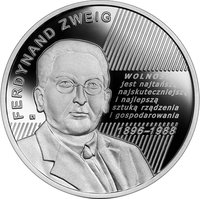
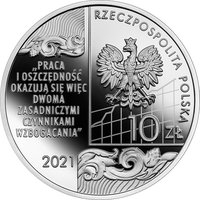
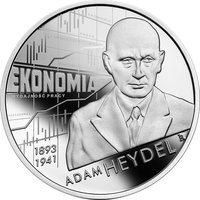
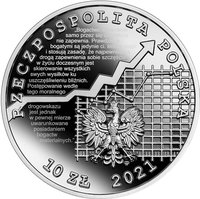
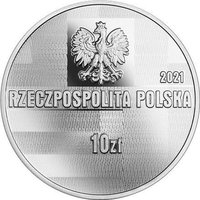
Obverse
Inscription:
mw
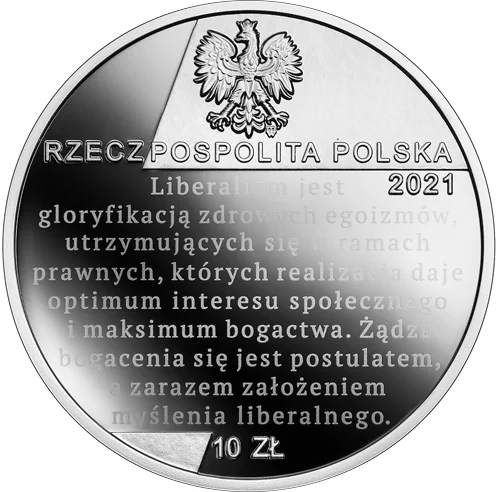
RZECZPOSPOLITA POLSKA
2021
Liberalizm jest
gloryfikacją zdrowych egoizmów,
utrzymujących się w ramach
prawnych, których realizacja daje
optimum interesu społecznego
i maksimum bogactwa. Żądza
bogacenia się jest postulatem,
a zarazem założeniem
myślenia liberalnego.
10 ZŁ
RZECZPOSPOLITA POLSKA
2021
Liberalizm jest
gloryfikacją zdrowych egoizmów,
utrzymujących się w ramach
prawnych, których realizacja daje
optimum interesu społecznego
i maksimum bogactwa. Żądza
bogacenia się jest postulatem,
a zarazem założeniem
myślenia liberalnego.
10 ZŁ
Translation:
REPUBLIC OF POLAND
2021
Liberalism is
the glorification of healthy egotisms,
which remain within the legal
framework, and whose realization gives
the optimum of social interest
and the maximum of wealth. The lust
for enrichment is a postulate,
and at the same time an assumption
of liberal thinking.
10 ZŁ
2021
Liberalism is
the glorification of healthy egotisms,
which remain within the legal
framework, and whose realization gives
the optimum of social interest
and the maximum of wealth. The lust
for enrichment is a postulate,
and at the same time an assumption
of liberal thinking.
10 ZŁ
Script: Latin
Language: Polish
Designer: Dominika Karpińska-Kopiec
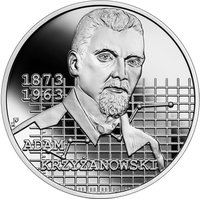
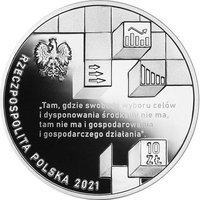
Reverse
Inscription:
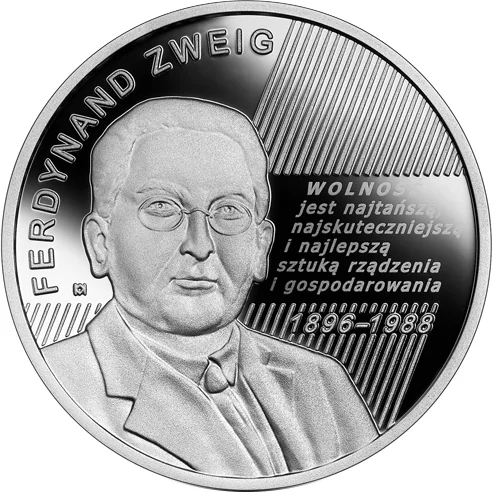
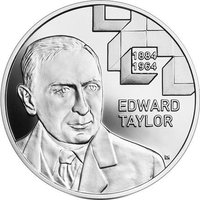
FERDYNAND ZWEIG
WOLNOSĆ
jest najtańsąj
najskuteczniejszą
i najlepszą
sztuką rządzenia
igospodarowania
1896-1988
WOLNOSĆ
jest najtańsąj
najskuteczniejszą
i najlepszą
sztuką rządzenia
igospodarowania
1896-1988
Translation:
FREEDOM
is the cheapest
the most effective
and the best
art of governing
and managing
1896-1988
is the cheapest
the most effective
and the best
art of governing
and managing
1896-1988
Script: Latin
Language: Polish
Designer: Dominika Karpińska-Kopiec
Edge
Plain
Mints
| Name | Mark |
|---|---|
| Mint of Poland | (MW) |
Mintings
| Year | Mint Mark | Mintage | Quality | Collection |
|---|---|---|---|---|
| 2021 | MW | 10,000 | Proof |
Historical background
In 2021, Poland's currency, the złoty (PLN), navigated a year of significant volatility and strengthening pressure, largely influenced by the country's economic resilience and shifting monetary policy. The year began with the złoty trading at approximately 3.8 to the euro, but it embarked on a sustained appreciation trend, reaching a decade-high of around 4.45 PLN/EUR by November. This strength was primarily driven by Poland's robust post-pandemic economic recovery, with GDP growth forecasts repeatedly revised upwards, and by the National Bank of Poland (NBP) becoming the first central bank in the European Union to raise interest rates in October to combat surging inflation, which had soared well above the NBP's target band.
The currency's appreciation was a double-edged sword for the economy. On one hand, a stronger złoty helped to curb imported inflation by making foreign goods, like energy and raw materials, cheaper in local currency terms. On the other hand, it posed a challenge for the crucial export sector, making Polish goods more expensive on international markets and potentially eroding competitiveness. This created a complex policy dilemma for the NBP, which had to balance fighting domestic inflation—fueled by supply chain disruptions, rising energy costs, and strong consumer demand—with concerns about slowing export-led growth.
External factors also played a key role throughout the year. The złoty was sensitive to global risk sentiment and the broader strength of the US dollar. Furthermore, a major point of tension was the ongoing rule-of-law dispute with the European Commission, which blocked Poland's access to billions in EU recovery funds. This political risk acted as a dampener on the currency's gains, creating uncertainty for investors. By year's end, the złoty remained strong but susceptible to shifts in both domestic monetary policy, as the NBP signaled a continued tightening cycle, and the resolution of the EU fund stalemate.
The currency's appreciation was a double-edged sword for the economy. On one hand, a stronger złoty helped to curb imported inflation by making foreign goods, like energy and raw materials, cheaper in local currency terms. On the other hand, it posed a challenge for the crucial export sector, making Polish goods more expensive on international markets and potentially eroding competitiveness. This created a complex policy dilemma for the NBP, which had to balance fighting domestic inflation—fueled by supply chain disruptions, rising energy costs, and strong consumer demand—with concerns about slowing export-led growth.
External factors also played a key role throughout the year. The złoty was sensitive to global risk sentiment and the broader strength of the US dollar. Furthermore, a major point of tension was the ongoing rule-of-law dispute with the European Commission, which blocked Poland's access to billions in EU recovery funds. This political risk acted as a dampener on the currency's gains, creating uncertainty for investors. By year's end, the złoty remained strong but susceptible to shifts in both domestic monetary policy, as the NBP signaled a continued tightening cycle, and the resolution of the EU fund stalemate.
Series: The Great Polish Economists
✨ Legendary