

2 Francs – Belgium
Belgium
Context
Years: 1904–1909
Issuer: Belgium 
Ruler: Leopold II
Currency:
(1832—2001)
Demonetization: 30 July 1932
Total mintage: 1,487,500
Material
References
KM: #Click to copy to clipboard58
Numista: #278
Value
Exchange value: 2 BEF
Bullion value: $23.71
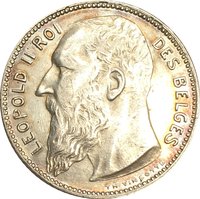
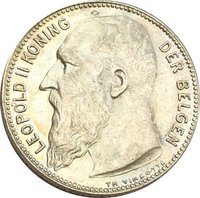
Obverse
Description:
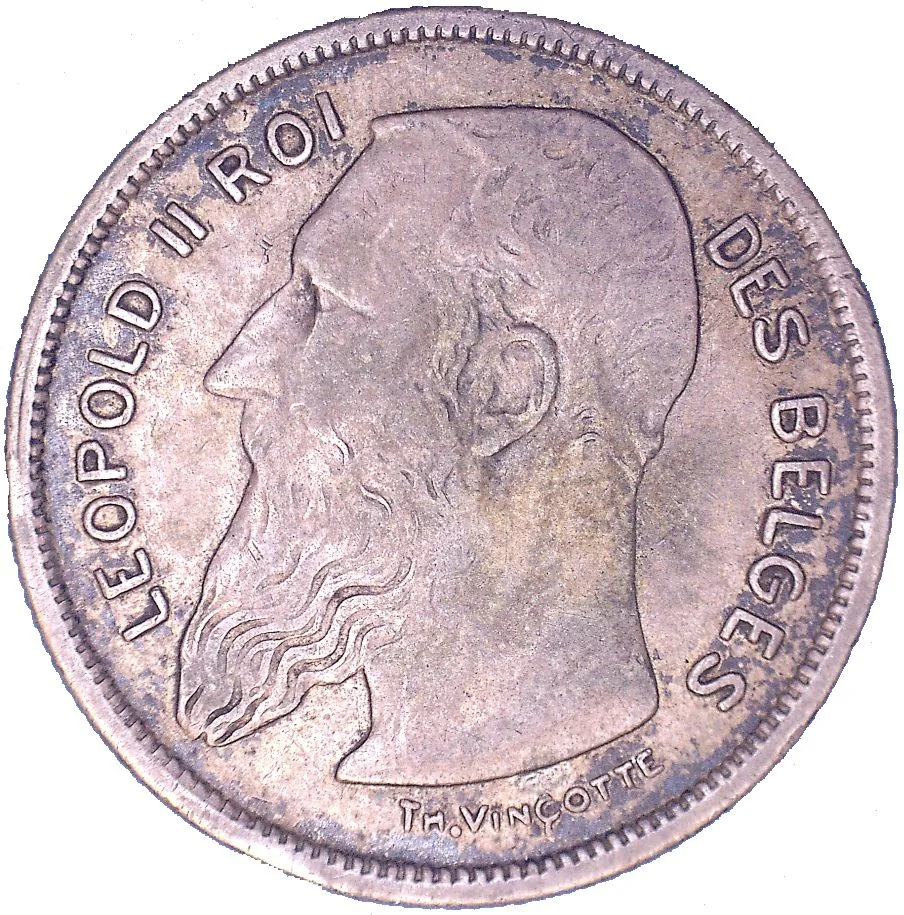
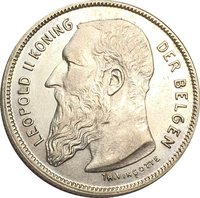
Left-profile portrait of Belgium's Leopold II, French motto, designer below.
Inscription:
LEOPOLD II ROI DES BELGES
TH.VINÇOTTE
TH.VINÇOTTE
Translation:
Leopold II King of the Belgians
Th. Vinçotte
Th. Vinçotte
Script: Latin
Language: French
Engraver: Thomas Vinçotte
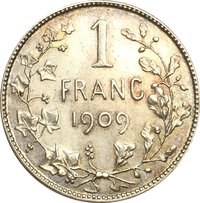
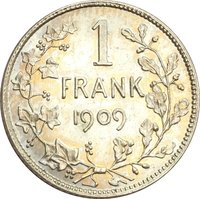
Reverse
Description:
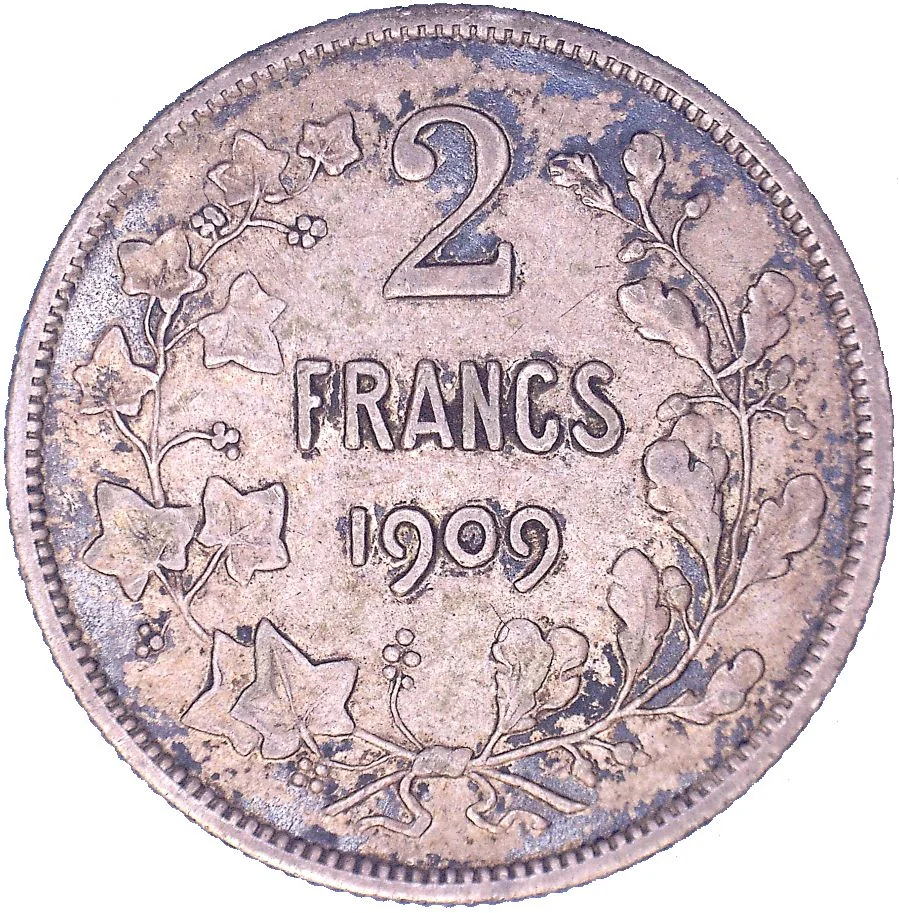
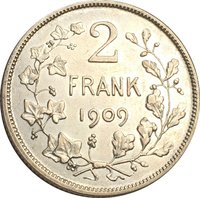
Ivy and oak wreath encircling the value and date.
Inscription:
2
FRANCS
1909
FRANCS
1909
Script: Latin
Engraver: Thomas Vinçotte
Edge
Reeded
Mints
| Name | Mark |
|---|---|
| Royal Mint of Belgium | — |
Mintings
| Year | Mint Mark | Mintage | Quality | Collection |
|---|---|---|---|---|
| 1904 | — | 400,000 | ||
| 1909 | — | 1,087,500 |
Historical background
In 1904, Belgium operated under a well-established bimetallic system, legally anchored to both gold and silver, but which functioned in practice as a de facto gold standard. The Latin Monetary Union (LMU), formed in 1865 with France, Italy, Switzerland, and later Greece, provided the framework. This treaty standardized coin weights and fineness, making member nations' gold and silver coins legal tender across borders. While the Belgian franc was pegged to the French franc at parity, the system was strained by the global decline in the value of silver, which led to the LMU suspending the free minting of silver coins in 1878. By 1904, Belgium, like its partners, was effectively on a "limping gold standard," where existing silver coins remained in circulation as token money, but the core of the monetary system was gold.
The domestic currency in circulation consisted of gold coins (20 and 10 franc pieces), silver coins (5, 2, 1, and ½ francs, and 50 centimes), and lower-value bronze and nickel coins. The National Bank of Belgium, founded in 1850, acted as the central bank, issuing banknotes that were also legal tender. However, public preference for metallic coins, especially for everyday transactions, remained strong. The stability of the franc was a point of national pride and a cornerstone for Belgium's significant industrial and export-oriented economy, which was deeply integrated into international trade, particularly with its LMU partners and its vast colonial project in the Congo.
The year 1904 fell within a period of relative monetary stability for Belgium, but underlying tensions within the LMU were present. The union struggled with the asymmetry of silver circulation and the lack of a central authority to manage imbalances. Belgium's own economic strength, driven by heavy industry, helped maintain confidence. However, the monetary situation was increasingly influenced by global gold flows and the policies of major powers like Britain and Germany, which were on a pure gold standard. This external dependency and the latent weaknesses of the LMU would later be severely tested by the financial pressures of the First World War, leading to the union's eventual dissolution in the 1920s.
The domestic currency in circulation consisted of gold coins (20 and 10 franc pieces), silver coins (5, 2, 1, and ½ francs, and 50 centimes), and lower-value bronze and nickel coins. The National Bank of Belgium, founded in 1850, acted as the central bank, issuing banknotes that were also legal tender. However, public preference for metallic coins, especially for everyday transactions, remained strong. The stability of the franc was a point of national pride and a cornerstone for Belgium's significant industrial and export-oriented economy, which was deeply integrated into international trade, particularly with its LMU partners and its vast colonial project in the Congo.
The year 1904 fell within a period of relative monetary stability for Belgium, but underlying tensions within the LMU were present. The union struggled with the asymmetry of silver circulation and the lack of a central authority to manage imbalances. Belgium's own economic strength, driven by heavy industry, helped maintain confidence. However, the monetary situation was increasingly influenced by global gold flows and the policies of major powers like Britain and Germany, which were on a pure gold standard. This external dependency and the latent weaknesses of the LMU would later be severely tested by the financial pressures of the First World War, leading to the union's eventual dissolution in the 1920s.
Series: 1904 Belgium circulation coins
🌱 Common