

10 bani – Romania
Add to wishlist
Romania
Context
Material
Diameter: 22 mm
Weight: 4 g
Thickness: 1.4 mm
Shape: Round with a round hole
Composition: Copper-nickel
Technique: Milled
Alignment: Coin alignment
flip
References
KM: #
Numista: #2778
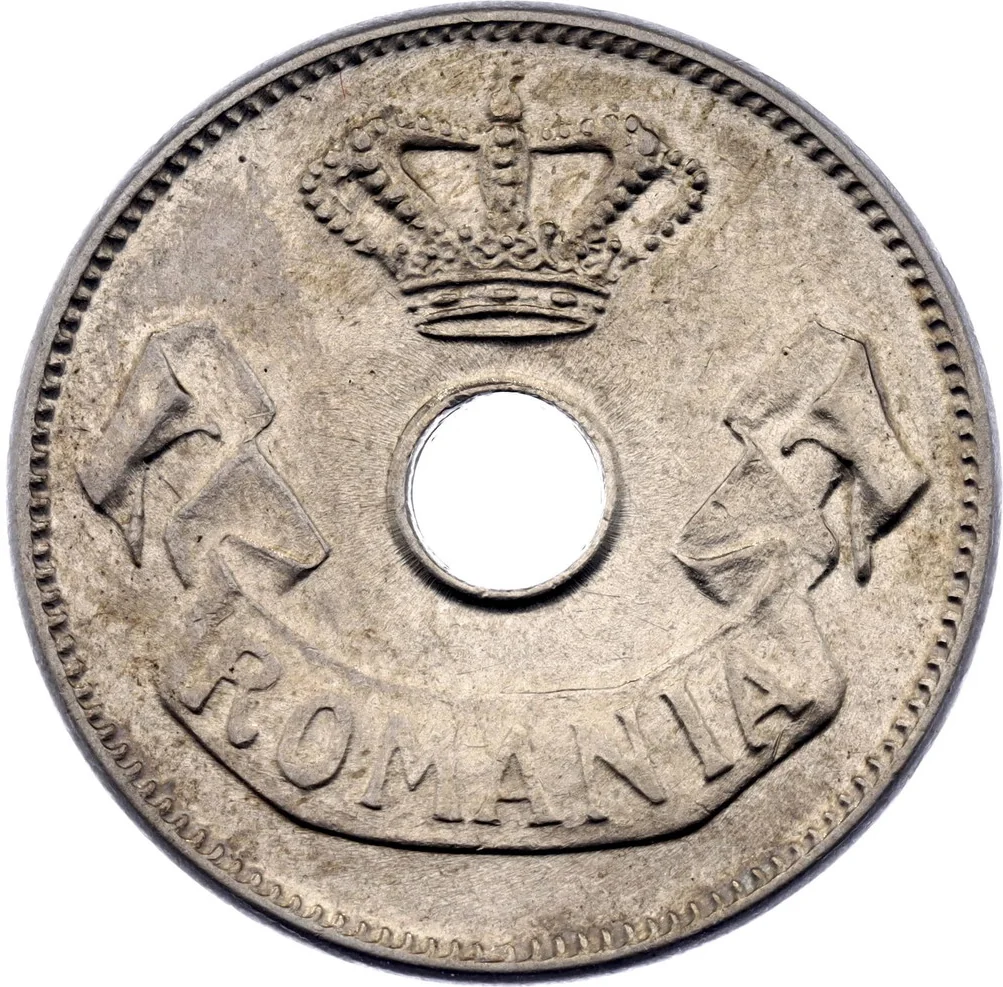
Obverse
Description:
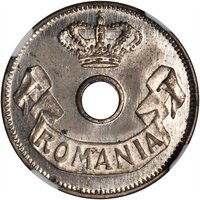
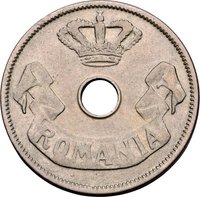
Crown over banner. A "J" mintmark, if present, is below the ribbon.
Inscription:
ROMANIA
Script: Latin
Engraver: Anton Scharff
Reverse
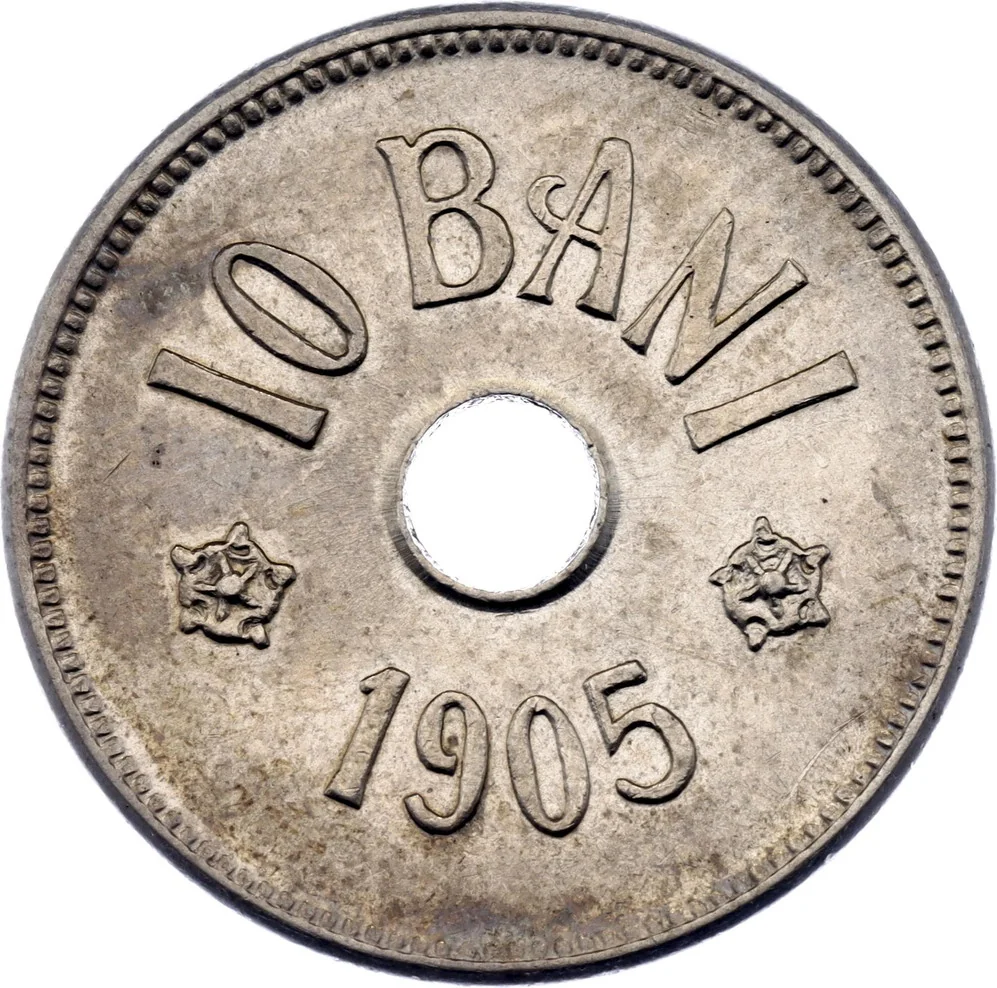
Description:
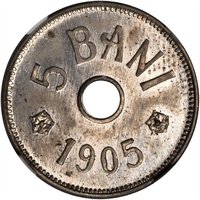
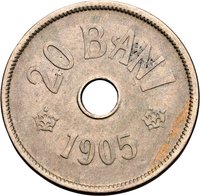
Rosettes flank the hole.
Inscription:
10 BANI
1905
1905
Script: Latin
Engraver: Anton Scharff
Edge
Plain
Mints
| Name | Mark |
|---|---|
| Royal Mint of Belgium | — |
| Hamburgische Münze | J |
Mintings
| Year | Mint Mark | Mintage | Quality | Collection |
|---|---|---|---|---|
| 1905 | — | 10,820,000 | ||
| 1906 | — | 24,180,000 | ||
| 1906 | J | 17,000,000 | BU |
Historical background
In 1905, Romania operated under a bimetallic currency system, though it was effectively transitioning towards a gold standard as part of a broader European trend and its own aspirations for economic modernity and stability. The official unit was the Romanian Leu (Leu Românesc), subdivided into 100 bani. While both gold and silver coins were minted, the system was strained. The fixed legal ratio between gold and silver did not reflect their fluctuating market values, leading to the practical disappearance of full-value silver coins from circulation, as they were often hoarded or melted down. This created a chronic shortage of small change, complicating everyday transactions for the public and businesses.
The period was one of monetary preparation and ambition. Following the establishment of the National Bank of Romania in 1880, the state aimed to solidify its financial credibility. A crucial step had been the 1890 loan, which provided the gold reserves needed to back a stable currency. By 1905, Romania was on the cusp of a major reform: the Law of 1906, which would formally adopt the gold standard. Thus, the currency situation in 1905 was characterized by the final adjustments and accumulation of reserves for this shift, moving away from the unreliable bimetallism of the 19th century.
Economically, this monetary environment reflected Romania's position as a largely agrarian exporter of grain and oil. The push for a gold-backed leu was driven by the desire to attract foreign investment, facilitate international trade, and integrate more securely with Western European financial systems, particularly that of France, a major creditor. However, the persistent small change shortage highlighted the gap between state-level financial policy and the practical realities of the rural economy, where the majority of the population lived. The reforms sought not only economic stability but also enhanced national prestige on the eve of the country's declaration of a Kingdom in 1881 and its later geopolitical ambitions.
The period was one of monetary preparation and ambition. Following the establishment of the National Bank of Romania in 1880, the state aimed to solidify its financial credibility. A crucial step had been the 1890 loan, which provided the gold reserves needed to back a stable currency. By 1905, Romania was on the cusp of a major reform: the Law of 1906, which would formally adopt the gold standard. Thus, the currency situation in 1905 was characterized by the final adjustments and accumulation of reserves for this shift, moving away from the unreliable bimetallism of the 19th century.
Economically, this monetary environment reflected Romania's position as a largely agrarian exporter of grain and oil. The push for a gold-backed leu was driven by the desire to attract foreign investment, facilitate international trade, and integrate more securely with Western European financial systems, particularly that of France, a major creditor. However, the persistent small change shortage highlighted the gap between state-level financial policy and the practical realities of the rural economy, where the majority of the population lived. The reforms sought not only economic stability but also enhanced national prestige on the eve of the country's declaration of a Kingdom in 1881 and its later geopolitical ambitions.
🌱 Very Common