

2 euro (Grand Duke Henri's marriage) – Luxembourg
Add to wishlist
Circulating commemorative coins
Commemoration: The 40th anniversary of the marriage of Grand Duke Henri
Luxembourg
Context
Material
References
KM: #
Numista: #277754
Value
Exchange value: 2 EUR
Inflation-adjusted value: 2.37 EUR
Obverse
Description:
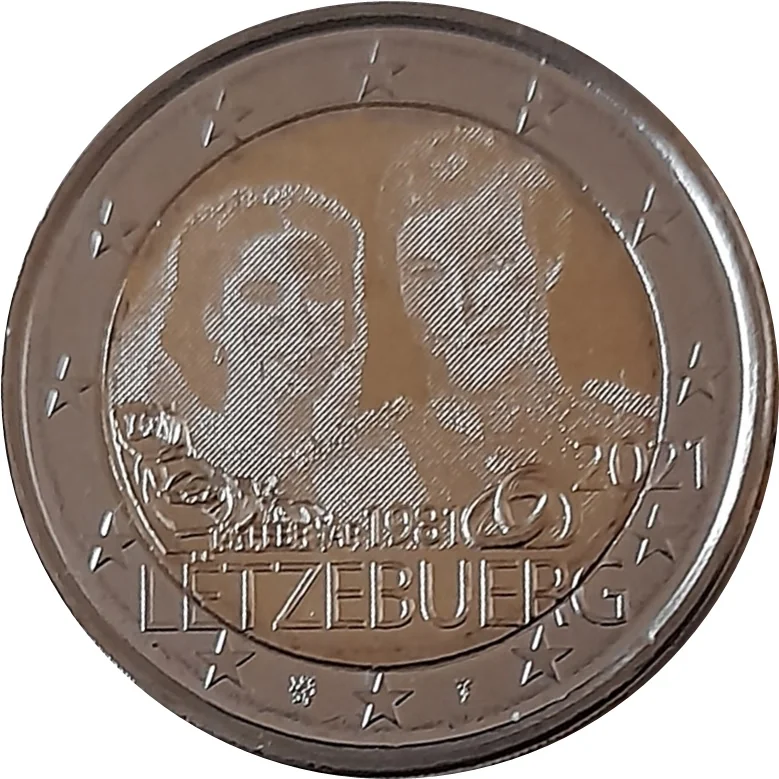
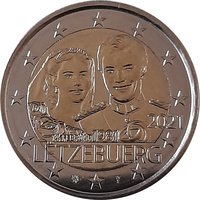
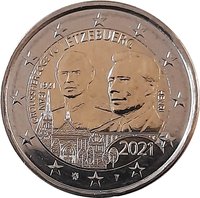
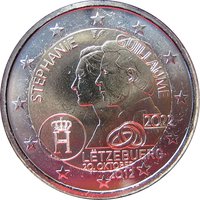
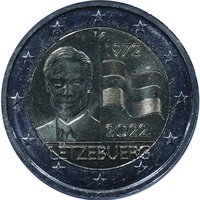
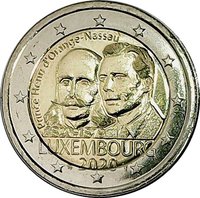
The design features effigies of Grand Duke Henri and Grand Duchess Maria Teresa. Below are two wedding rings, the date ‘14. FEBRUAR 1981’, and the year ‘2021’. ‘LETZEBUERG’ appears at the bottom. The outer ring bears the 12 stars of the European flag.
Inscription:
14. FEBRUAR 1981
2021
LETZEBUERG
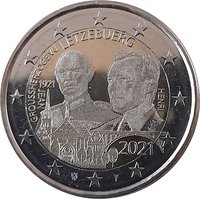
2021
LETZEBUERG
Translation:
14 FEBRUARY 1981
2021
LUXEMBOURG
2021
LUXEMBOURG
Script: Latin
Languages: German, Luxembourgish
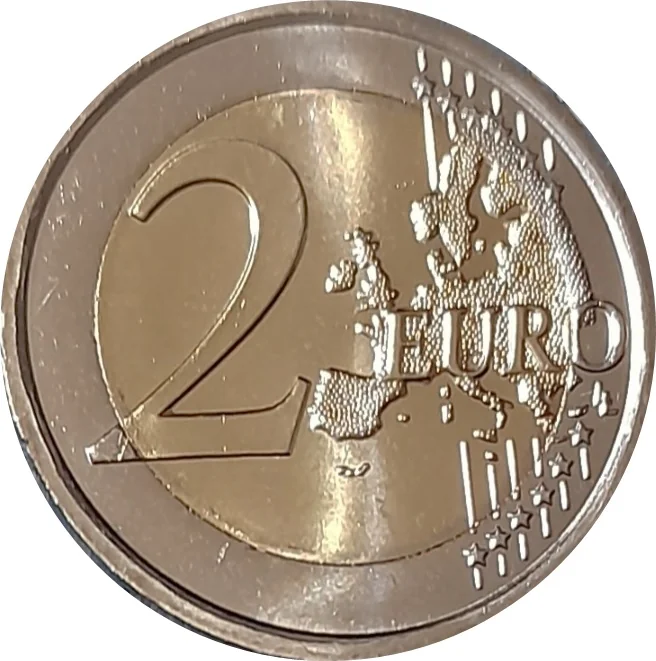
Reverse
Edge
Reeded with inscription: the number "2" and two stars
Legend:
2 ** 2 ** 2 ** 2 ** 2 ** 2 **
Mints
| Name | Mark |
|---|---|
| Royal Dutch Mint | — |
Mintings
| Year | Mint Mark | Mintage | Quality | Collection |
|---|---|---|---|---|
| 2021 | — | 160,000 | ||
| 2021 | — | 2,500 | Proof | |
| 2021 | — | 2,500 | BU |
🌱 Common