

5 cents – Namibia
Add to wishlist
Circulating commemorative coins
Commemoration: F.A.O.
Namibia
Context
Years: 1999–2000
Issuer: Namibia
Issuing organization: Bank of Namibia
Period:
(since 1990)
Currency:
(since 1993)
Material
Diameter: 20 mm
Weight: 3.1 g
Thickness: 1.5 mm
Shape: Round
Composition: Stainless steel
Standard: Gold tenth ounce
Technique: Milled
Alignment: Medal alignment
flip
References
KM: #
Numista: #7084
Value
Exchange value: 0.05 NAD
Obverse
Description:
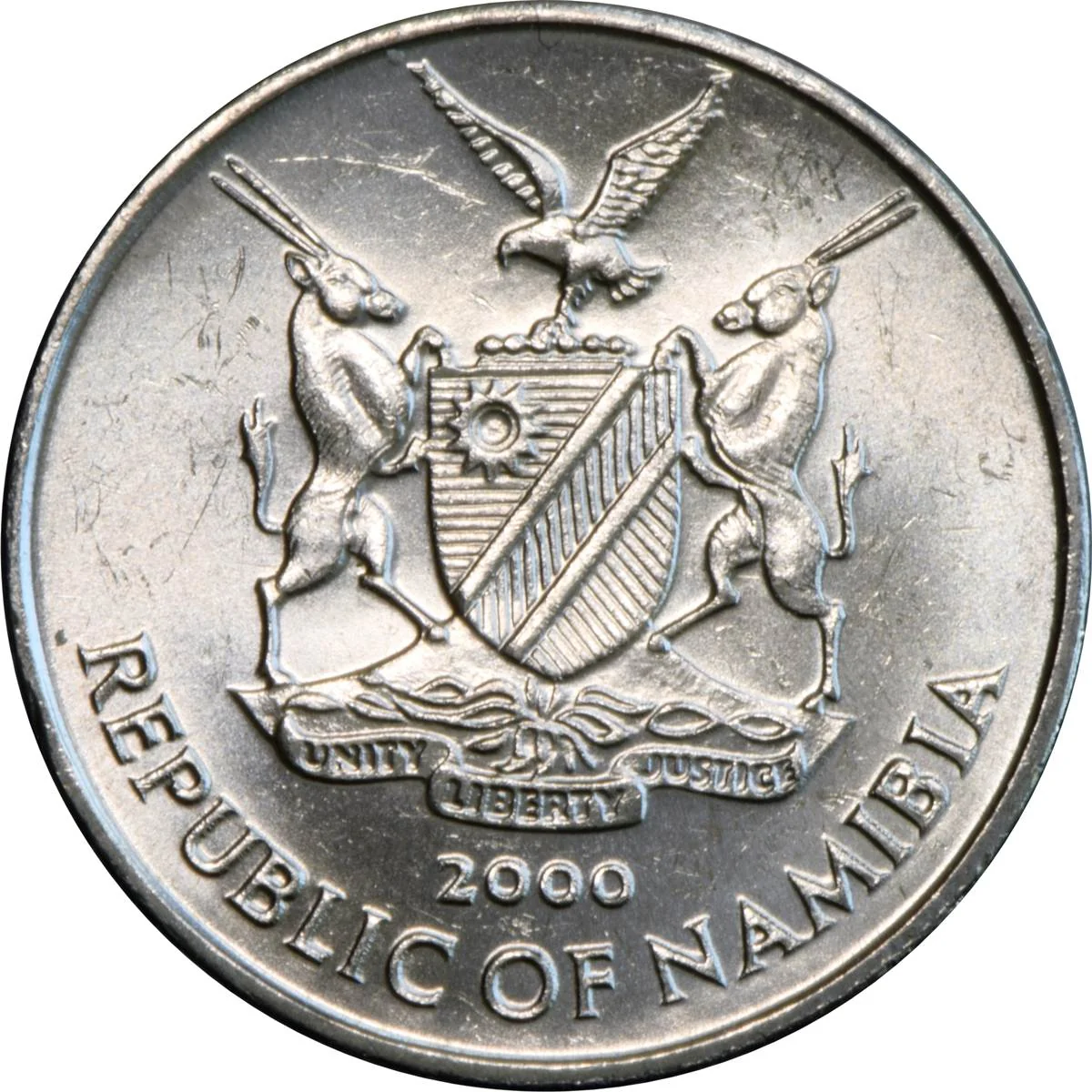
Coat of Arms of Namibia, full state name, and issue year.
Inscription:
UNITY LIBERTY JUSTICE
2000
REPUBLIC OF NAMIBIA
2000
REPUBLIC OF NAMIBIA
Script: Latin
Reverse
Description:
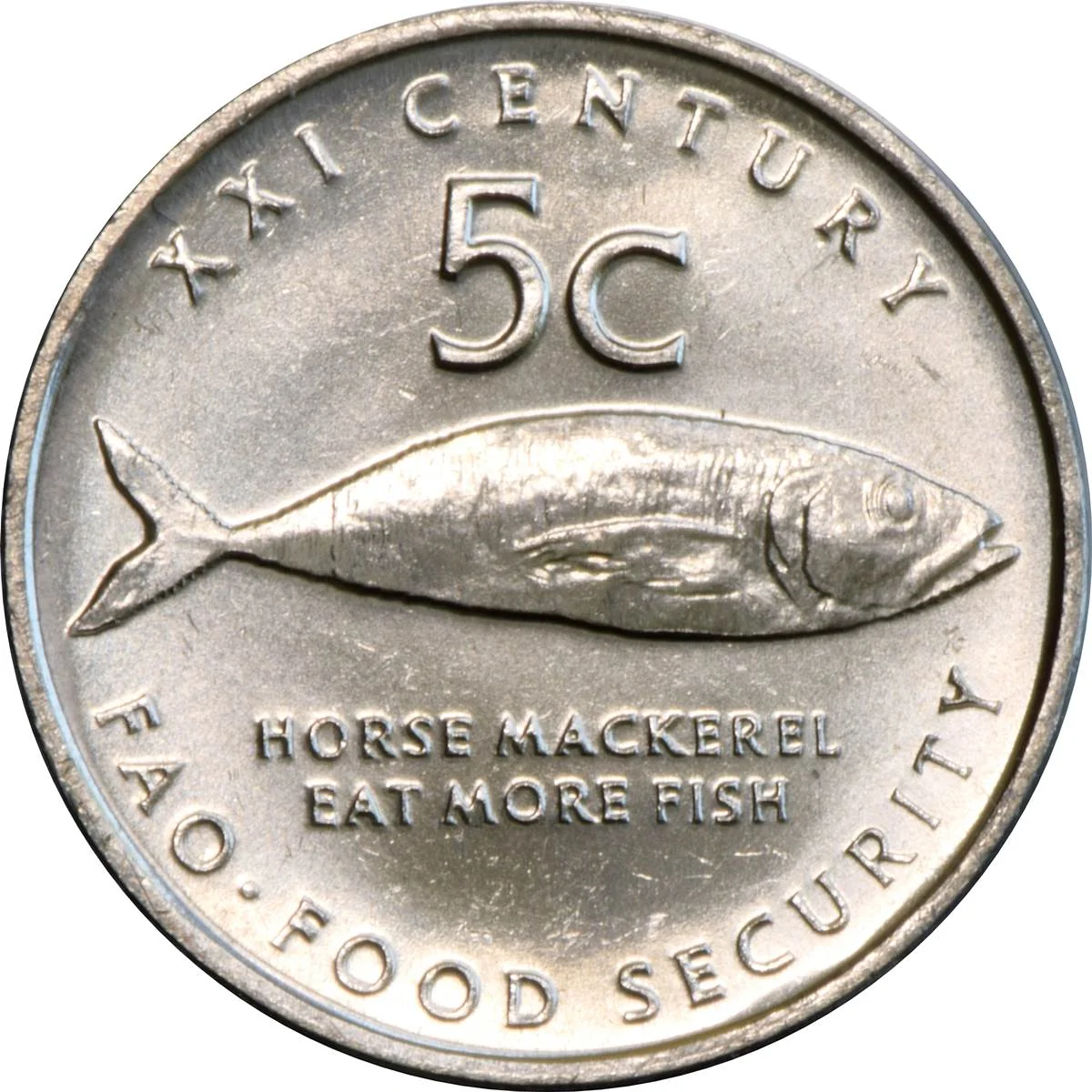
Cape Horse Mackerel (Trachurus capensis)
Inscription:
XXI CENTURY FAO FOOD SECURITY
5c
HORSE MACKEREL
EAT MORE FISH
5c
HORSE MACKEREL
EAT MORE FISH
Script: Latin
Edge
Plain
Mintings
| Year | Mint Mark | Mintage | Quality | Collection |
|---|---|---|---|---|
| 1999 | — | — | ||
| 2000 | — | — |
Historical background
In 1999, Namibia's currency situation was defined by its continued and stable participation in the Common Monetary Area (CMA) with South Africa, Lesotho, and Eswatini. The Namibian dollar (NAD), introduced in 1993, remained pegged at par (1:1) to the South African rand (ZAR), which was legal tender in Namibia alongside the NAD. This arrangement effectively ceded Namibia's independent monetary policy to the South African Reserve Bank, making the Namibian economy highly sensitive to South Africa's interest rate decisions and economic performance, particularly its bouts of currency volatility.
The year was marked by a challenging economic climate that put pressure on this currency peg. Namibia was experiencing the lingering effects of the late-1990s emerging market crises, which contributed to a significant depreciation of the South African rand. Consequently, the NAD also weakened against major currencies like the US dollar, increasing the cost of imports and contributing to inflationary pressures. Despite this strain, the Namibian government maintained a firm commitment to the peg, valuing the monetary stability and seamless trade facilitation it provided with its largest trading partner, South Africa.
Domestically, the currency situation in 1999 reflected broader fiscal concerns. The government was running persistent budget deficits, financed largely through domestic borrowing. This raised questions about long-term sustainability but did not immediately threaten the currency peg, which was backed by substantial foreign reserves held by the Bank of Namibia. The primary focus for authorities was maintaining the credibility of the fixed exchange rate regime while navigating the external shocks transmitted through the rand, a balancing act that underscored the trade-offs between monetary independence and regional economic integration.
The year was marked by a challenging economic climate that put pressure on this currency peg. Namibia was experiencing the lingering effects of the late-1990s emerging market crises, which contributed to a significant depreciation of the South African rand. Consequently, the NAD also weakened against major currencies like the US dollar, increasing the cost of imports and contributing to inflationary pressures. Despite this strain, the Namibian government maintained a firm commitment to the peg, valuing the monetary stability and seamless trade facilitation it provided with its largest trading partner, South Africa.
Domestically, the currency situation in 1999 reflected broader fiscal concerns. The government was running persistent budget deficits, financed largely through domestic borrowing. This raised questions about long-term sustainability but did not immediately threaten the currency peg, which was backed by substantial foreign reserves held by the Bank of Namibia. The primary focus for authorities was maintaining the credibility of the fixed exchange rate regime while navigating the external shocks transmitted through the rand, a balancing act that underscored the trade-offs between monetary independence and regional economic integration.
🌱 Very Common