

2 Sovereigns – United Kingdom
United Kingdom
Context
Years: 1985–1996
Issuer: United Kingdom 
Ruler: Elizabeth II
Currency:
(since 1971)
Total mintage: 46,748
Material
References
KM: #Click to copy to clipboard944
Numista: #13385
Value
Exchange value: 2 GBP = $2.71
Bullion value: $2440.29
Inflation-adjusted value: 8.21 GBP
Obverse
Description:
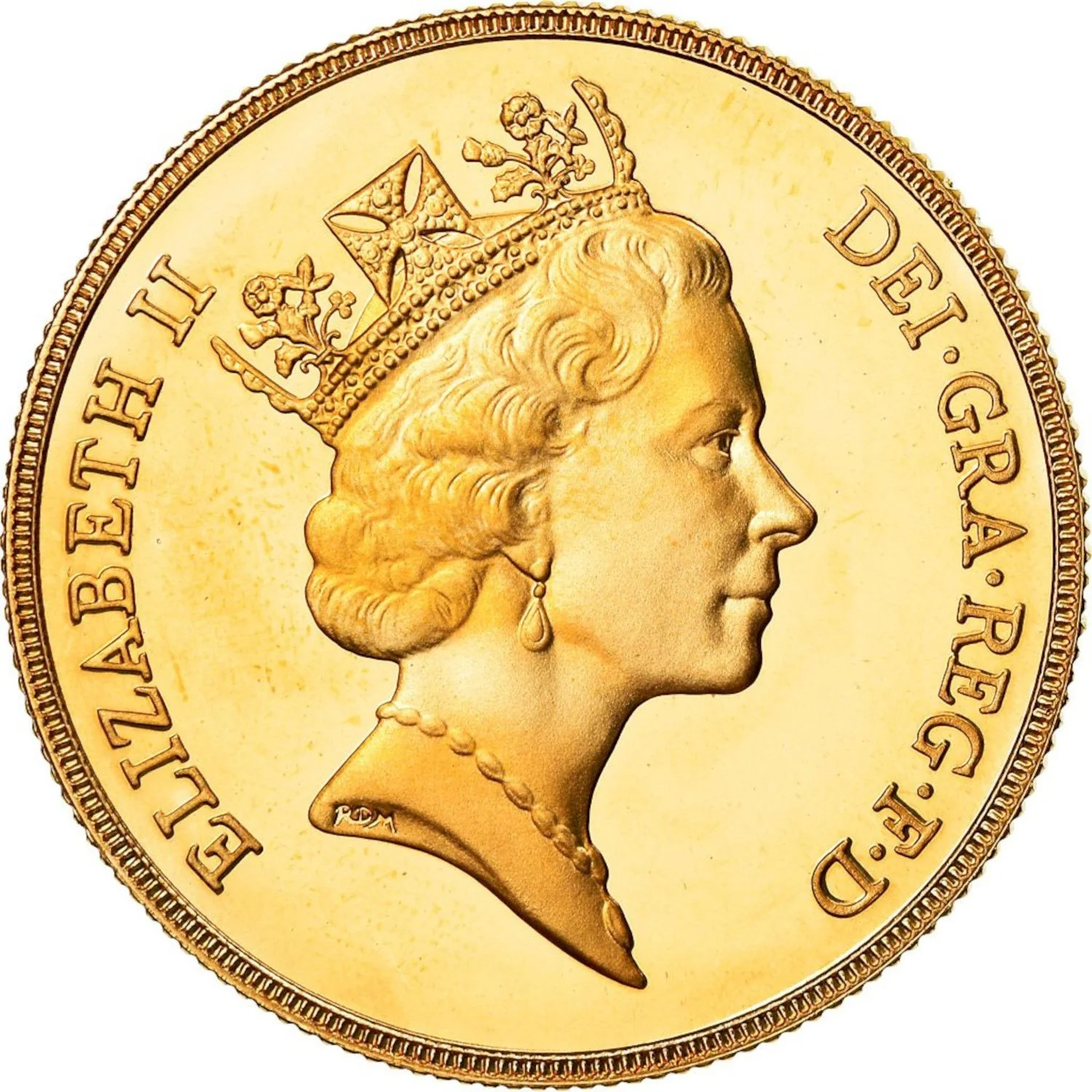
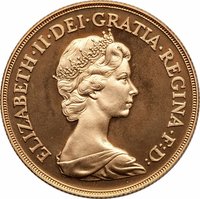
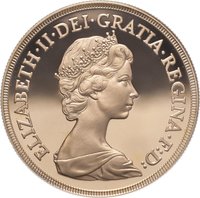
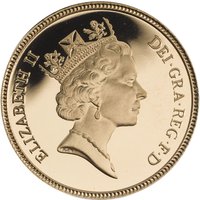
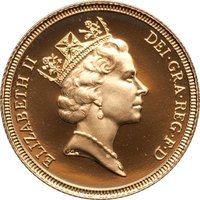
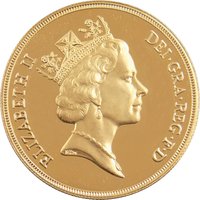
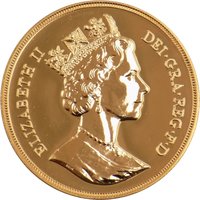
Third crowned portrait of Queen Elizabeth II facing right, wearing the George IV State Diadem.
Inscription:
ELIZABETH II DEI·GRA·REG·F·D
RDM
RDM
Translation:
Elizabeth II by the Grace of God Queen Defender of the Faith
Script: Latin
Language: Latin
Engraver: Raphael David Maklouf
Reverse
Description:
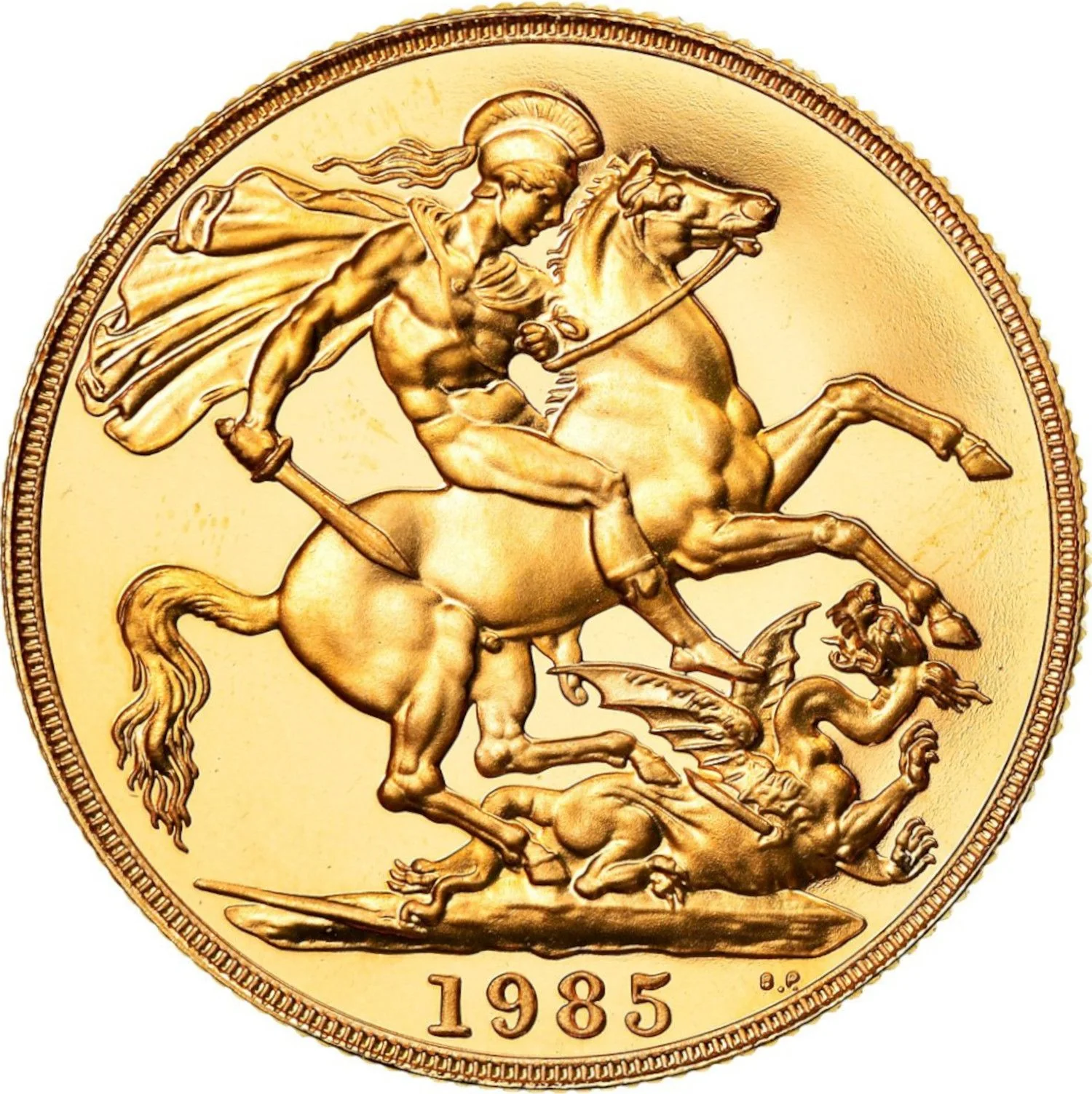
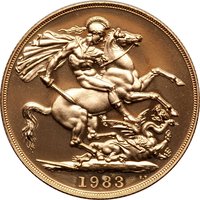
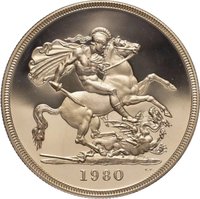
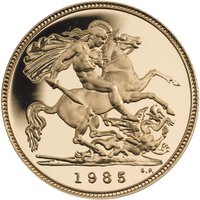
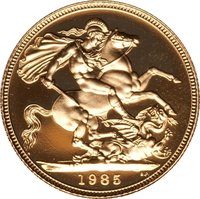
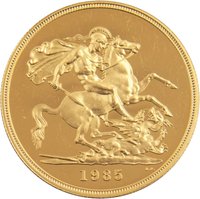
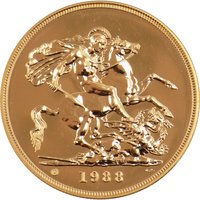
St. George slaying the dragon, with date and initials below.
Inscription:
1985 B.P
Script: Latin
Designer: Benedetto Pistrucci
Edge
Reeded
Categories
| Mythology> Fantastic animal |
| Animal> Horse |
Mints
| Name | Mark |
|---|---|
| Royal Mint | — |
Mintings
| Year | Mint Mark | Mintage | Quality | Collection |
|---|---|---|---|---|
| 1985 | — | 5,849 | Proof | |
| 1987 | — | 14,301 | Proof | |
| 1988 | — | 12,743 | Proof | |
| 1990 | — | 4,374 | Proof | |
| 1991 | — | 3,108 | Proof | |
| 1992 | — | 2,608 | Proof | |
| 1993 | — | 2,155 | Proof | |
| 1996 | — | 1,610 | Proof |
Historical background
In 1985, the United Kingdom's currency situation was dominated by the ongoing struggle to manage the value of sterling within the complex framework of the European Monetary System (EMS). The UK had joined the EMS's Exchange Rate Mechanism (ERM) in 1979 but suspended its membership in 1985, a period often referred to as the "sterling crisis." Chancellor Nigel Lawson was a strong proponent of a policy known as "shadowing the Deutsche Mark," aiming to stabilize sterling by informally pegging it to the strong West German currency. This was driven by a desire to control inflation, which had been a historic weakness for the UK economy, by importing the credibility of the Bundesbank's anti-inflationary discipline.
However, this policy created significant tension within Margaret Thatcher's government and with the markets. To maintain the unofficial peg, the Bank of England was forced to engage in heavy intervention, buying sterling and raising interest rates to support its value. This conflicted with other domestic economic goals, as high interest rates threatened to stifle growth and increase unemployment. Furthermore, the policy was conducted largely in secret and without formal international agreement, leading to criticism that it was unsustainable and undermined the UK's control over its own monetary policy.
The situation culminated in early 1987, but its roots in 1985 set the stage. The core conflict was between the government's desire for exchange rate stability to foster European trade and combat inflation, and the opposing need for monetary policy autonomy to respond to domestic economic conditions. This period highlighted the difficulties of fixed exchange rate regimes and foreshadowed the even more severe ERM crisis the UK would face in 1992. Ultimately, the experience of 1985 reinforced a deep-seated British skepticism towards surrendering monetary sovereignty, a sentiment that would profoundly influence later debates about European economic and monetary union.
However, this policy created significant tension within Margaret Thatcher's government and with the markets. To maintain the unofficial peg, the Bank of England was forced to engage in heavy intervention, buying sterling and raising interest rates to support its value. This conflicted with other domestic economic goals, as high interest rates threatened to stifle growth and increase unemployment. Furthermore, the policy was conducted largely in secret and without formal international agreement, leading to criticism that it was unsustainable and undermined the UK's control over its own monetary policy.
The situation culminated in early 1987, but its roots in 1985 set the stage. The core conflict was between the government's desire for exchange rate stability to foster European trade and combat inflation, and the opposing need for monetary policy autonomy to respond to domestic economic conditions. This period highlighted the difficulties of fixed exchange rate regimes and foreshadowed the even more severe ERM crisis the UK would face in 1992. Ultimately, the experience of 1985 reinforced a deep-seated British skepticism towards surrendering monetary sovereignty, a sentiment that would profoundly influence later debates about European economic and monetary union.
Series: Sovereign series
💎 Extremely Rare