

1 krone – Norway
Add to wishlist
Norway
Context
Years: 1951–1957
Issuer: Norway
Ruler: Haakon VII
Currency:
(since 1875)
Demonetized: Yes
Total mintage: 22,228,900
Material
References
KM: #
Numista: #2769
Value
Exchange value: 1 NOK
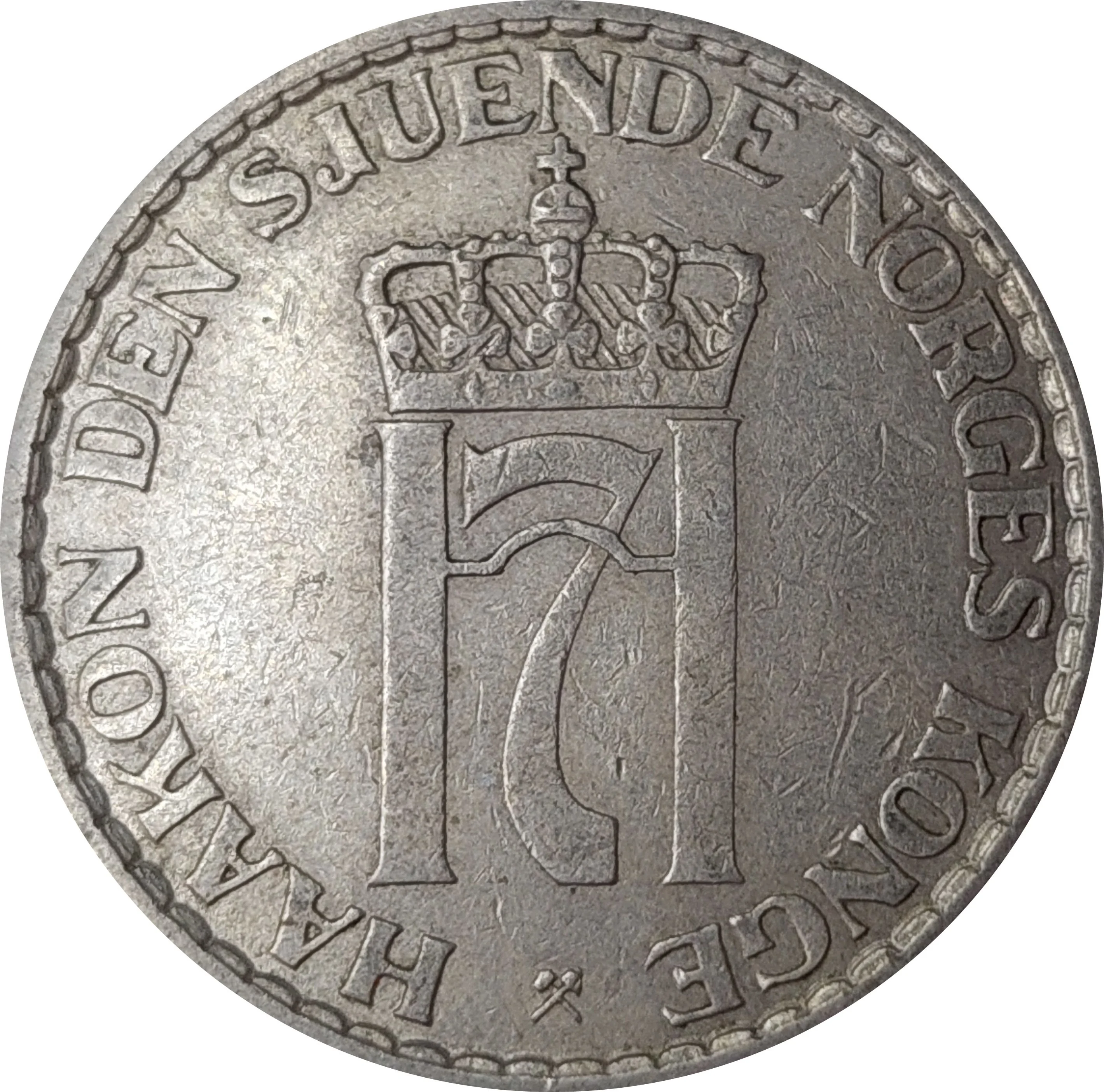
Obverse
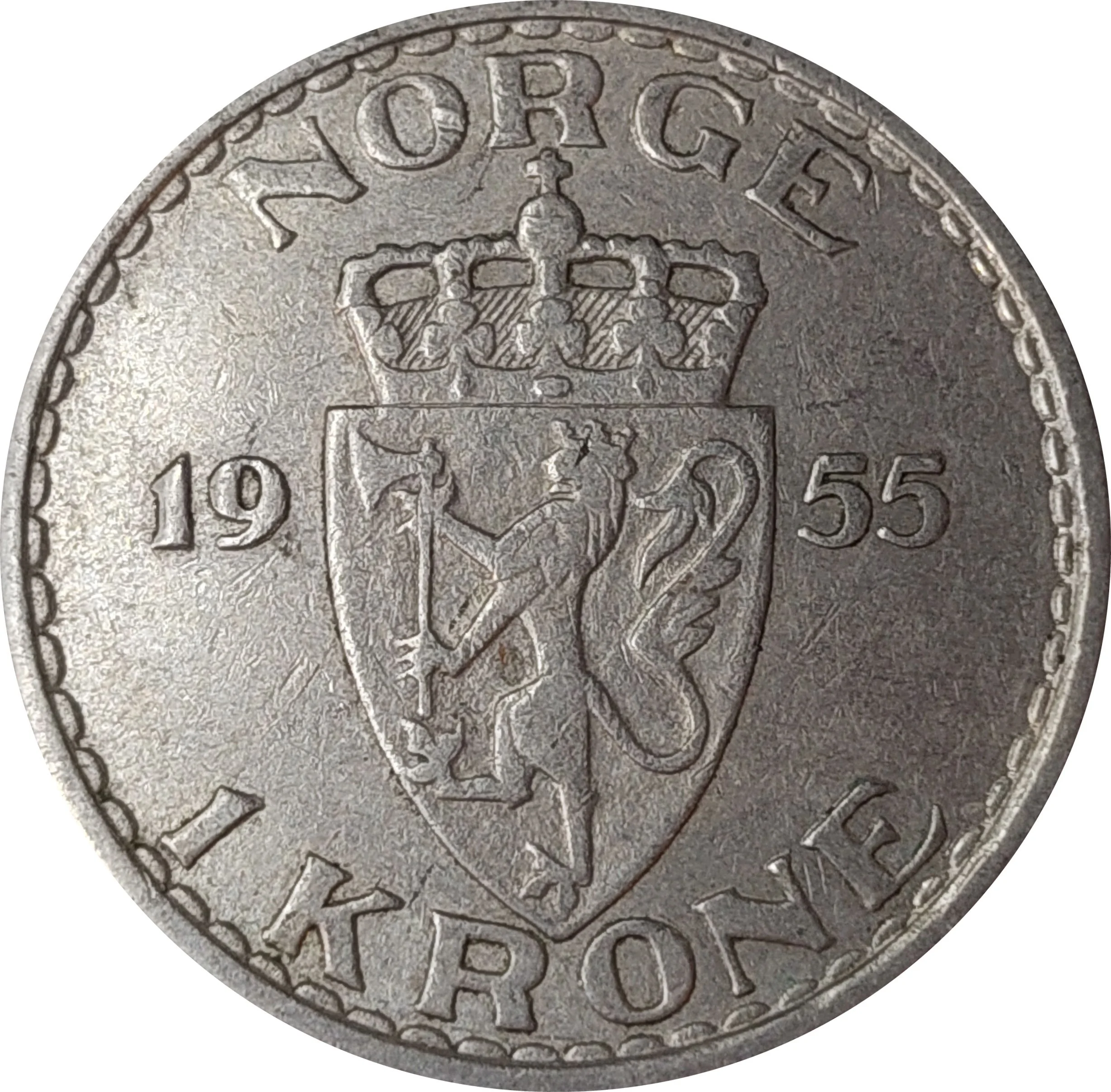
Reverse
Edge
Plain
Mints
| Name | Mark |
|---|---|
| Norwegian Mint | — |
Mintings
| Year | Mint Mark | Mintage | Quality | Collection |
|---|---|---|---|---|
| 1951 | — | 3,818,900 | ||
| 1953 | — | 1,465,000 | ||
| 1954 | — | 3,045,000 | ||
| 1955 | — | 1,970,000 | ||
| 1956 | — | 4,300,000 | ||
| 1957 | — | 7,630,000 |
Historical background
In 1951, Norway's currency situation was fundamentally defined by its post-war economic reconstruction and its participation in the Bretton Woods international monetary system. The Norwegian krone (NOK) had a fixed exchange rate, pegged to the US dollar at a rate of 7.142 kroner per dollar, which in turn was tied to gold. This fixed parity, established in 1946, provided crucial stability for a small, open economy heavily dependent on foreign trade, but it also required strict government control over all foreign exchange transactions to defend the peg and manage scarce dollar reserves.
Domestically, the period was characterized by extensive regulation and a persistent shortage of foreign currency. All foreign exchange earnings from key exports like shipping and emerging oil exploration had to be surrendered to the central bank (Norges Bank). The government then allocated these hard currency reserves through a licensing system, prioritizing imports essential for rebuilding the nation's industrial base and infrastructure over consumer goods. This system of kroneremisjon (krone allocation) was a key tool of the state's dirigiste economic policy, aimed at full employment, rapid industrialization, and suppressing inflation.
The year 1951 itself saw specific pressures within this controlled framework. The booming global economy driven by the Korean War (1950-1953) increased demand for Norwegian shipping and exports, improving the trade balance. However, worldwide inflationary pressures and rising import prices for capital goods challenged domestic price stability. While the fixed exchange rate held firm, the underlying tension between a regulated currency regime and the needs of a recovering market economy was evident, setting the stage for the gradual liberalization of currency and trade controls that would begin later in the decade.
Domestically, the period was characterized by extensive regulation and a persistent shortage of foreign currency. All foreign exchange earnings from key exports like shipping and emerging oil exploration had to be surrendered to the central bank (Norges Bank). The government then allocated these hard currency reserves through a licensing system, prioritizing imports essential for rebuilding the nation's industrial base and infrastructure over consumer goods. This system of kroneremisjon (krone allocation) was a key tool of the state's dirigiste economic policy, aimed at full employment, rapid industrialization, and suppressing inflation.
The year 1951 itself saw specific pressures within this controlled framework. The booming global economy driven by the Korean War (1950-1953) increased demand for Norwegian shipping and exports, improving the trade balance. However, worldwide inflationary pressures and rising import prices for capital goods challenged domestic price stability. While the fixed exchange rate held firm, the underlying tension between a regulated currency regime and the needs of a recovering market economy was evident, setting the stage for the gradual liberalization of currency and trade controls that would begin later in the decade.
🌱 Very Common