

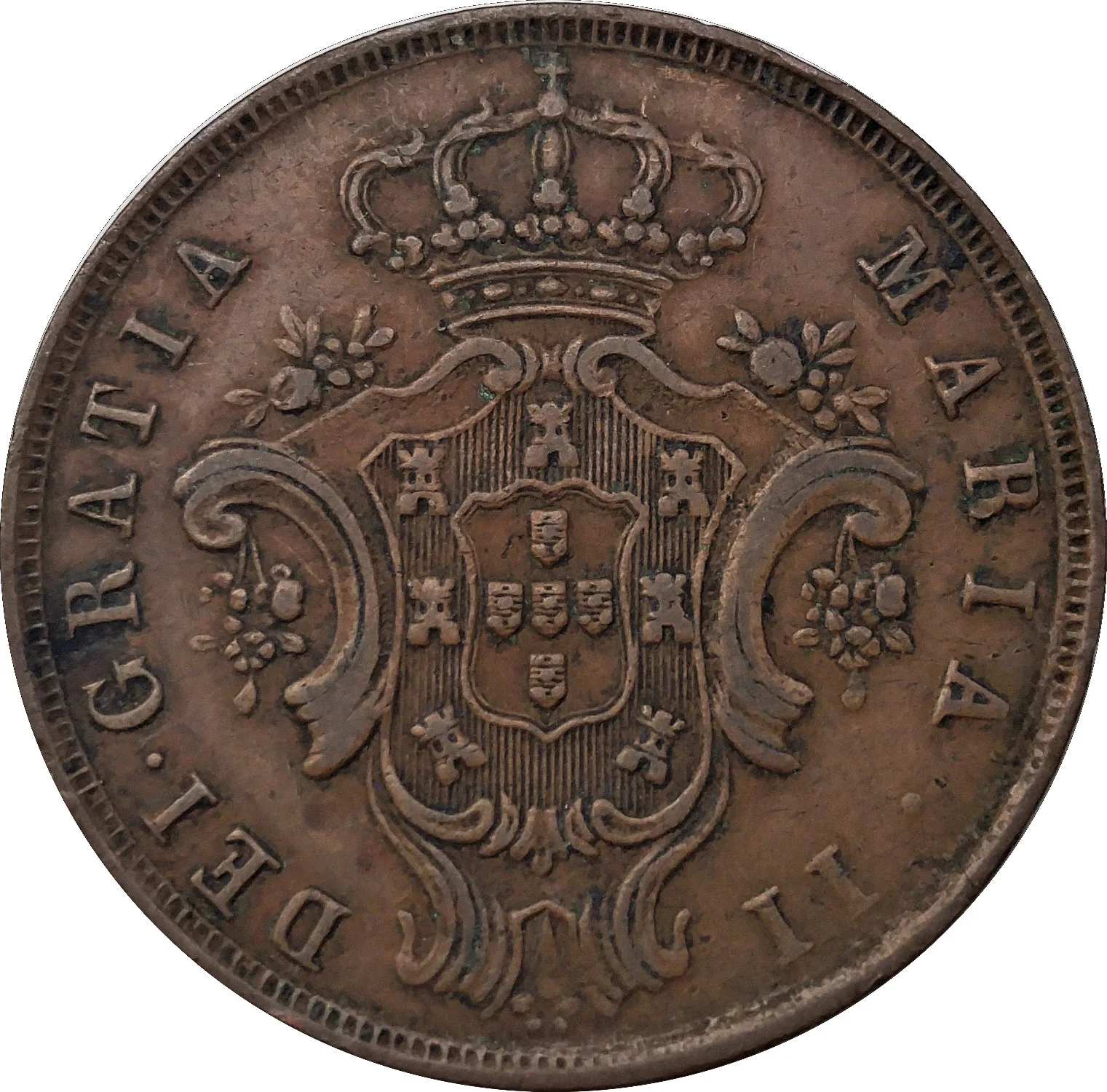
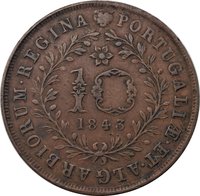
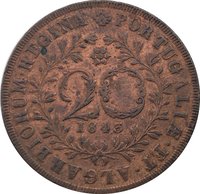
Obverse
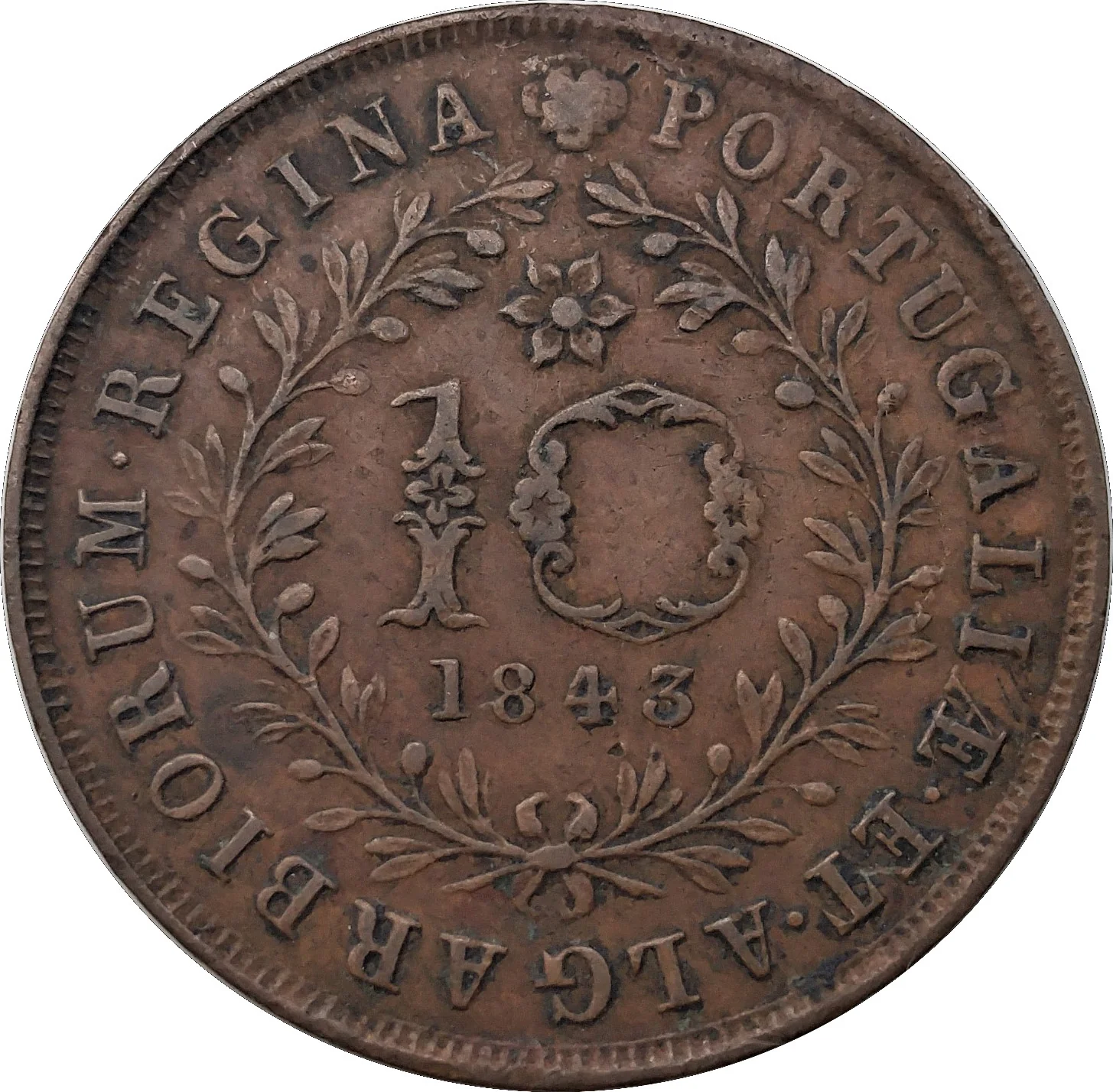
Reverse
Edge
Plain
Categories
| Symbols> Coat of Arms |
| Symbol> Crown |
Mints
| Name | Mark |
|---|---|
| Imprensa Nacional - Casa da Moeda | — |
Mintings
| Year | Mint Mark | Mintage | Quality | Collection |
|---|---|---|---|---|
| 1843 | — | — |
Historical background
In 1843, the Azores, as an integral part of the Kingdom of Portugal, operated under the Portuguese monetary system, but with significant local challenges. The official currency was the Portuguese real (plural: réis), a system often denoted by the suffix "réis" (e.g., 1,000 réis). However, the archipelago's isolation and persistent trade imbalances meant that specie—actual coinage—was chronically scarce. This shortage was exacerbated by the islands' economy, heavily based on exporting agricultural goods like oranges and wine, which often did not generate enough hard currency inflow to meet local commercial needs.
Consequently, a complex and often chaotic situation of complementary and substitute currencies existed alongside the official system. Merchants, municipal councils, and even individuals frequently issued private tokens, promissory notes, and vales (IOUs) to facilitate everyday transactions. Furthermore, due to the Azores' role as a mid-Atlantic stopping point for whaling and merchant ships, foreign coins—particularly Spanish, Brazilian, British, and French—circulated widely and were accepted at fluctuating, negotiated exchange rates. This created a de facto multi-currency environment where the value of money was often uncertain and localized.
The central Portuguese government in Lisbon was aware of these monetary irregularities and viewed them as a problem of sovereignty and economic control. Efforts to standardize the currency and suppress local tokens were ongoing but difficult to enforce from afar. Therefore, the 1843 monetary landscape was one of transition and friction, caught between the formal, centralized system of the mainland and the pragmatic, makeshift solutions required by island life, setting the stage for more forceful monetary reforms later in the 19th century.
Consequently, a complex and often chaotic situation of complementary and substitute currencies existed alongside the official system. Merchants, municipal councils, and even individuals frequently issued private tokens, promissory notes, and vales (IOUs) to facilitate everyday transactions. Furthermore, due to the Azores' role as a mid-Atlantic stopping point for whaling and merchant ships, foreign coins—particularly Spanish, Brazilian, British, and French—circulated widely and were accepted at fluctuating, negotiated exchange rates. This created a de facto multi-currency environment where the value of money was often uncertain and localized.
The central Portuguese government in Lisbon was aware of these monetary irregularities and viewed them as a problem of sovereignty and economic control. Efforts to standardize the currency and suppress local tokens were ongoing but difficult to enforce from afar. Therefore, the 1843 monetary landscape was one of transition and friction, caught between the formal, centralized system of the mainland and the pragmatic, makeshift solutions required by island life, setting the stage for more forceful monetary reforms later in the 19th century.
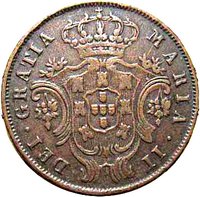
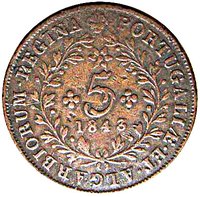
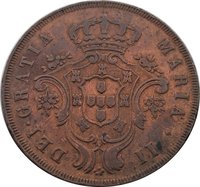
⭐ Somewhat Rare