

50 Bani – Romania
Romania
Context

Material
Diameter: 23.75 mm
Weight: 6.1 g
Thickness: 1.9 mm
Shape: Round
Composition: Nickel brass
Magnetic: No
Technique: Milled
Alignment: Medal alignment
flip
References
KM: #Click to copy to clipboard444
Numista: #133816
Value
Exchange value: 0.50 RON = $0.12
Inflation-adjusted value: 0.77 RON
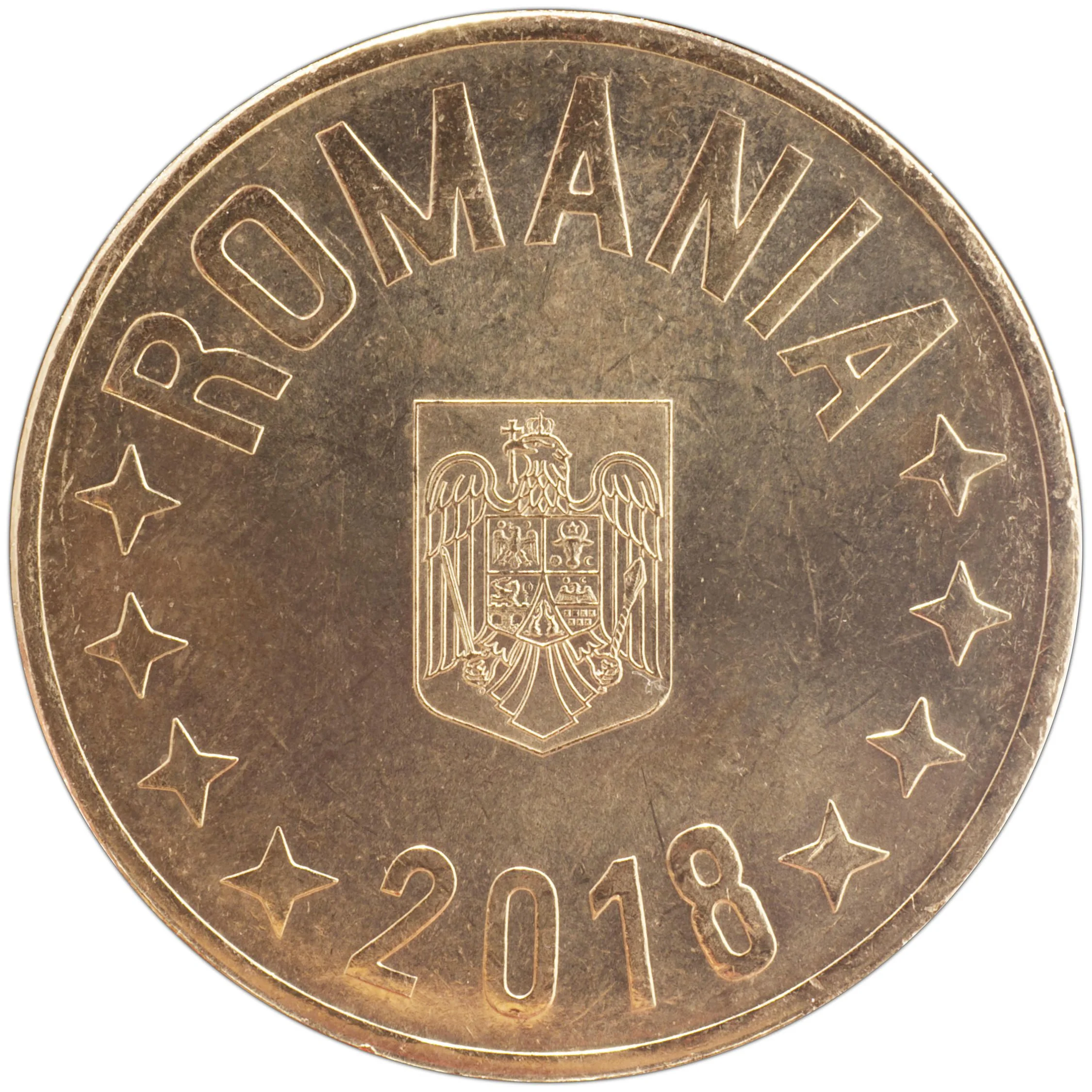
Obverse
Description:
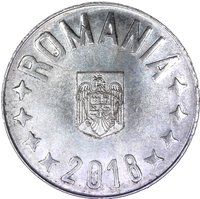
National arms with flanking stars, crowned eagle.
Inscription:
ROMANIA
2018
2018
Script: Latin
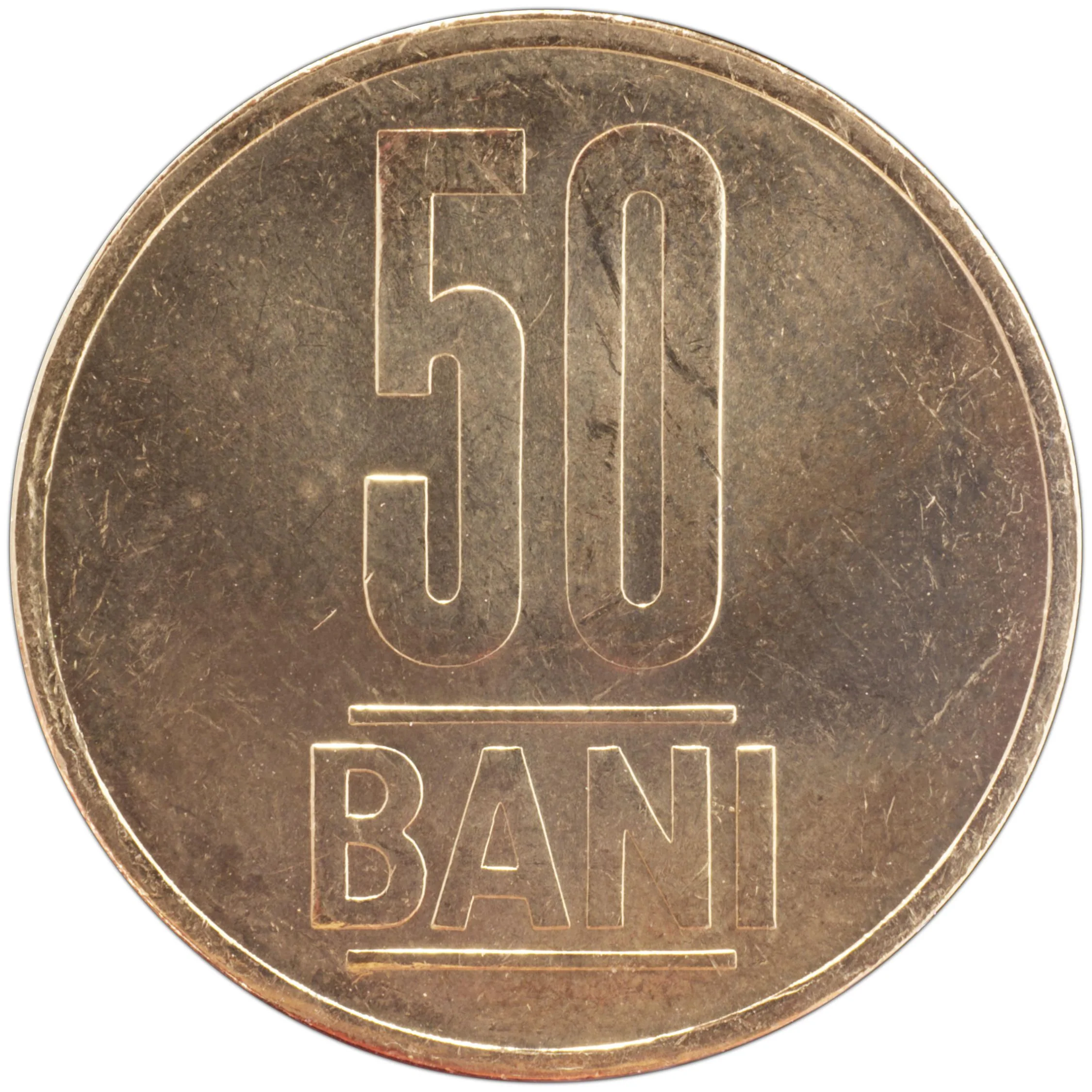
Reverse
Edge
Smooth with lettering
Legend:
ROMANIA * ROMANIA *
Mints
| Name | Mark |
|---|---|
| State Mint | — |
Mintings
| Year | Mint Mark | Mintage | Quality | Collection |
|---|---|---|---|---|
| 2018 | — | — | ||
| 2019 | — | — | ||
| 2020 | — | — | ||
| 2021 | — | — | ||
| 2022 | — | 5,000 | Proof | |
| 2022 | . Mint Set | 5,000 | Proof | |
| 2022 | . Mint Set | 5,000 | Proof | |
| 2022 | — | — | ||
| 2023 | — | 5,000 | Proof | |
| 2023 | . Mint Set | 5,000 | Proof | |
| 2023 | . Mint Set | 5,000 | Proof | |
| 2023 | — | — | ||
| 2024 | — | 5,000 | Proof | |
| 2024 | . Mint Set | 5,000 | Proof | |
| 2024 | . Mint Set | 5,000 | Proof | |
| 2024 | — | — | ||
| 2025 | . Mint Set | 5,000 | Proof | |
| 2025 | . Mint Set | 5,000 | Proof | |
| 2025 | — | 5,000 | Proof | |
| 2025 | — | — |
Historical background
In 2018, Romania's currency situation was characterized by a period of relative stability for the Romanian Leu (RON) against the Euro, but within a context of significant macroeconomic pressures. The year saw the RON trading in a managed float regime, with the National Bank of Romania (NBR) actively intervening to curb excessive volatility. The key exchange rate band hovered around 4.6 to 4.7 RON per Euro for much of the year, a stability achieved despite twin deficits—a widening current account deficit and a large budget deficit—that typically put downward pressure on a currency.
The primary domestic challenge was robust domestic demand, fueled by sharp increases in wages and government spending, which spurred inflation and a growing import bill. This contributed to the current account deficit widening to nearly 4.5% of GDP, raising concerns about external sustainability. In response, the NBR pursued a tightening monetary policy, raising its key interest rate five times throughout the year to combat inflation, which peaked above 5%. These hikes helped support the Leu by making RON-denominated assets more attractive to investors seeking higher yields.
Internationally, the year brought headwinds from emerging market volatility and a stronger US dollar, which pressured currencies globally. However, the RON's relative resilience was also underpinned by strong GDP growth (over 4%) and EU fund inflows. Ultimately, 2018 was a year where the central bank successfully balanced competing priorities, using its reserves and interest rate policy to maintain currency stability while addressing inflationary pressures, though the underlying structural deficits pointed to longer-term vulnerabilities.
The primary domestic challenge was robust domestic demand, fueled by sharp increases in wages and government spending, which spurred inflation and a growing import bill. This contributed to the current account deficit widening to nearly 4.5% of GDP, raising concerns about external sustainability. In response, the NBR pursued a tightening monetary policy, raising its key interest rate five times throughout the year to combat inflation, which peaked above 5%. These hikes helped support the Leu by making RON-denominated assets more attractive to investors seeking higher yields.
Internationally, the year brought headwinds from emerging market volatility and a stronger US dollar, which pressured currencies globally. However, the RON's relative resilience was also underpinned by strong GDP growth (over 4%) and EU fund inflows. Ultimately, 2018 was a year where the central bank successfully balanced competing priorities, using its reserves and interest rate policy to maintain currency stability while addressing inflationary pressures, though the underlying structural deficits pointed to longer-term vulnerabilities.
Series: 2018 Romania circulation coins

🌱 Very Common